That tiny sliver of space by the front door—it's often the first thing you see and the hardest to keep organized. But you don't need a dedicated room to get that coveted mudroom function. With a little creativity, even the smallest entryway can become a powerhouse of organization. These seven ideas will help you conquer the clutter, maximize every square inch, and create a welcoming, functional entry to your home.
1. Go Vertical with a Narrow Hall Tree or DIY Wall Unit
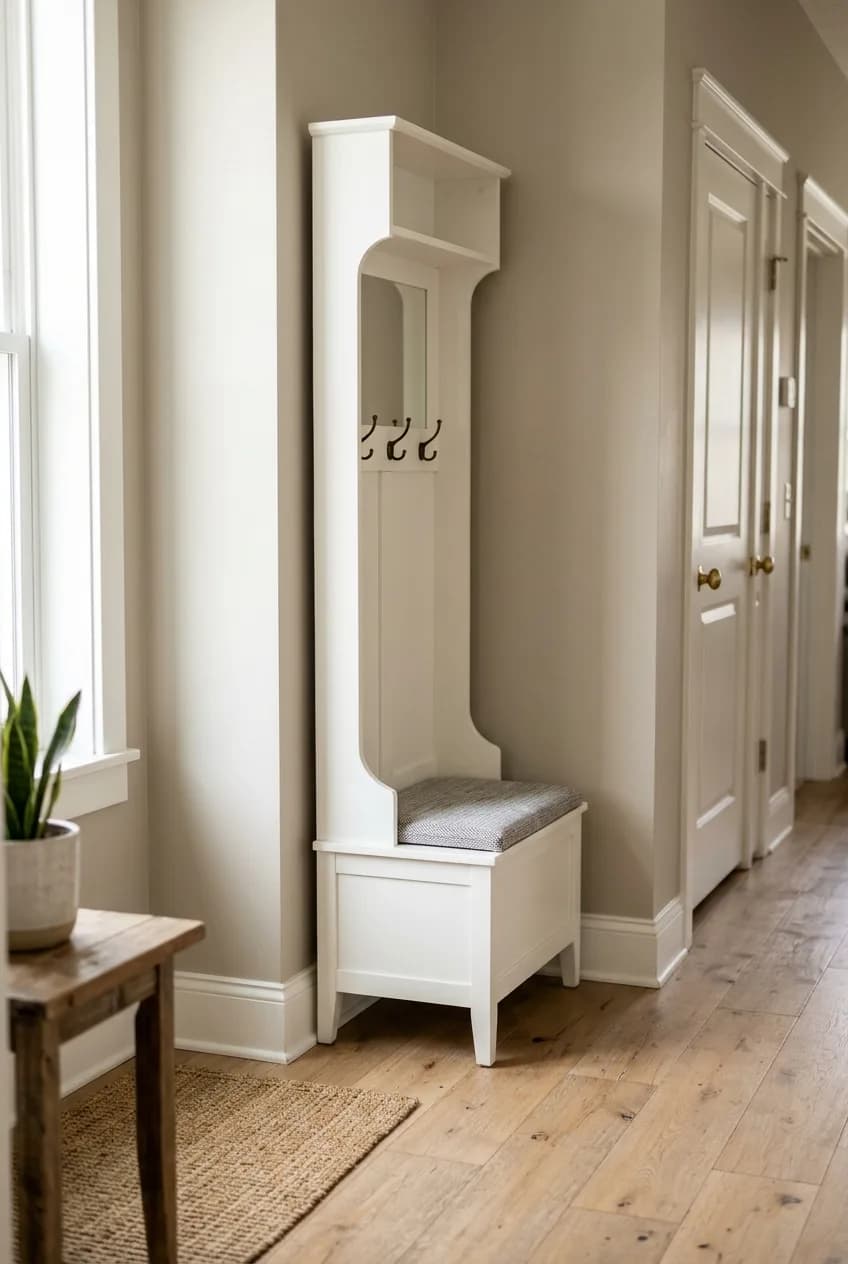
When you can't build out, build up. A tall, narrow storage unit draws the eye upward, making a small space feel more expansive. You can find slim-profile hall trees online or at stores like Target and Wayfair that combine a few key functions into one small footprint, typically 24-30 inches wide.
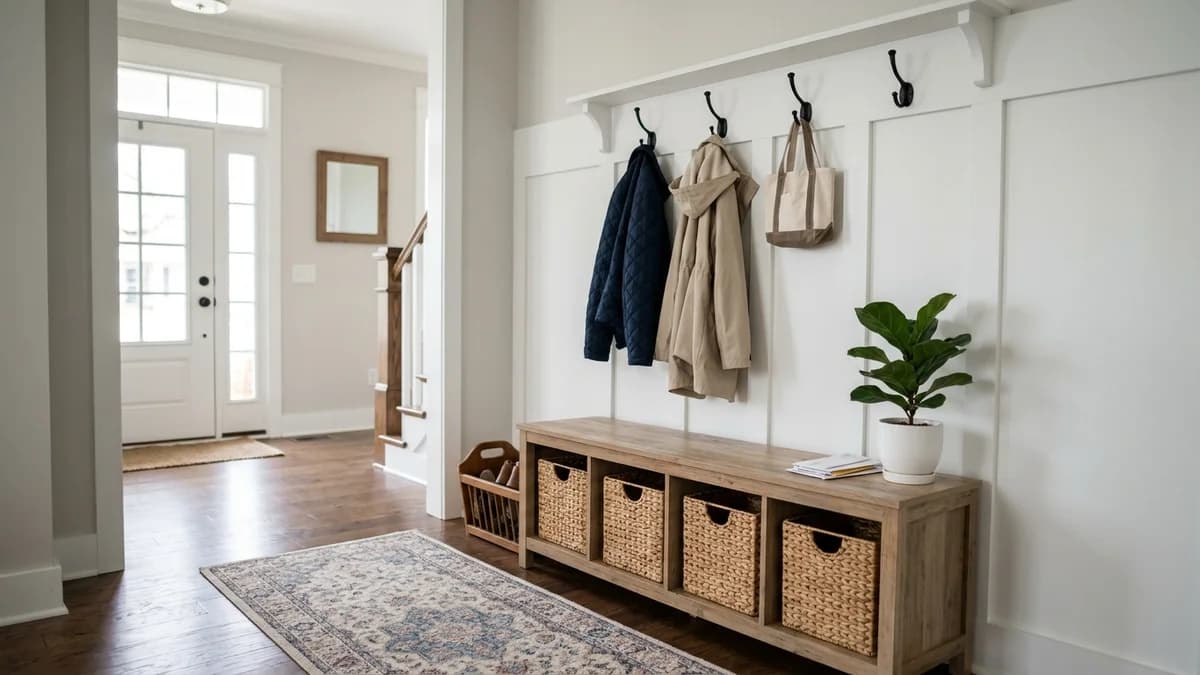
For a custom fit, a simple DIY board-and-batten wall with a high shelf and a row of hooks is incredibly effective. The goal is to stack functions: a top shelf for baskets holding seasonal gear, hooks for daily coats and bags, and space below for shoes or a small bench. For an extra touch of genius, choose a hall tree with an integrated mirror. It’s not just for a last-minute check before you leave; it bounces light around and creates an illusion of depth, making your tiny entryway feel twice its size.
2. Incorporate a Multi-Functional Storage Bench
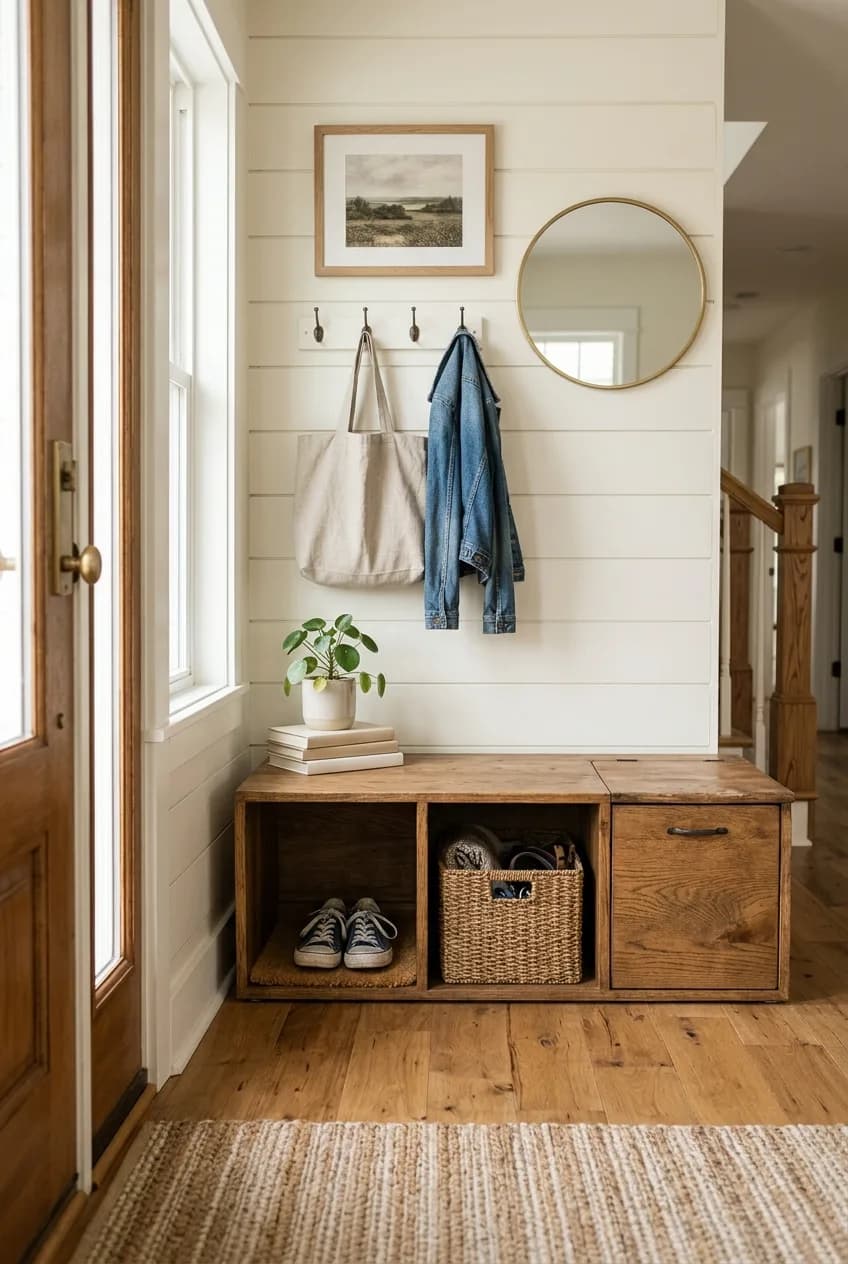
A bench is an entryway classic for a reason: it gives you a place to sit while you wrestle with your shoes and offers prime storage space below. The style you choose depends on your tolerance for visual clutter. A lift-top bench is fantastic for completely concealing items like sports equipment, extra shoes, or bulky winter accessories.
Benches with open cubbies, on the other hand, provide grab-and-go access, perfect for the shoes you wear every day. You can keep these looking neat by assigning a cubby to each family member and using uniform baskets or bins. The best of both worlds is a combination bench—look for one with a couple of open cubbies for daily-drivers and a hinged section for less-used, out-of-season items like hats and gloves.
3. Liberate Your Floor Space with Wall-Mounted Solutions
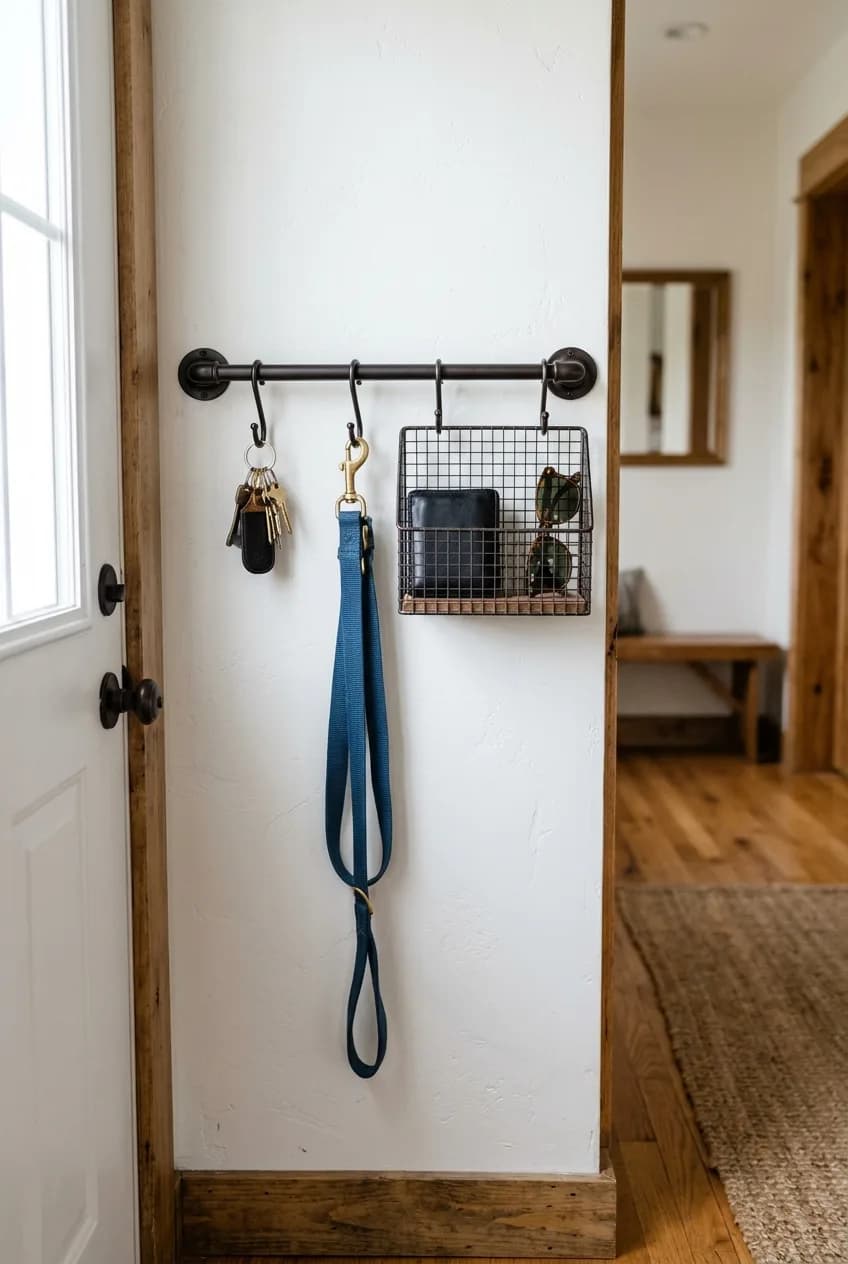
Nothing makes a small entryway feel more cramped than a cluttered floor. Getting everything up and onto the walls is the fastest way to create a sense of openness and make cleaning a breeze. Start with a simple, sturdy row of hooks for coats and backpacks. Above that, consider adding one or two floating shelves for keys, sunglasses, and a touch of decor.
Instead of just a basic hook rack, consider installing a wall-mounted rail system, like those often seen in kitchens. These systems offer incredible flexibility. You can slide on S-hooks for keys and dog leashes, add small cups for pens, and even attach shallow shelves or baskets for mail and wallets. This creates a completely customizable command center that takes up zero floor space.
4. Choose Slim-Profile Cabinetry for Concealed Storage
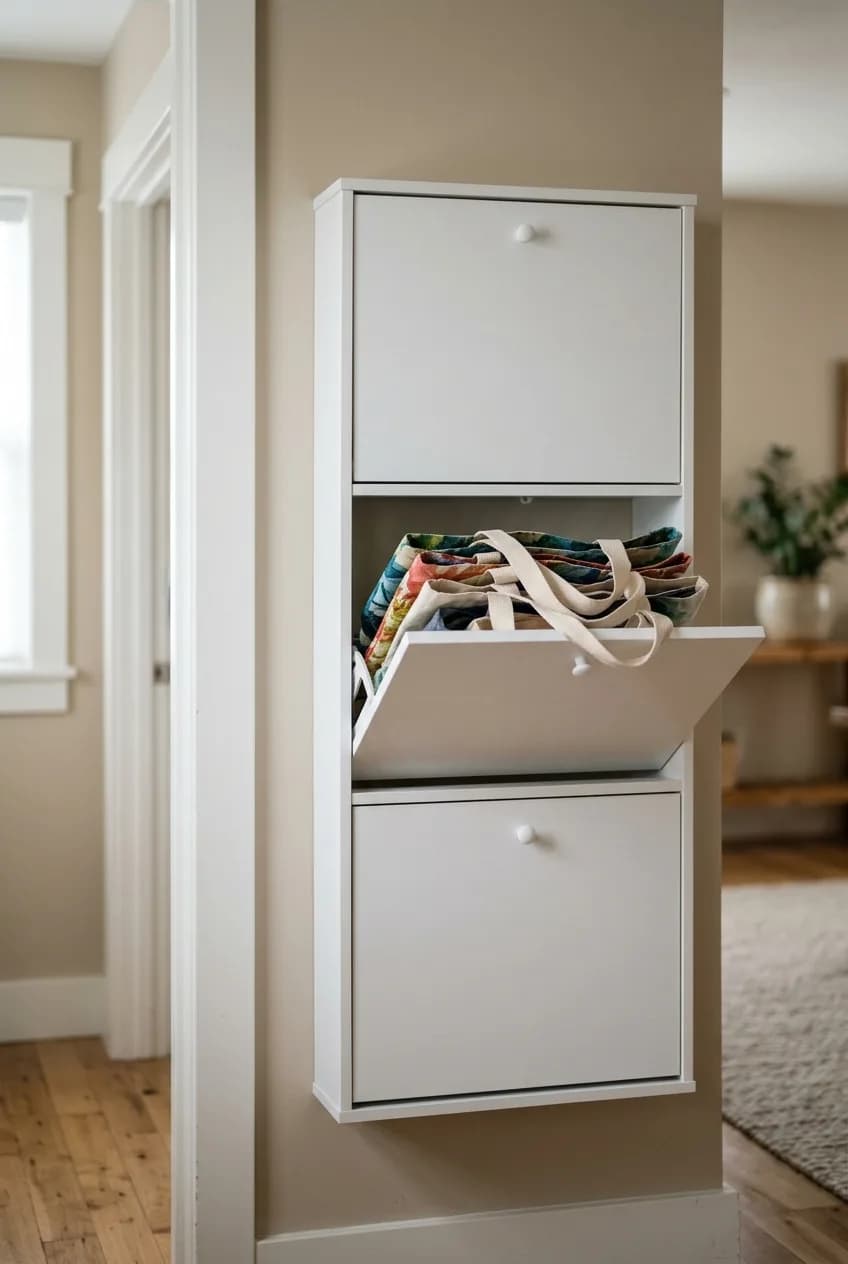
If you crave a completely clean, minimalist look, slim-profile cabinets are your best friend. Look for wall-mounted shoe organizers, like the popular TRONES cabinets from IKEA, which are often only 6-7 inches deep. This allows them to fit behind a door or in a narrow hallway without obstructing the path.
These tip-out cabinets are designed for shoes, but their real magic lies in their versatility. That shallow depth is perfect for corralling all sorts of awkward entryway items. Use one cabinet for umbrellas and reusable shopping bags, and another for small clutch purses or winter accessories. The flat top surface also creates a handy floating ledge for your keys or phone.
More in Room Ideas
Walk-In vs. Reach-In Closet: Which Is Truly Better for a Small Space?
5. Unlock Hidden Potential with Back-of-the-Door Storage
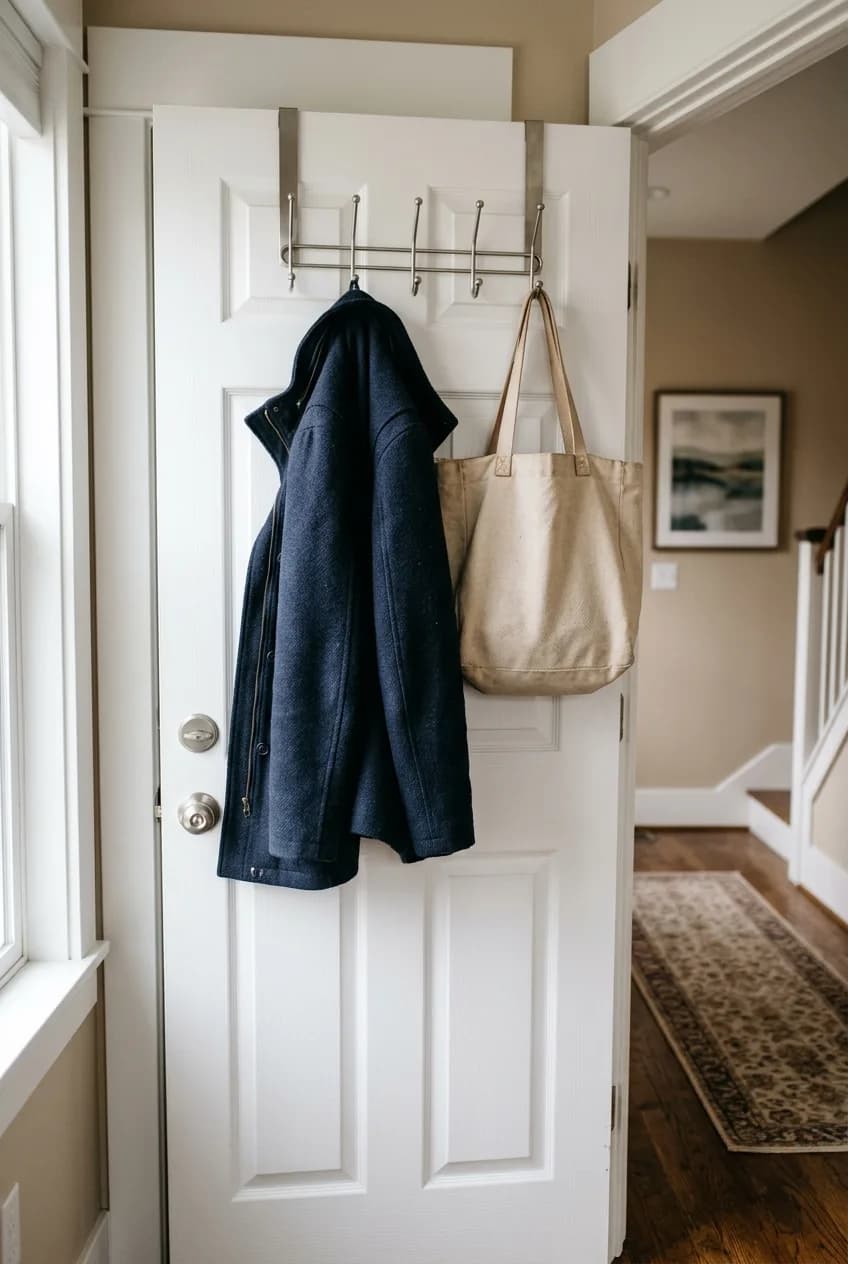
The back of your entryway closet door—or even the main entry door itself—is some of the most underutilized real estate in a small home. A simple over-the-door organizer can add a surprising amount of storage without any permanent installation. Clear pocket organizers are great for corralling small items like gloves, beanies, and sunscreen that tend to get lost.
For heavier items, skip the flimsy plastic organizers. Invest in a sturdy, heavy-duty metal rack with multiple robust hooks. This ensures it can handle the weight of winter coats, loaded-down backpacks, and tote bags without bending, breaking, or damaging your door frame. It's the perfect spot for guest coats or items you need to remember to grab on your way out.
6. Define a 'Drop Zone' with Paint and a Durable Rug
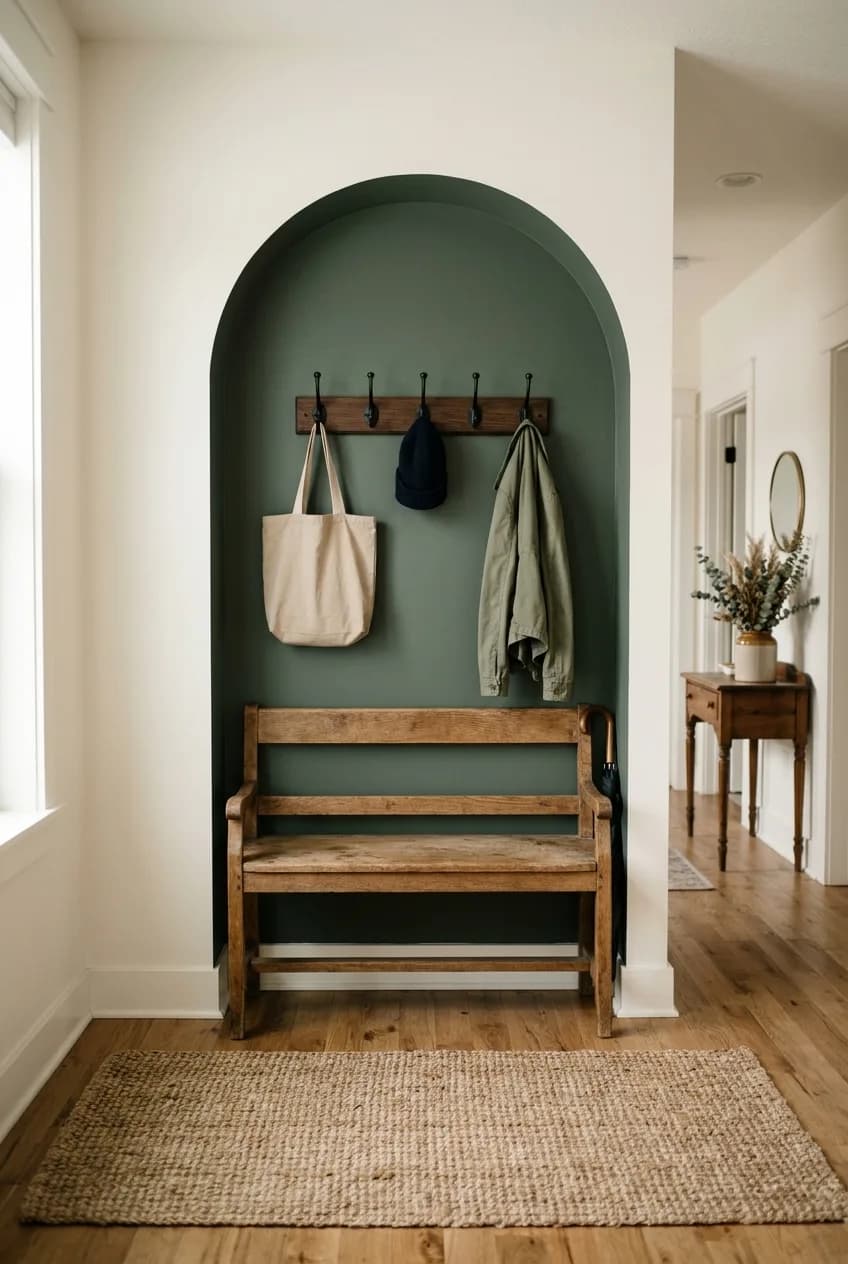
You can create the feeling of a mudroom without any walls at all. Use visual cues to define a dedicated 'drop zone.' A popular and stylish technique is to paint a bold shape, like a tall arch or a simple rectangle, on the wall where you'll place your bench and hooks. This creates a distinct visual anchor for the entire area.
Ground the space with a durable, low-pile runner or an indoor/outdoor mat. This not only protects your floors but also clearly marks the boundary of the 'mudroom.' This visual trick has a powerful psychological effect; it signals to everyone in the household that 'this is where shoes, bags, and coats belong,' which naturally helps contain the clutter and prevents it from spreading further into your home.
7. Add Character with a Repurposed Narrow Bookcase
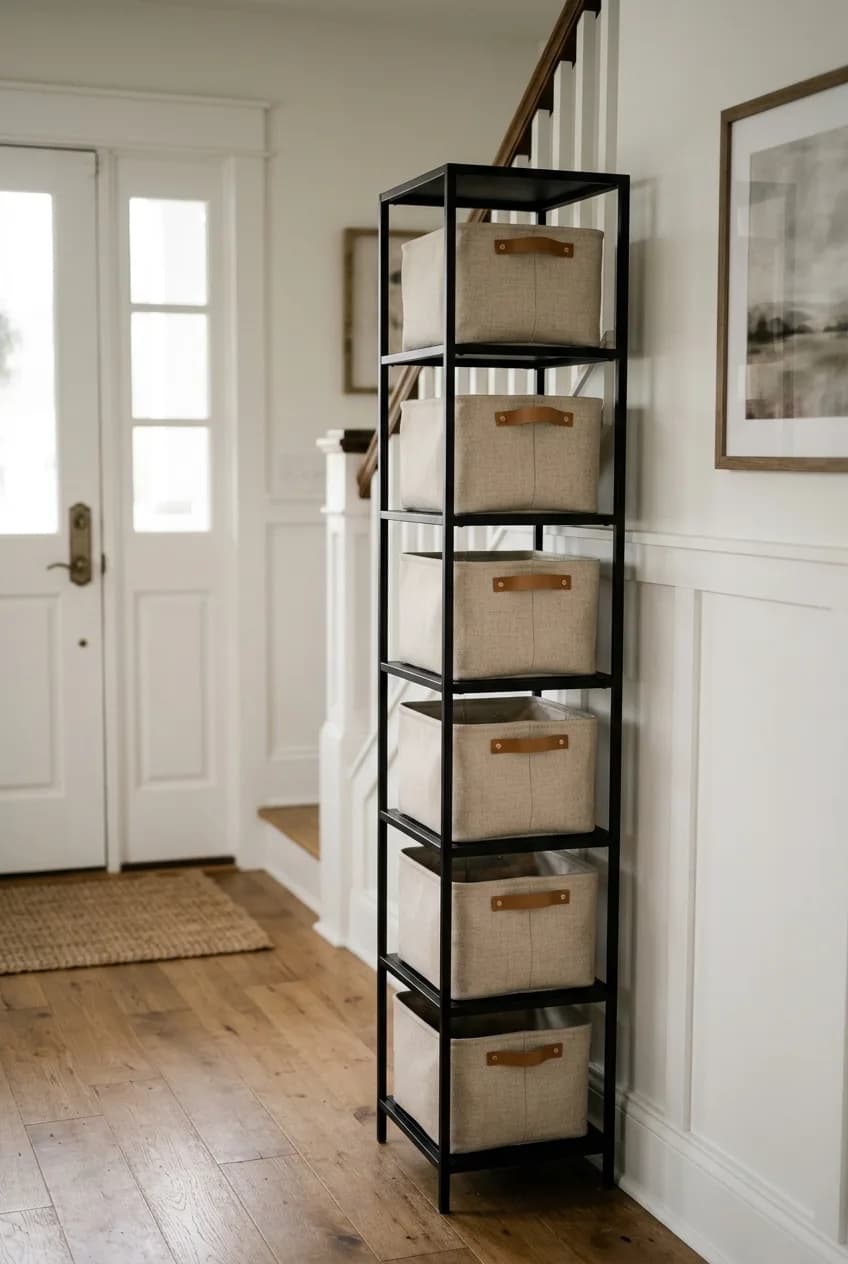
Think outside the 'entryway furniture' box. Sometimes the perfect solution is a piece designed for another room entirely. A narrow vertical bookcase, sometimes called a 'spine' or 'tower' bookcase, can fit perfectly into a tight spot where a traditional console table wouldn't work.
The open shelving provides an instant organizational system. You can assign a shelf to each family member for their shoes and bags, or dedicate shelves to specific categories. To elevate the look and hide the inevitable jumble of items, place attractive, sturdy baskets on each shelf. This simple addition transforms the bookcase into a set of 'drawers,' giving you the concealed storage of a cabinet with the slim footprint of simple shelving.