When every square inch counts, a traditional, bulky nightstand can feel like a luxury you can't afford. But where do you put your glass of water, your book, your phone? The answer? Look up. Floating nightstands are the ultimate small-space solution, freeing up valuable floor area while providing the essential bedside surface you need. They create an open, airy feel that can make a tiny room feel significantly larger. Here are 10 clever ideas to get you started.
1. Embrace Sleek Minimalism with a Single Floating Drawer
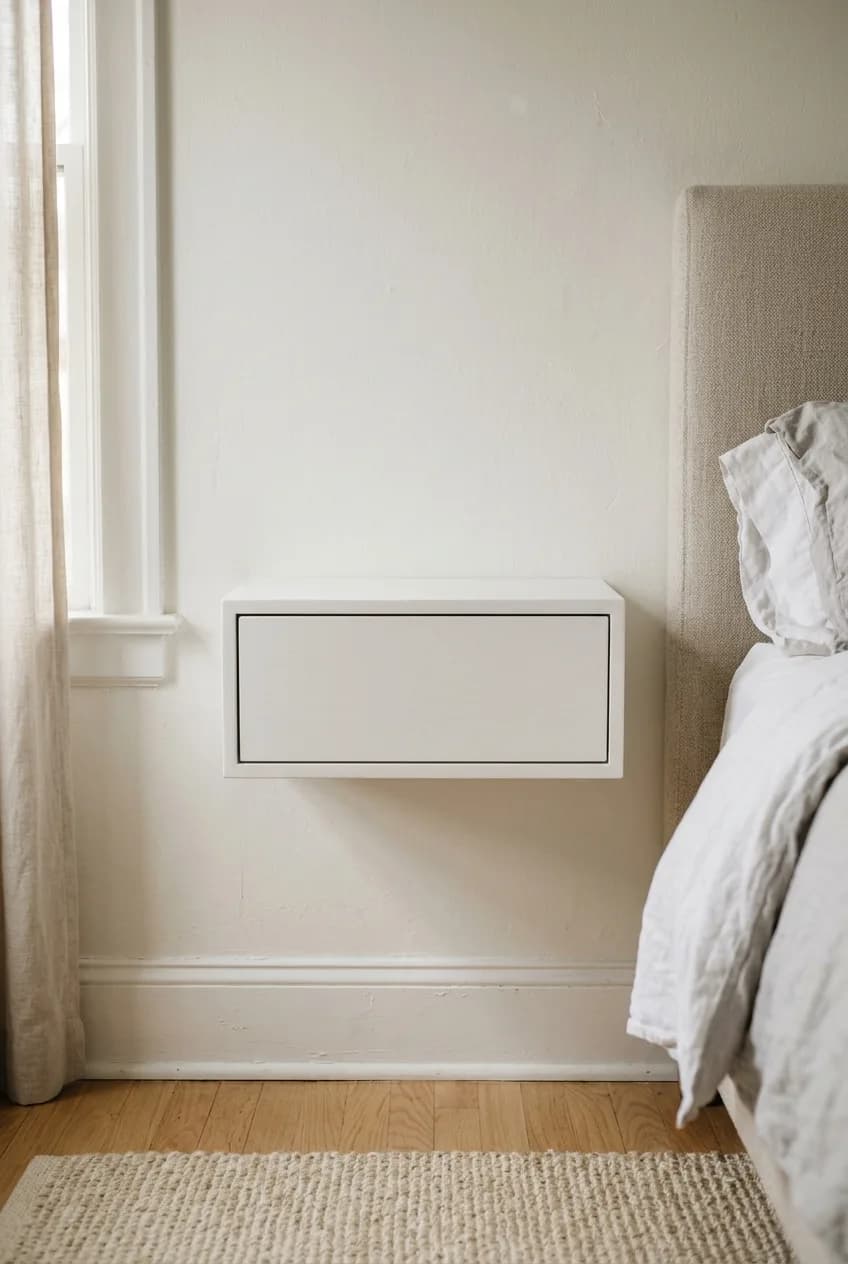
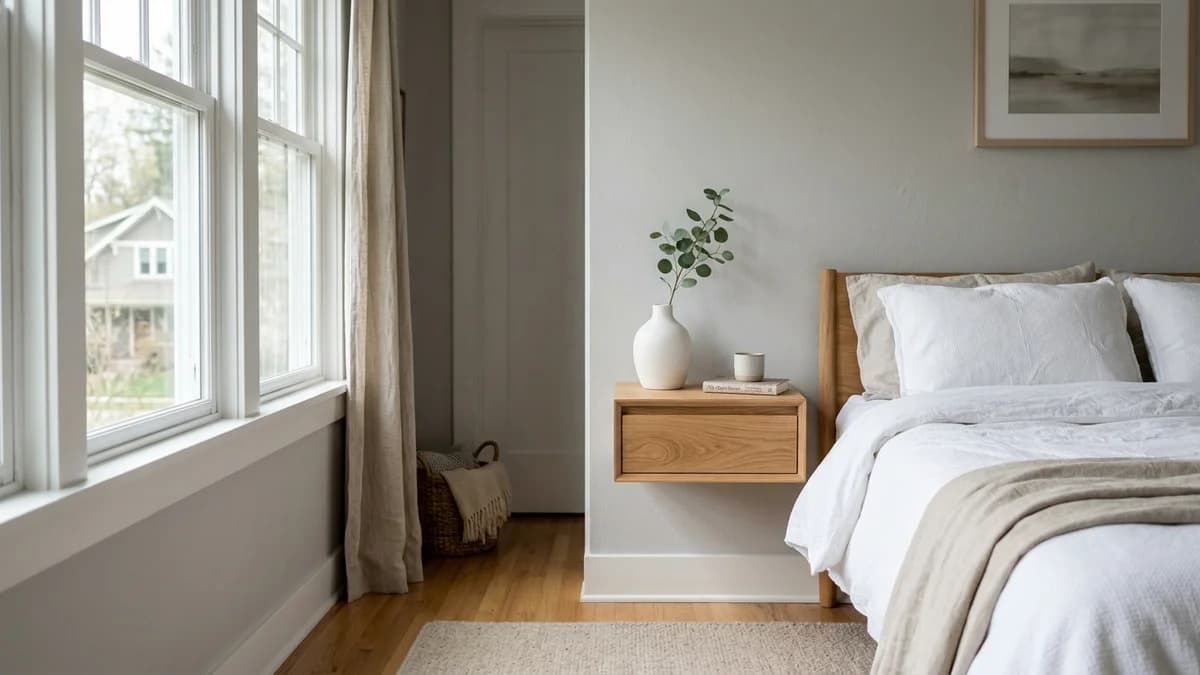
For a clean, hotel-inspired look, nothing beats a single floating drawer. This simple solution keeps all your bedside essentials—chargers, hand cream, sleep masks—tucked away and out of sight, which is crucial for reducing visual clutter in a small room. Opt for materials that feel light and airy, like pale birch, whitewashed oak, or a high-gloss white lacquer to enhance the feeling of spaciousness.
The real secret to making this work is to match the drawer color as closely as possible to your wall paint. When the nightstand visually recedes into the wall, it tricks the eye into seeing a larger, more cohesive space. Pair it with a slim, wall-mounted sconce to free up the entire top surface for your absolute essentials.
2. Go Vertical with Tiered Floating Shelves
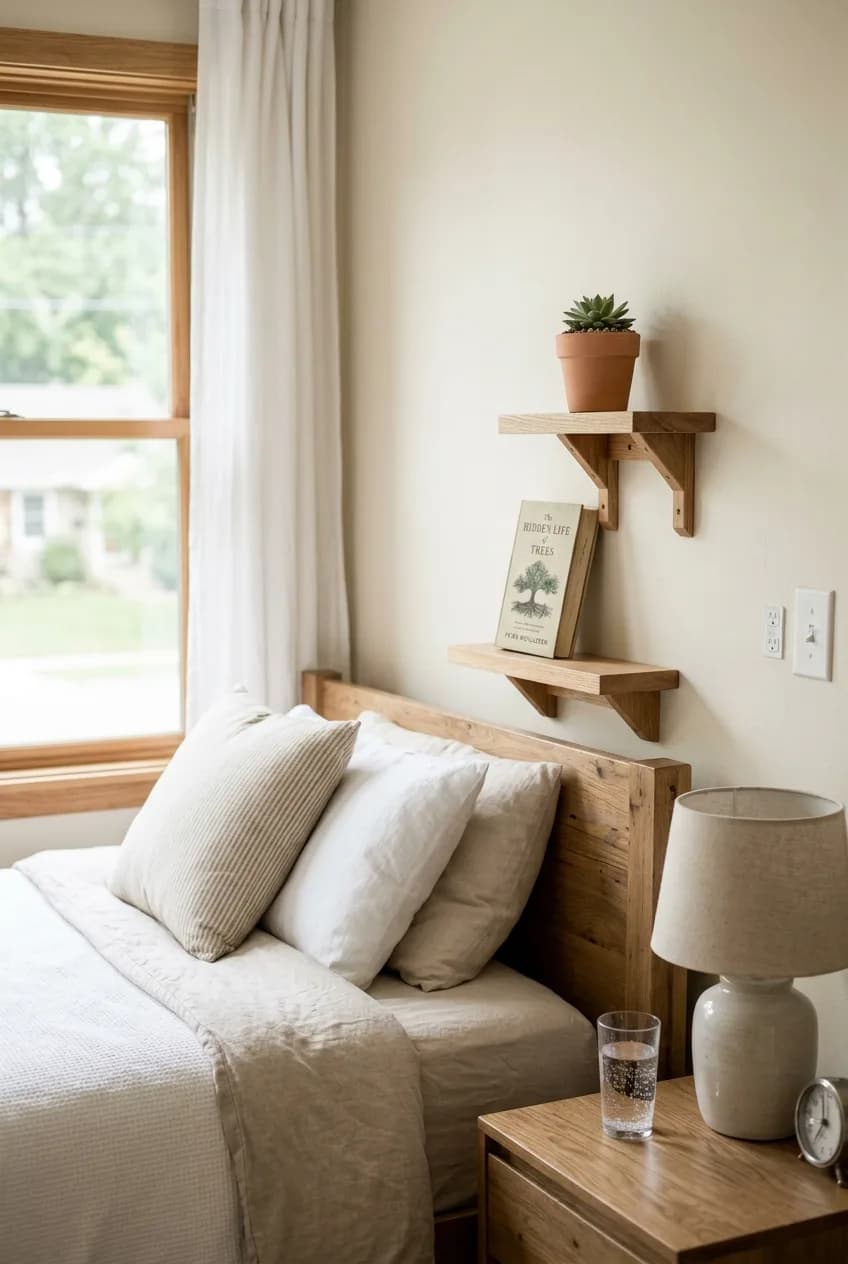
Why have one surface when you can have two or three? Stacking a couple of small floating shelves vertically creates a dynamic, ladder-like effect that provides designated spots for different items. This allows you to keep your practical items within reach while using the other shelf for a touch of personality.
Consider mounting the shelves slightly staggered for an asymmetrical, artistic look that turns simple storage into a piece of wall art. Use the top shelf for a small trailing plant or a framed photo, and reserve the lower, more accessible shelf for your phone and a cup of morning coffee. This design also has a clever side effect: it draws the eye upward, creating an illusion of height that can make a low ceiling feel less imposing.
3. Create a Seamless Look with an Integrated Headboard Niche
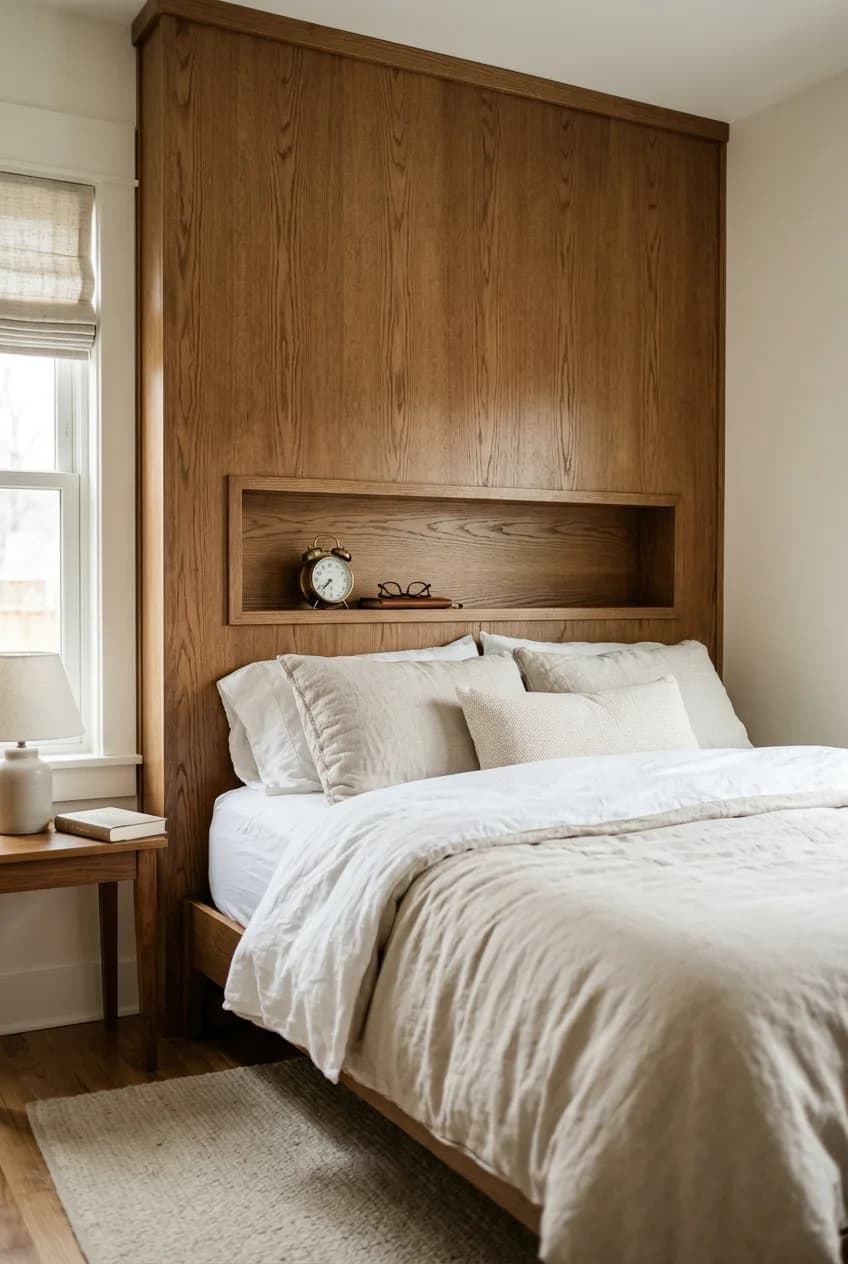
For the ultimate in space-saving design, consider making the nightstand part of the wall itself. By building a shallow recessed shelf, or niche, directly into a custom DIY headboard or a paneled feature wall behind the bed, you create an incredibly clean, built-in aesthetic with absolutely zero footprint. It’s the perfect spot for a book, glasses, and a phone.
To elevate this concept, integrate a strip of warm LED lighting into the top of the niche. This provides soft, ambient light that’s perfect for winding down in the evening and can easily double as a reading lamp, eliminating the need for any other fixtures. This approach completely erases the nightstand as a separate piece of furniture, making it the most streamlined solution for truly compact rooms.
4. Add Rustic Charm with a Wall-Mounted Wooden Crate
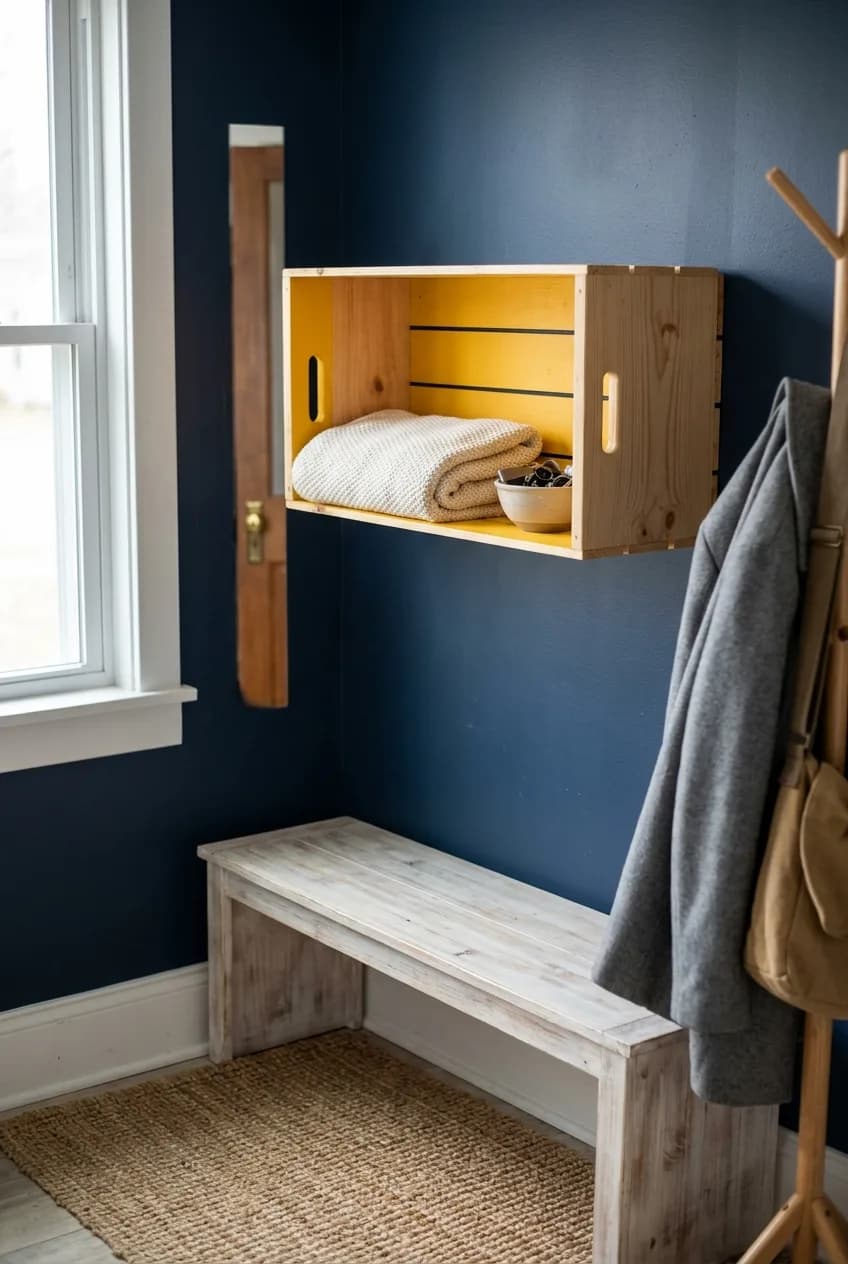
Looking for something with a bit more character? A simple wooden crate, turned on its side and mounted securely to the wall, can serve as a charming and functional floating nightstand. This is a fantastic way to introduce a touch of rustic, farmhouse, or shabby-chic style into your bedroom. It instantly provides two distinct storage surfaces: one inside the crate for stacking books, and one on top for a small alarm clock or your phone.
To make this simple DIY feel like a deliberate design choice, try painting the inside of the crate a bold accent color that coordinates with your bedding or a piece of art in the room. This unexpected pop of color against the neutral wood and wall turns a basic box into a thoughtful, eye-catching feature.
5. Maximize Awkward Corners with a Floating Corner Shelf
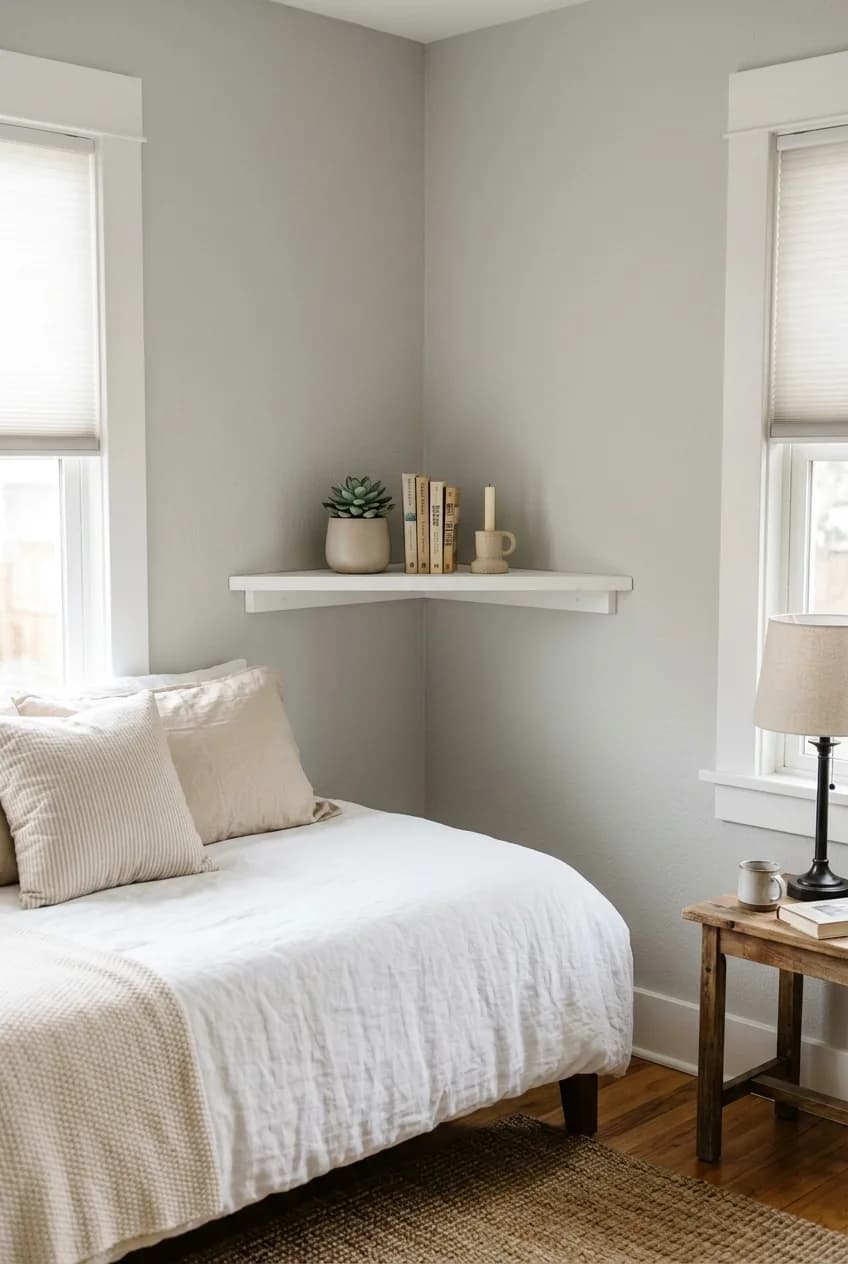
That little bit of dead space in the corner between the side of your bed and the wall is often overlooked, but it’s prime real estate for a nightstand. A triangular or quarter-round floating shelf is designed to fit perfectly into this unused 90-degree nook, giving you a handy surface without protruding into the room's main walkway.
These shelves are widely available in materials to suit any style, from sleek clear glass that feels almost invisible to solid wood for a more substantial look. By claiming that corner, you aren't just adding a shelf; you're visually 'squaring off' the room's layout, which can make the space feel more intentional, organized, and less cramped.
6. Achieve an 'Invisible' Look with a Clear Acrylic Shelf
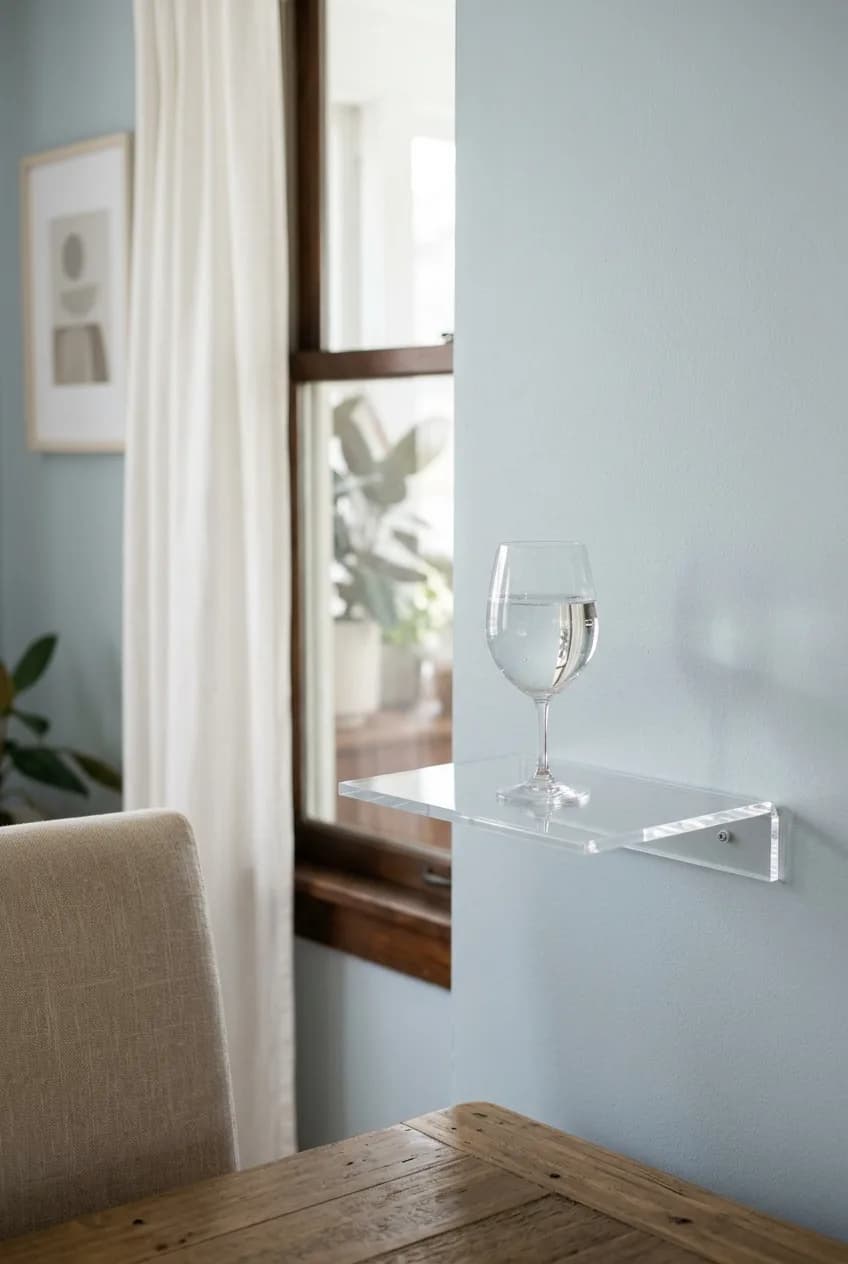
When you want the function of a nightstand without any of the visual bulk, transparent materials are your best friend. A simple floating shelf made of clear acrylic or lucite has virtually zero visual weight, which prevents it from crowding the space next to your bed. This creates a fascinating illusion where your lamp, book, and alarm clock appear to be floating in mid-air.
This option works best if you’re a minimalist at heart, as the total lack of hidden storage means you have to keep the surface tidy. The trick to styling an acrylic shelf is to focus on the objects you place on it. Since the shelf itself disappears, choose items with beautiful silhouettes—like a shapely lamp base or a small sculptural object—to create a curated display.
7. Combine Functions with a Shelf-and-Sconce Unit
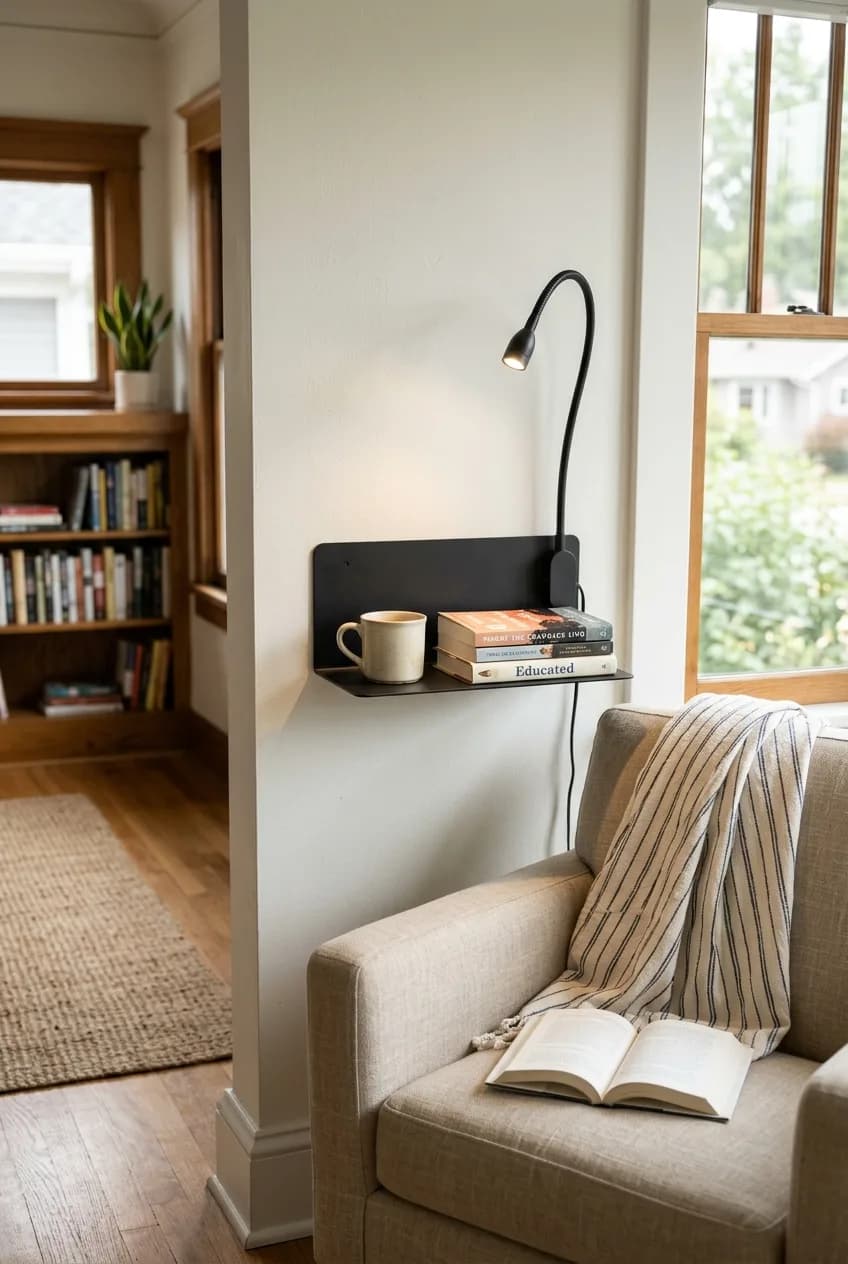
In small-space design, a key principle is that every item should work hard, and ideally, serve more than one purpose. That's what makes an integrated shelf-and-sconce unit so brilliant. These all-in-one fixtures combine your bedside light and your bedside surface into a single, streamlined piece, saving the maximum amount of space.
This approach, often called 'functional consolidation,' gives you a clean, custom look without the expense of a custom build. The wiring is typically designed to be completely hidden within the wall or the unit's mounting plate, resulting in a polished aesthetic with no messy cords dangling down. It’s an incredibly efficient way to streamline both the function and the visual harmony of your bedside area.
More in Room Ideas
How to Arrange a Long, Narrow Living Room Without It Feeling Like a Hallway
8. Get a Bohemian Vibe with a Sturdy Wall-Mounted Basket
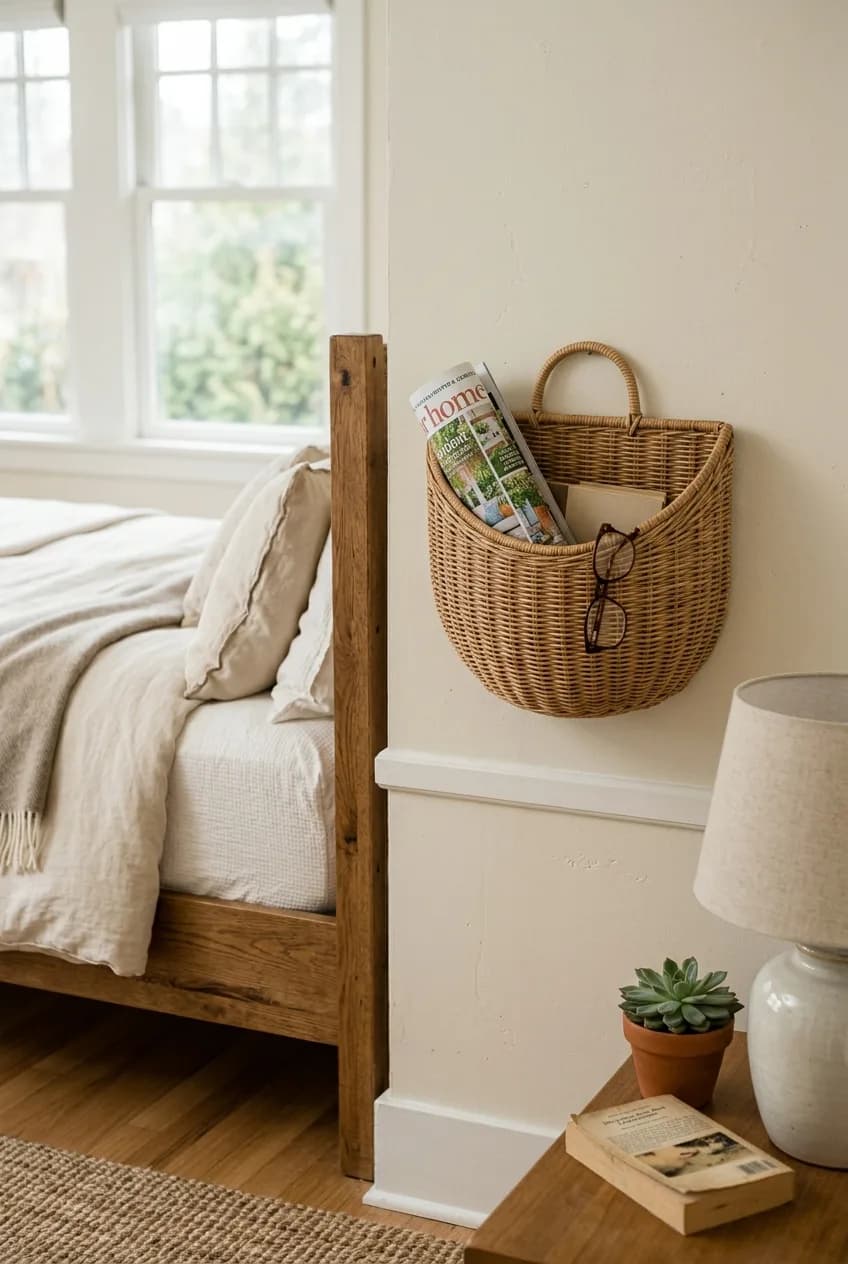
For a softer, more textural alternative to a hard shelf, consider mounting a sturdy, flat-backed woven basket on the wall. A piece designed as a wall-mounted mail holder made from natural materials like rattan, wicker, or seagrass works perfectly. It introduces a welcome layer of texture and a natural, bohemian element that can soften the hard edges of a small, boxy room.
The pocket-like design is ideal for securely holding a paperback, a tablet, and your phone without anything sliding off. Unlike a simple shelf, a woven basket brings a sense of craftsmanship and coziness to the wall, making your small space feel less generic and more like a carefully curated retreat.
9. Use Geometric Floating Cubes for a Modern, Modular Look
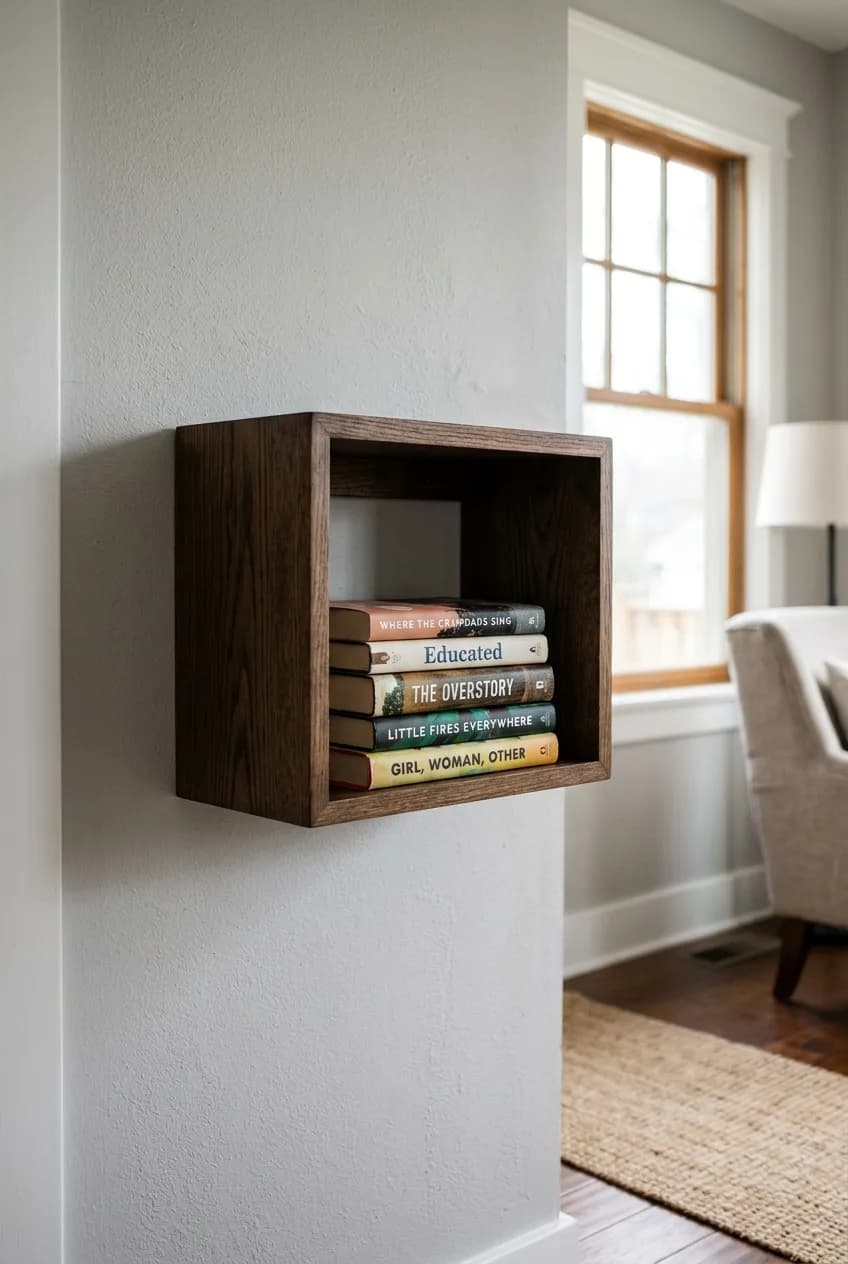
A floating cube shelf offers a clean, modern aesthetic with double the utility of a flat shelf. You get a top surface for a lamp or glass of water, plus a protected interior space perfect for stacking books or hiding less-attractive items. You can use a single cube for a simple, bold statement or arrange a small cluster of them for a more personalized, modular design.
The true power of the cube is its flexibility. You can start with just one and easily add another one later—perhaps stacked or offset—if your storage needs change over time. This makes it a fantastic solution that can adapt and grow with you, which isn't something you can say about most furniture.
10. Solve the Tightest Squeeze with an Ultra-Narrow Picture Ledge
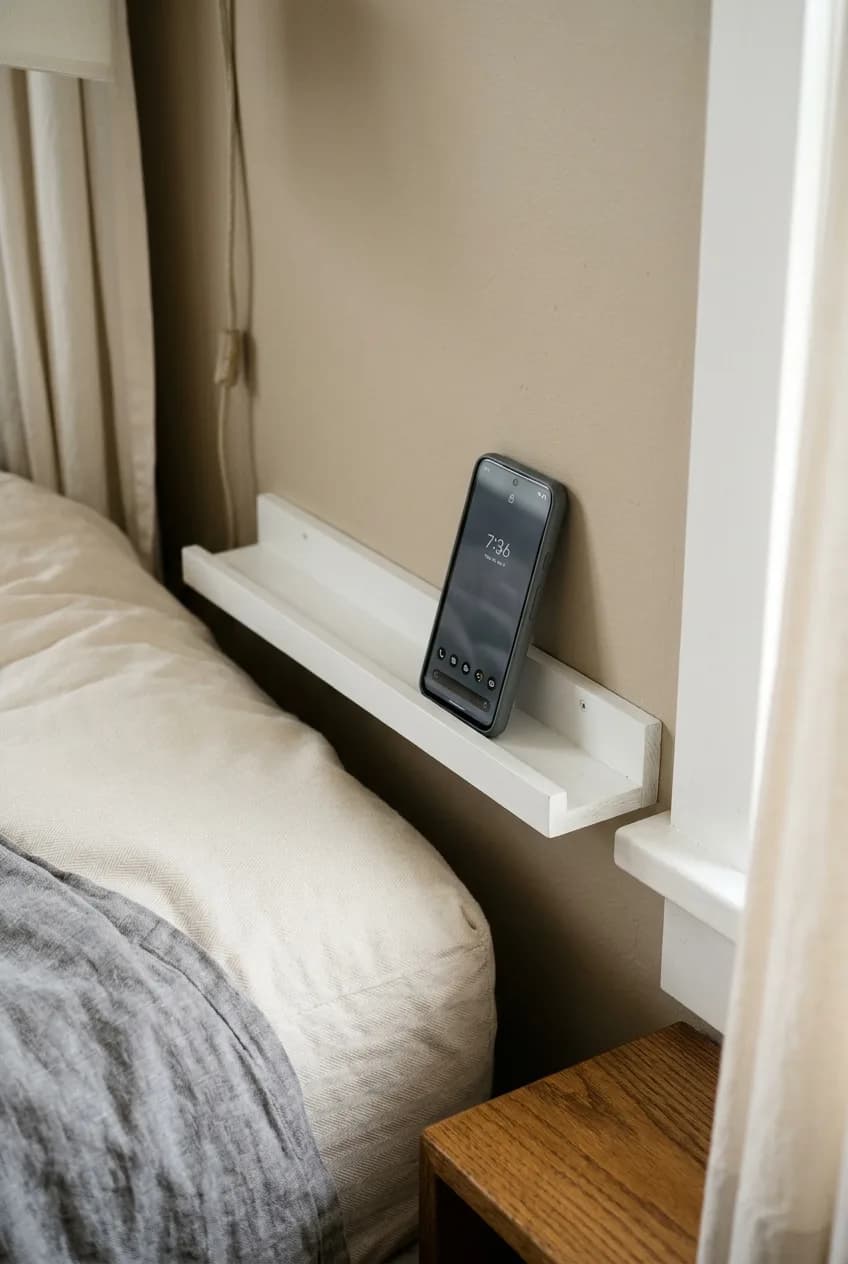
What do you do when you only have a few inches between your bed and the wall or a doorway? You use a picture ledge. These ultra-slim shelves are typically only 3 to 4 inches deep, making them the perfect problem-solver for the tightest of spaces. They offer just enough surface area for the absolute bare essentials: a smartphone, your glasses, and maybe a slim paperback.
The best part is the small lip along the front edge, which is designed to keep picture frames from sliding off but works just as well to keep your phone from taking a tumble in the middle of the night. This solution proves that you don't need a wide, deep surface for a nightstand to be perfectly functional; you just need an intelligently designed one.