Having a small bedroom doesn't mean you have to give up on the dream of a cozy reading nook. You know, that perfect little corner where you can curl up with a good book and shut out the world for a while. It's not about having more square footage; it's about being clever with the space you already have.
The key is to think differently about corners, furniture, and vertical space. With a few strategic choices, you can carve out a functional and inviting reading spot that feels like a deliberate escape, not a cluttered afterthought. Let’s walk through how to find the space, choose the right pieces, and add those finishing touches that make it feel special.
Find Your Nook Niche: Identifying Underutilized Space
Before you buy a single thing, take a good look around your bedroom. You likely have a pocket of usable space hiding in plain sight. The goal is to identify a spot that feels slightly separate from the main sleeping area, even if it’s just by a few feet.
Corners and Windows
An empty corner is the most classic location for a reading nook, and for good reason. It’s a natural anchor point that feels inherently cozy and enclosed. Look for any corner that isn't already burdened by a door swing or heavy foot traffic. A spot beside a window is even better, as you can take advantage of natural light during the day—a reader's best friend.
Beside or at the Foot of the Bed
Think about the areas immediately surrounding your larger furniture. Is there a 3-foot gap between the side of your dresser and the wall? That’s a potential nook. The area at the foot of the bed is also often overlooked. Placing a small bench or a low-profile chair there can create a great multi-purpose zone.
Rethink Your Nightstand
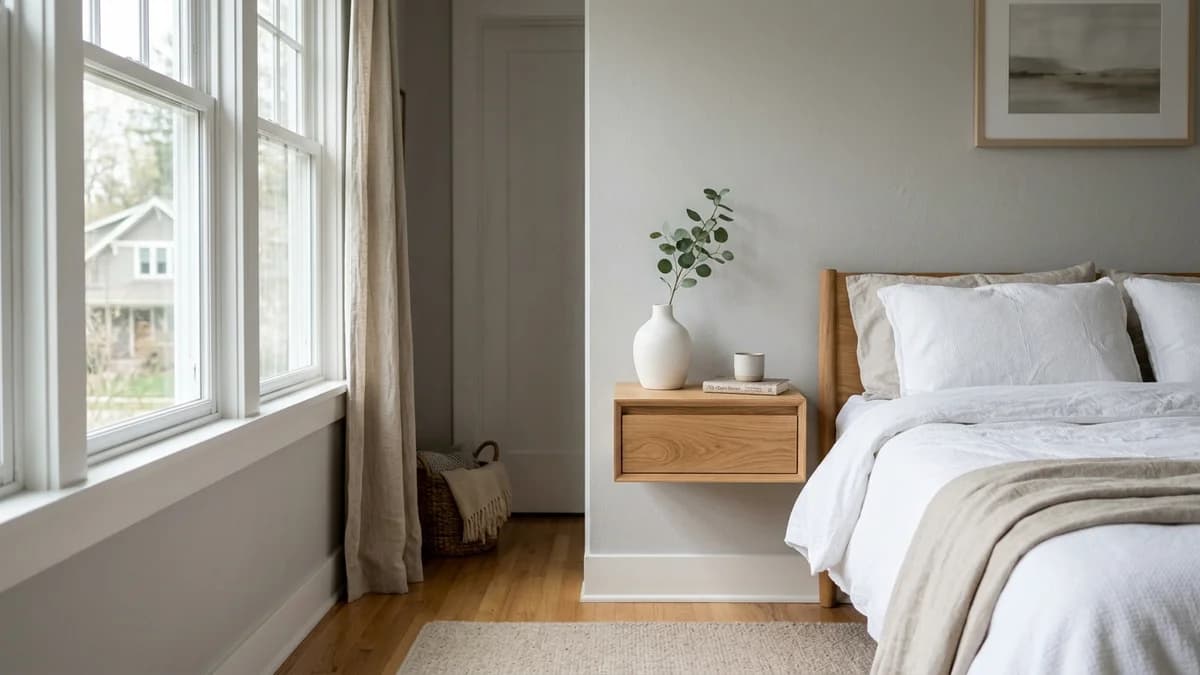
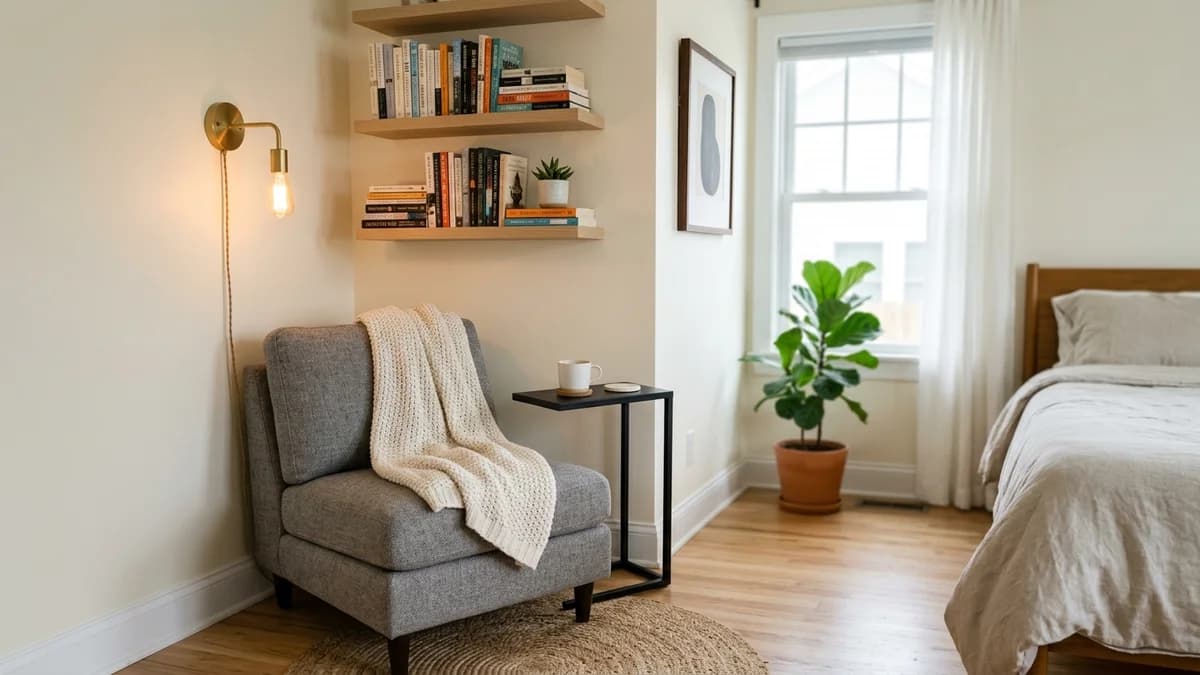
Here's an idea that many people miss: the best spot might not be empty at all. If your nightstand is bulky, consider swapping it out entirely. A slim, armless chair paired with a small floating shelf and a plug-in wall sconce can perform all the duties of a bedside table while also serving as your dedicated reading seat. This dual-purpose approach is one of the most effective space-saving tricks for a small bedroom. That same trick of making one piece of furniture pull double duty is exactly how our small home office nook ideas squeeze a workspace into an apartment with no room to spare.
Choose Your Throne: Compact and Comfy Seating Solutions
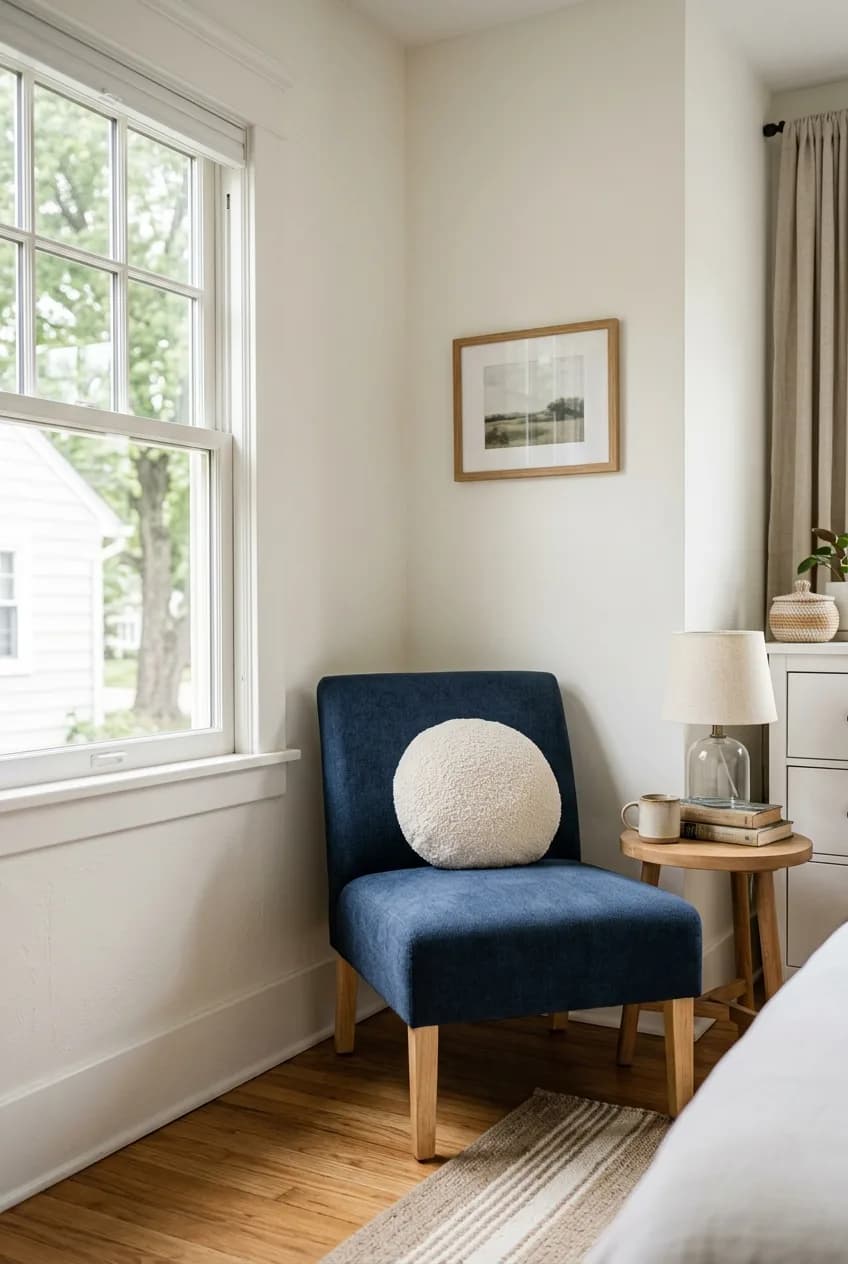
The chair is the heart of the reading nook, but in a small room, it can also be the biggest obstacle. Forget oversized, plush armchairs that eat up half the room. Your mission is to find something with a minimal footprint that still delivers on comfort.
Seating Type | Typical Footprint | Best For | Pro Tip |
|---|---|---|---|
Slipper Chair | Approx. 24" x 30" | Tight corners and a traditional look. | Look for one with a slightly higher back for better support during long reading sessions. |
Storage Ottoman/Pouf | Approx. 18" x 18" | Maximum function in minimum space. | Choose a firm, flat-topped model that can double as a side table with a tray on top. |
Hanging Chair | Zero floor space | Creating an airy, modern feel and preserving floor space. | Ensure it's properly anchored to a ceiling joist for safety. This is not a job for a simple drywall anchor. |
Oversized Floor Pillows | Varies, stackable | A casual, bohemian vibe that can be easily stored. | Layer two or three for comfortable height and back support against a wall. |
The Ultimate Small-Space Workhorse
If there's one piece that does it all, it's a small storage bench. Placed at the foot of the bed or against a wall, it provides seating, a place to set your book down, and, most importantly, a hidden spot to stash extra blankets, pillows, and your to-be-read pile. It’s the ultimate multi-tasker for a small bedroom nook.
Smart Shelving: Storing Books Without the Bulk
A tower of books is romantic, but a bulky bookshelf is a space-killer. In a small bedroom, your book storage needs to be clever, using vertical and overlooked spaces to keep your collection accessible but not overwhelming.
Vertical and Low-Profile Ideas
- Go Vertical: Narrow 'spine' bookshelves or a series of short, wall-mounted floating shelves use wall space instead of floor space. They draw the eye upward, making the room feel taller.
- Use Picture Ledges: These low-profile shelves are just a few inches deep. They're perfect for displaying a few favorite books with their covers facing out, turning your collection into a rotating art display.
- Grab a C-Table: It's worth the investment. A C-shaped table is designed to slide over the arm or seat of your chair, giving you a surface for your book, a cup of tea, or your glasses without taking up any extra floor space. When you're done, it tucks away neatly.
An Insider Tip: Over-the-Chair Shelving
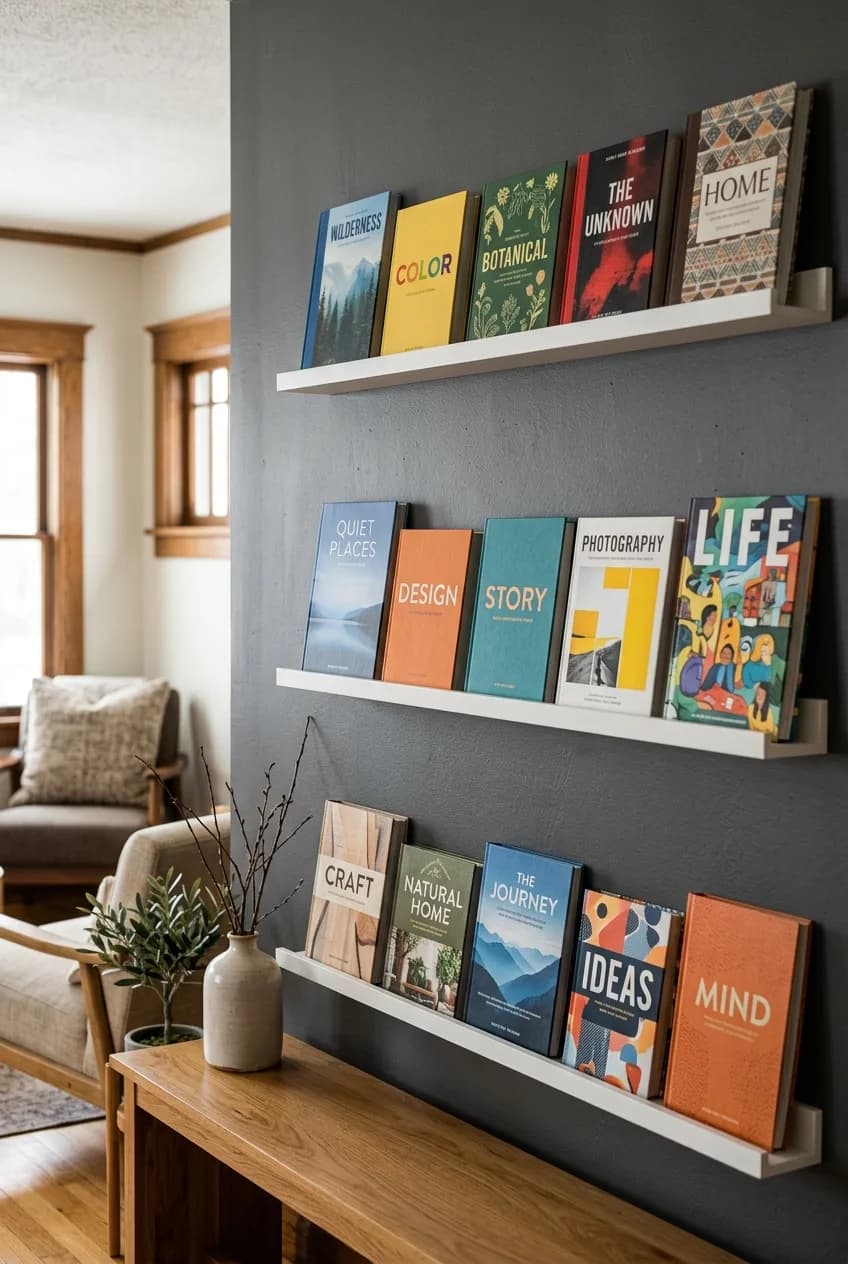
Don't forget the space directly above your reading chair. Instead of placing a bookshelf across the room, install two or three floating shelves starting about 4 feet off the ground, right above where your head will be. This keeps your books within arm's reach but clears them from your immediate living and traffic area, making the nook feel much more open. The same floating-shelf trick works well in small home office nooks, too.
Layered Lighting: Create Ambiance and Functionality
More in Room Ideas
7 Small Entryway Mudroom Ideas That Maximize Your Space
Good lighting is non-negotiable for a reading nook. You need focused light for reading (task lighting) and soft light to make the space feel cozy (ambient lighting). The trick in a small room is to achieve this without a single floor lamp.
Task Lighting: The Plug-In Sconce
A plug-in wall sconce is the undisputed champion here. Look for an articulated or swing-arm model that you can pull closer when you're reading and push back when you're not. Because it mounts on the wall, it frees up both floor and table space. The best part? Most plug-in models don't require an electrician, just a couple of screws in the wall.
Ambient Light: Set the Mood
For a more minimal approach, a small clip-on lamp attached to a nearby shelf provides excellent, adjustable task lighting for almost no cost and zero footprint. To complete the mood, add a layer of ambient light. A strand of warm, battery-powered fairy lights draped over your shelves or a tiny, low-wattage table lamp on a nearby dresser can cast a soft glow that makes the whole corner feel more inviting.
Define the Zone: Making a Corner Feel Like a Destination
The final step is to make your nook feel intentional. You want it to look like a curated feature of the room, not just a chair you crammed into a corner. A few simple visual tricks can create this sense of separation and purpose.
Anchor with a Rug
Use a small rug to create a visual boundary. A simple 3-foot round rug placed under the front legs of your chair is enough to anchor the setting and signal that this corner has a special purpose.
Create a Backdrop with Paint
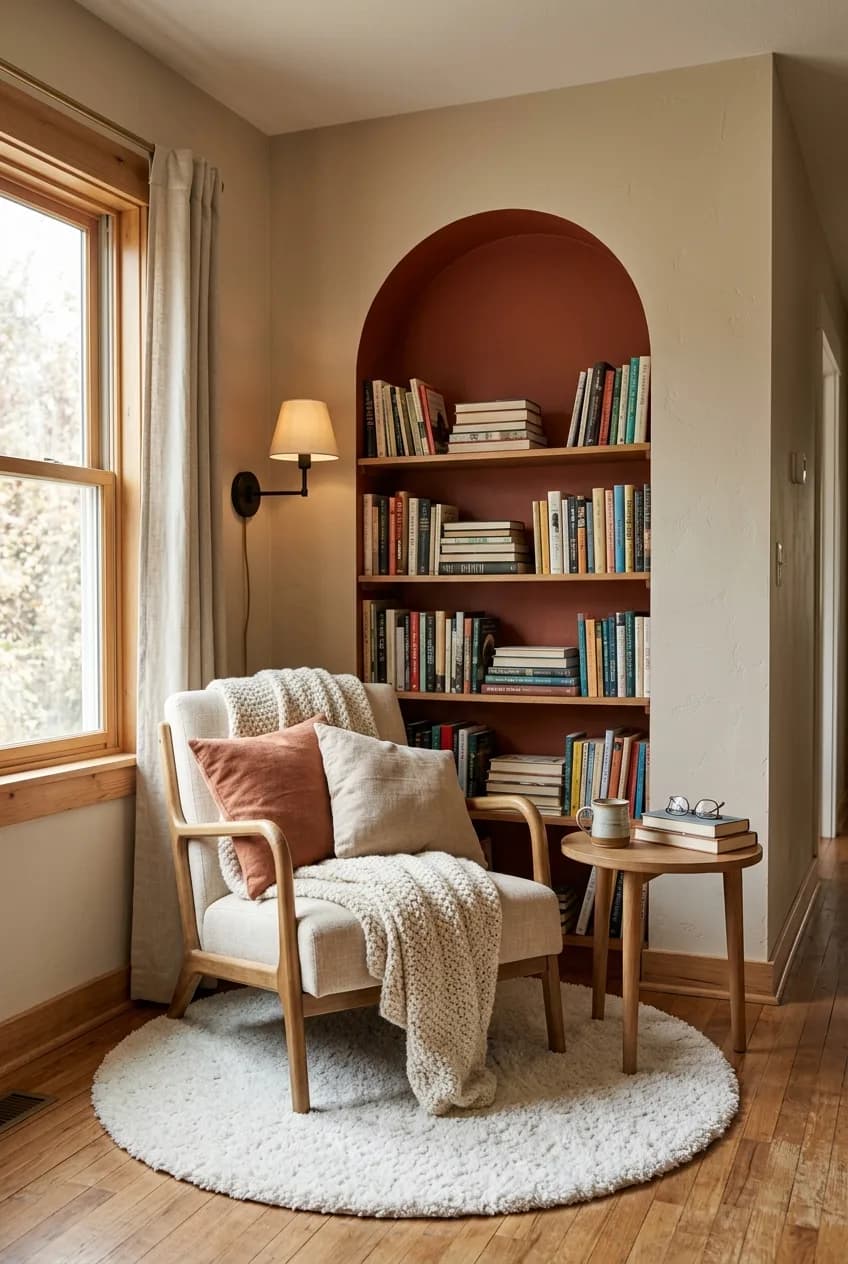
The real secret weapon, though, is paint. A painted color block or, even better, a painted arch on the wall behind your chair is a high-impact, zero-footprint design trick. It creates a backdrop that makes the nook feel like a custom built-in feature and adds a huge amount of personality.
Layer in Cozy Textures
Finally, bring it all together with texture. This is what transforms the space from functional to truly inviting. A soft sheepskin throw draped over the chair, a single velvet pillow, and a small plant on a shelf are the sensory details that will make you want to curl up and stay for a while.