The long, narrow living room. It’s a common feature in many homes, from historic townhouses to modern apartments, and it presents a unique decorating challenge. The natural impulse is to push everything against the walls, creating a straight path down the middle that feels more like a bowling alley than a cozy space to relax.
But what if that length wasn’t a weakness? With the right approach, you can transform that awkward, tunnel-like space into a multi-functional, beautifully balanced room. It’s not about fighting the shape, but learning to work with it. The key is to stop thinking of it as one long room and start seeing it as a series of connected, purposeful spaces.
Embrace the Zone: Your #1 Strategy to Beat the 'Bowling Alley' Effect
The single most effective strategy for any long room is to divide it into distinct functional zones. By breaking up the long, uninterrupted sightline, you give the room multiple purposes and make its length feel intentional rather than awkward. The goal isn't to trick the eye into thinking the room is short; it's to make the length a functional asset by giving every part of it a clear purpose. Suddenly, the length is a feature, not a bug.
How to Visualize Your Zones
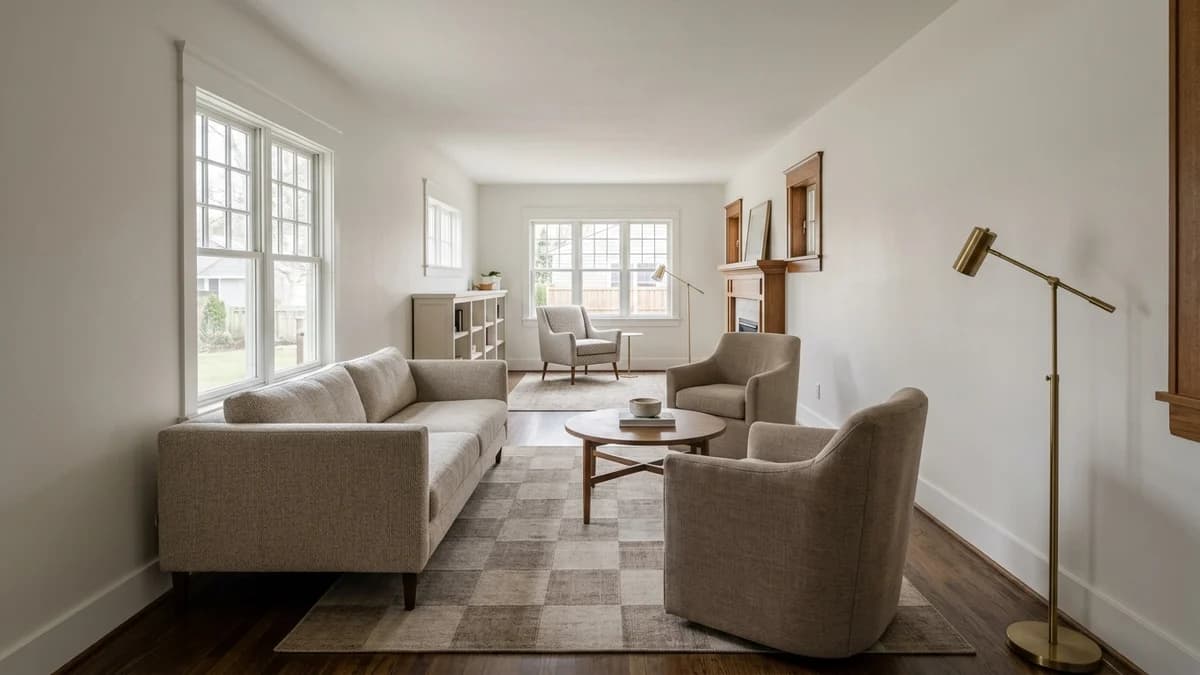
Imagine your room as a short story with a beginning, a middle, and an end. Near the entrance, you might have your main seating area with the sofa and TV. In the middle, you could place two armchairs facing each other to create a small conversation spot. At the far end, a slim console table with a lamp or a comfortable chair by the window can form a perfect reading nook. Each zone has its own identity, but they flow together.
First, Establish a Clear Traffic Path
Before you move a single sofa or armchair, you have to decide how people will walk through the room. A clear, uninterrupted traffic path is the non-negotiable foundation of a layout that works. Whatever you do, avoid creating a zig-zag path that forces people to weave around furniture—that’s a sure sign the layout isn’t working. Deciding on your path *before* placing any large furniture is the key to avoiding a layout that feels like a frustrating obstacle course.
The 36-Inch Rule
Aim for a walkway that is at least 30-36 inches wide. This gives enough space to walk comfortably without turning sideways or bumping into furniture. Look at where your doors and entryways are. Most often, the most logical path will run along one of the long walls, leaving the rest of the room’s width for furniture.
Anchor Layouts: Where to Place Your Sofa and TV
With your traffic path established, it's time to place your anchor pieces—the sofa and, if you have one, the television. These are the largest items and will dictate the rest of your arrangement. There are two primary approaches that work wonders in a narrow space.
Layout 1: Sofa on the Long Wall
This is the classic, most intuitive layout. Placing your sofa against one of the long walls maximizes the open floor space and keeps your traffic path clear on the opposite side. The TV and console can go on the wall directly across from it. This creates a simple, effective media zone. You can then build a conversation area by adding one or two armchairs angled toward the sofa.
Layout 2: The 'Floating' Sofa
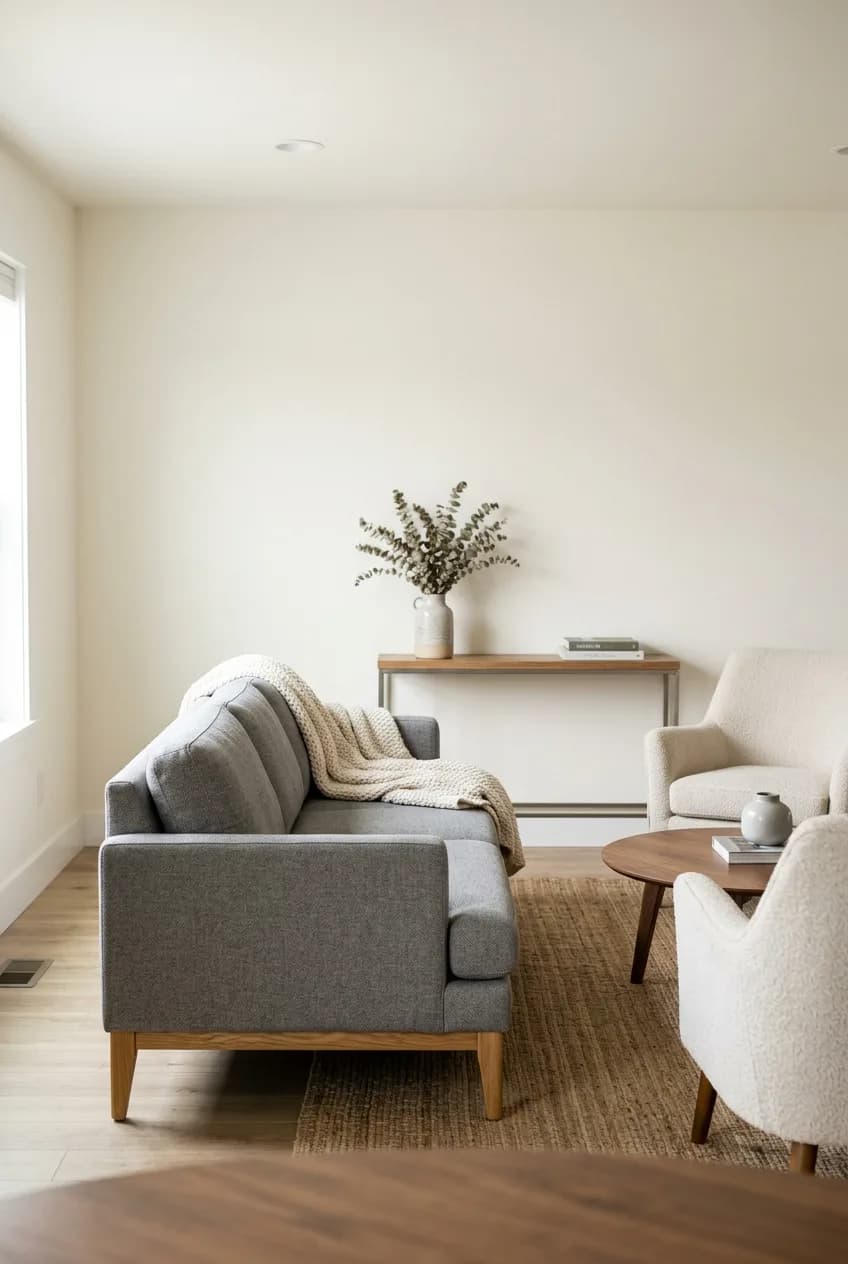
This one feels counterintuitive, but it's often the most powerful solution. By pulling the sofa away from the wall and turning it perpendicular to the length of the room, you create a very strong room divider. The back of the sofa acts as a 'wall,' effectively stopping the eye and carving out a cozy, self-contained zone. This is brilliant for creating a conversation area that feels distinct from, say, a dining area or office nook at the other end of the room.
Floating the sofa is often the most effective way to stop that 'bowling alley' feeling in its tracks and create the illusion of a wider, more proportioned space. Place a slim console table behind it to create a graceful transition.
A Note on Sofa Styles and TV Placement
In a narrow room, the right sofa style makes all the difference. Look for 'apartment sofas' which have a smaller footprint, or choose designs that are low-profile and raised on legs. 'Leggy' furniture allows you to see the floor underneath, which creates a wonderful sense of airiness and space. When placing your TV, always be mindful of glare from windows. If possible, avoid placing it directly opposite a bright window.
Choose Supporting Furniture That Creates Width
Once your sofa is in place, the next step is choosing supporting pieces that soften the room's hard lines and enhance the feeling of width. This is where you can get creative and solve problems with smart choices. A common mistake is to push every single piece of furniture flat against the walls, which actually emphasizes the narrowness. Pulling pieces even a few inches away from the wall creates 'breathing room' and makes the space feel larger and more thoughtfully arranged.
More in Room Ideas
Open Shelving vs. Upper Cabinets: The Best Choice for Your Small Kitchen
Smart Picks to Create Visual Width
Furniture Type | Why It Works in a Narrow Room | Pro Tip |
|---|---|---|
Round Coffee Table or Pouf | Breaks up all the straight lines and right angles. The curves encourage movement and flow around them. | Choose a table that's about two-thirds the length of your sofa and keep 14-18 inches of space between it and the sofa. |
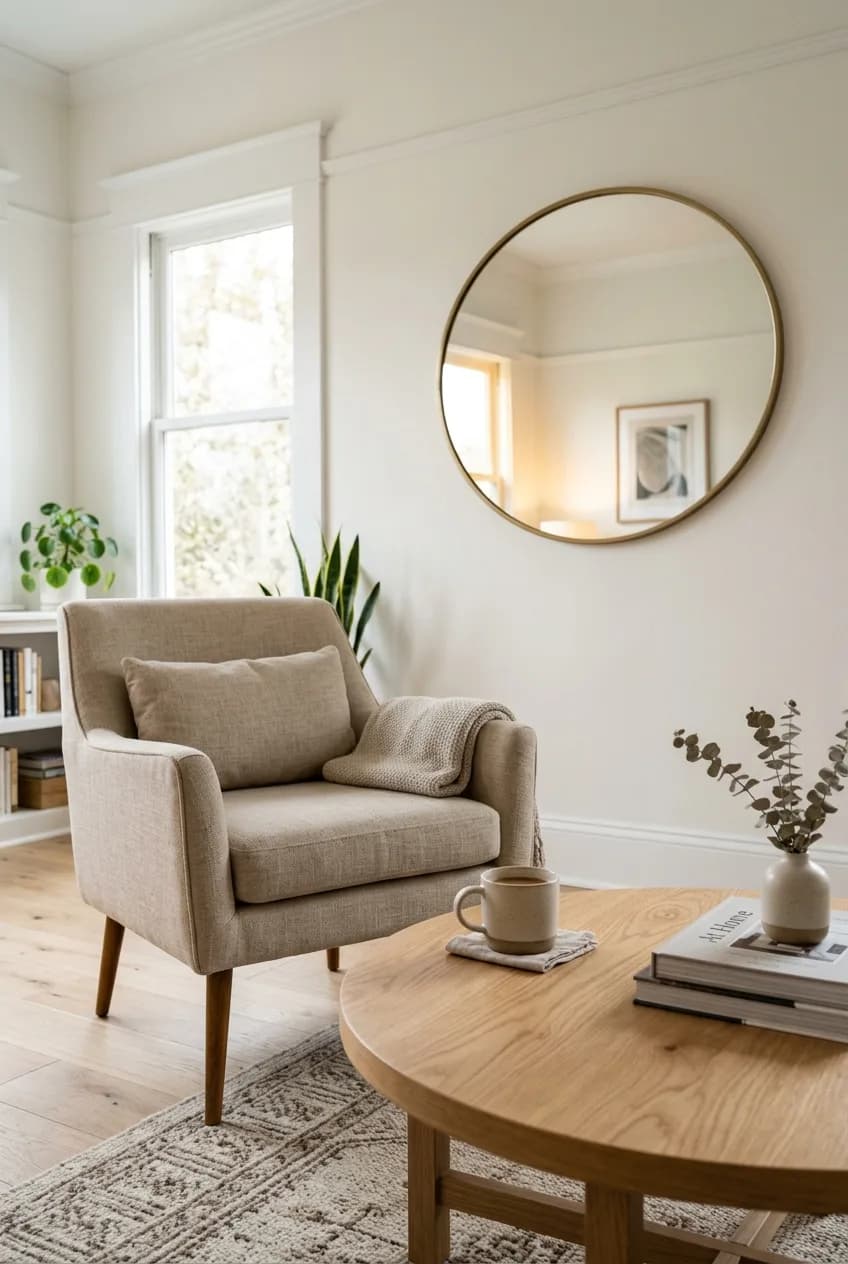
'Leggy' Furniture | Chairs, side tables, and consoles on visible legs create an illusion of more floor space because your eye can travel underneath them. | Look for mid-century modern or Scandinavian designs, which often feature tapered, elevated legs. |
Large Wall Mirror | This is the oldest trick in the book for a reason. Placed on one of the long walls, a large mirror dramatically increases perceived width by bouncing light. | Hang it opposite a window to maximize light, or across from an attractive piece of art to reflect something beautiful. |
Nesting or C-Tables | These provide flexible surface area without the visual bulk of a large end table or a wide coffee table. A C-table can tuck right over the sofa arm when needed. | Use them to replace a traditional coffee table entirely if the space is extremely tight. |
Use Rugs and Lighting to Solidify Your Zones
The final layers of your design—rugs and lighting—are what make your carefully planned zones feel truly distinct and intentional. They are the visual cues that tell you, 'this is the conversation area' or 'this is the reading nook.'
Defining Zones with Rugs
Area rugs are your best friend for defining zones. Think of them as visual 'islands' that anchor each furniture grouping. For your main seating area, a rug should be large enough that at least the front legs of your sofa and any chairs are sitting on it. This ties the whole grouping together.
Here’s a crucial tip: avoid using one single, long runner down the center of the room. A runner acts like a giant arrow, highlighting the room's length and exaggerating the very problem you're trying to solve. Instead, using two or even three smaller, more squarish rugs is a professional trick to break up that sightline. Use one for the seating area and a separate, smaller one for the reading nook at the other end.
Layering Light for Mood
Good lighting can completely change the feel of a room, and in a zoned space, it’s essential for creating different moods. Use a layered lighting approach in each zone:
- Ambient Light: This is the overall illumination, usually from a ceiling fixture. Consider two matching flush-mount fixtures instead of one to distribute light more evenly down the room's length.
- Task Light: This is focused light for specific activities. A floor lamp next to an armchair creates a perfect reading nook. A stylish table lamp on a console provides a warm welcome.
- Accent Light: This is used to highlight features, like a picture light over a piece of art or an uplight behind a large plant. It adds depth and a professional, finished feel to the room.
By giving each zone its own dedicated lighting, you empower it to function independently, making your long room feel less like one single space and more like a collection of thoughtfully designed moments.