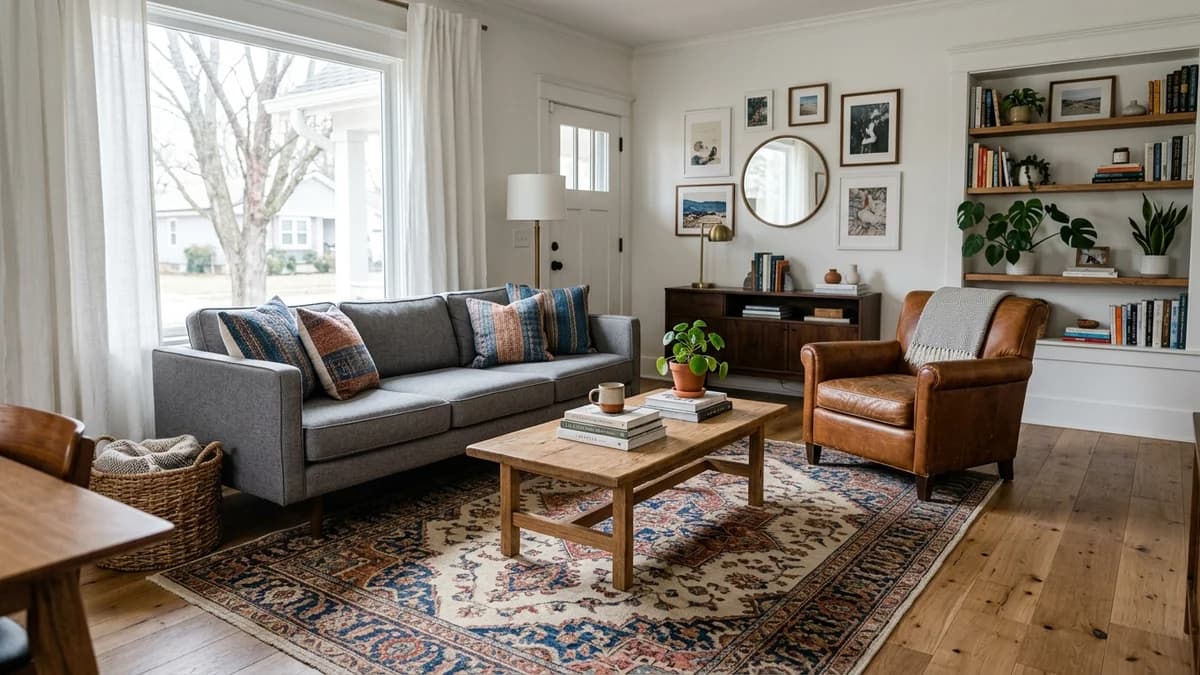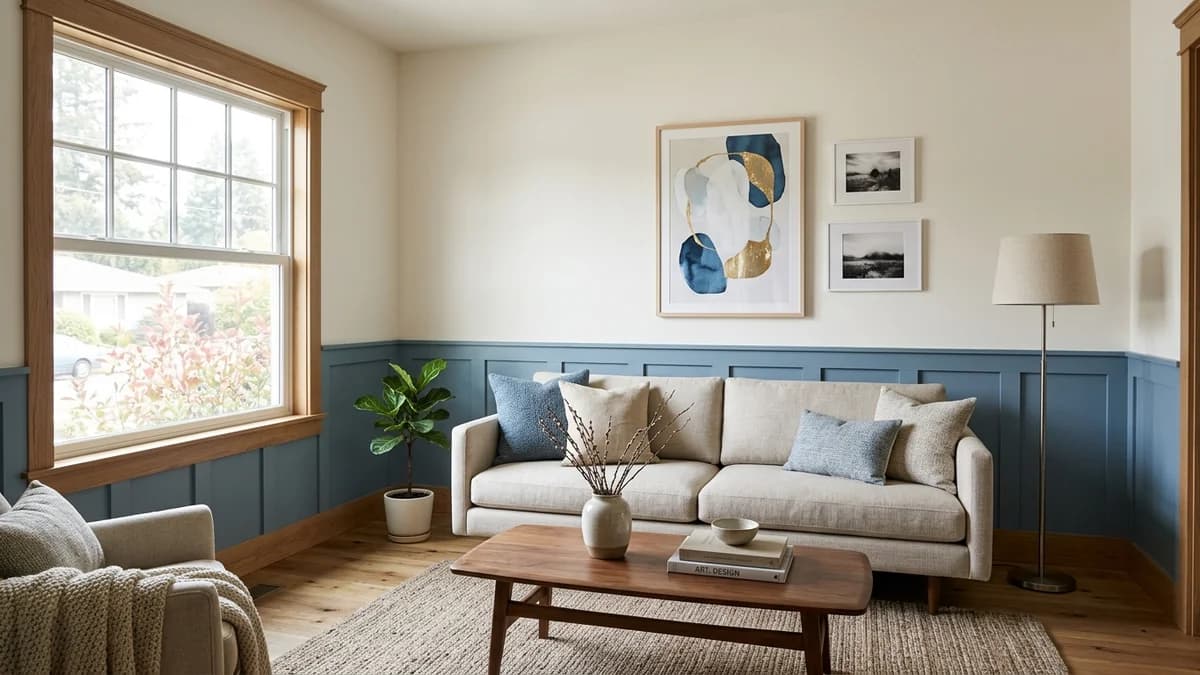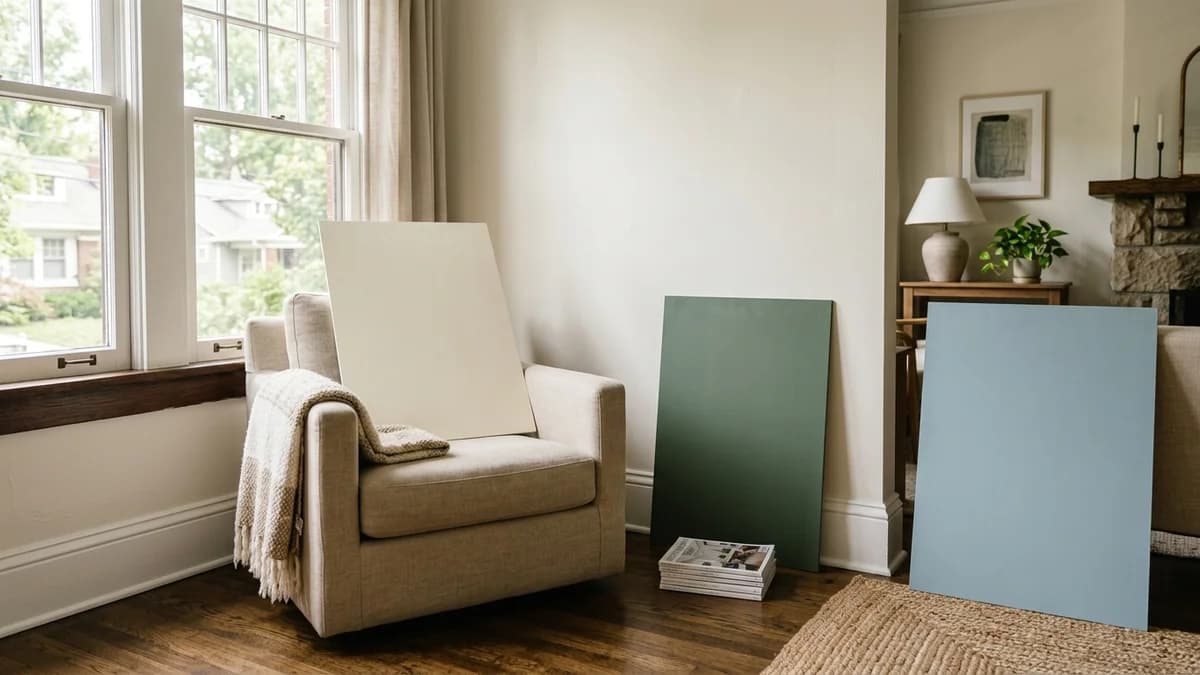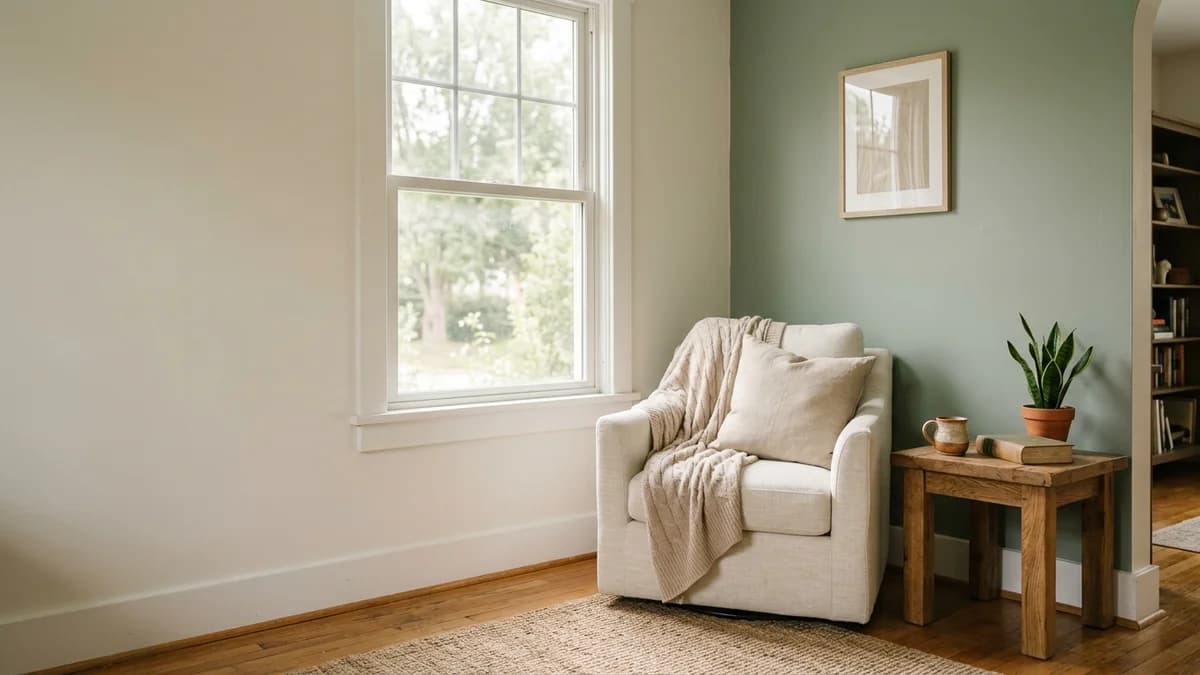
Picking a paint color can feel like a high-stakes decision. You stand in front of a wall of a thousand subtly different swatches, trying to guess how a tiny two-inch square will look on four hundred square feet of wall. But what if there was a number, a secret code right on the back of the paint chip, that could tell you exactly how that color will behave in your room? There is, and it’s called Light Reflectance Value, or LRV.
Think of LRV as the secret language of paint. It’s a simple, powerful tool that helps you predict and control the light in your home. Once you understand it, you can strategically make a small room feel bigger, a vast room feel cozier, or a dark hallway feel brighter—all by choosing the right paint. It’s the closest thing to a designer’s secret weapon you can find at the hardware store.
What is Light Reflectance Value (LRV)? Your Secret Design Tool
So, what is this magic number? In simple terms, Light Reflectance Value is a measurement on a scale from 0 to 100 that tells you how much light a color reflects. That's it. It’s a purely scientific measurement of light, not a subjective judgment of color.
A color with an LRV of 0 would be absolute black, absorbing all light that hits it. A color with an LRV of 100 would be pure, brilliant white, reflecting all light back into the room. Every paint color falls somewhere in between. This number isn't just a technical spec for paint nerds; it’s your key to managing the way both natural and artificial light works (or doesn't work) in your space.
Here’s the non-obvious insight: LRV isn’t about how 'light' or 'dark' a color appears to your eye at first glance, but how much physical light it will bounce back. This is why two colors that look equally 'light'—say, a pale yellow and a light gray—can make a room feel dramatically different. The one with the higher LRV will physically return more light into the room, making the entire space feel brighter.
LRV Range | Category | Effect on a Room |
|---|---|---|
0-30 | Light-Absorbing | Creates a dramatic, cozy, or intimate feel. Best for accent walls, media rooms, or spaces where you want to reduce glare. |
31-59 | Mid-Range | Offers a balance of color and light reflection. Great for taming overly bright rooms or when you want noticeable color without darkening the space. |
60-100 | Light-Reflecting | Maximizes light to make spaces feel larger, brighter, and more airy. Ideal for small rooms, dark hallways, and ceilings. |
How to Find and Interpret LRV on Any Paint Chip
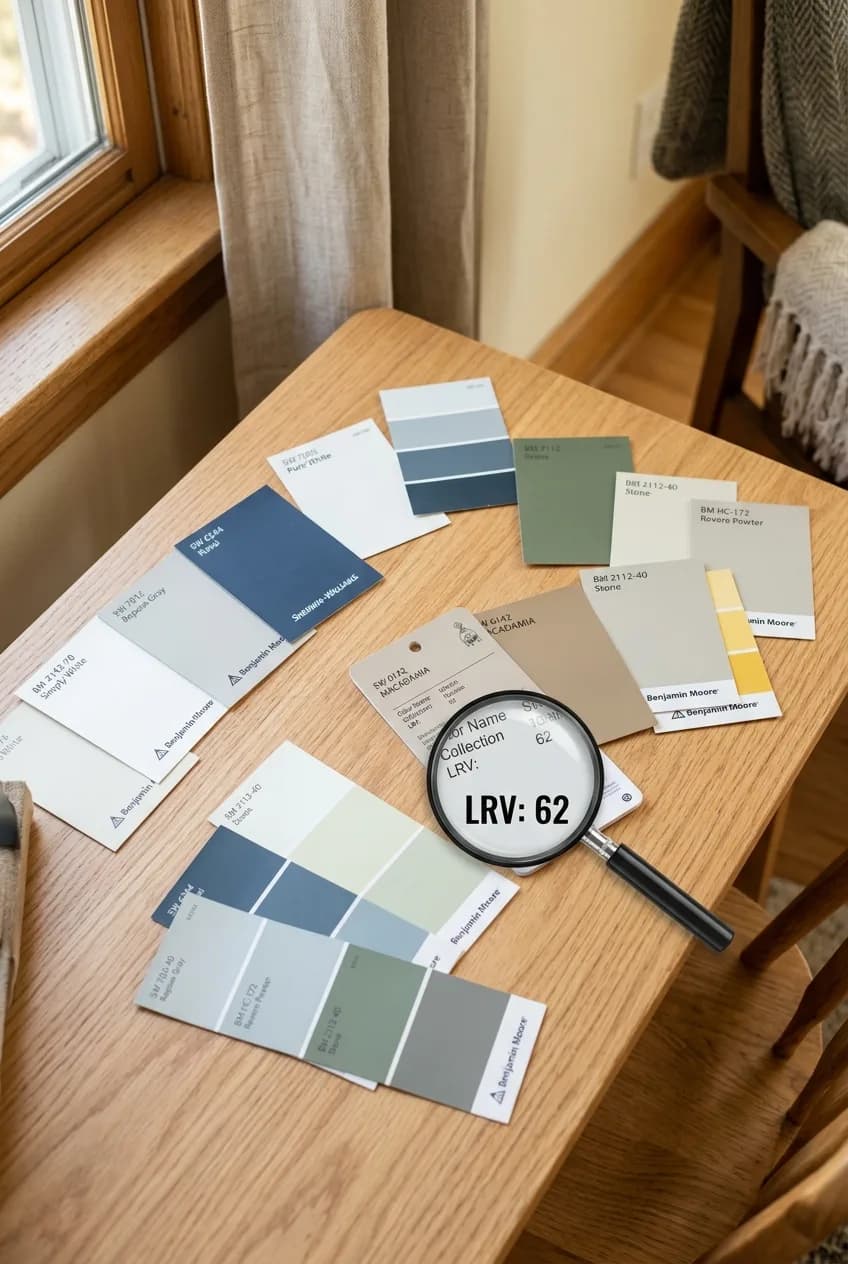
Finding a color's LRV is refreshingly simple once you know where to look. Most major paint brands print this number directly on their materials. You can typically find it on the back of an individual paint swatch or in the index of a fan deck, often listed alongside the color name and number.
If you can’t find it there, the manufacturer's website is your next best bet. A quick search for the paint color name will almost always lead you to a detailed page that includes the LRV. Don't underestimate how important even a small difference can be. On a large surface like a wall, a 5-10 point difference in LRV is absolutely noticeable, changing the entire ambient light level of the room.
One of the most practical uses for LRV is comparing colors across different brands. A Benjamin Moore color with an LRV of 55 will behave almost identically in terms of light reflection to a Sherwin-Williams color with the same LRV. This lets you focus on finding the perfect undertone you love, knowing you can find a color with the right light-reflecting properties from any brand.
LRV Range | General Guideline |
|---|---|
75+ | Whites & Off-Whites: Maximum light reflection. |
60-74 | Light Colors: Will actively brighten a room and make it feel more spacious. |
30-59 | Mid-Tones: Provide noticeable color while maintaining a good amount of light. |
Below 30 | Dark & Saturated Colors: Will absorb light and create a cozy, enclosing feel. |
Using LRV to Solve Common Room Problems
LRV is more than just a number—it’s a problem-solver. By choosing a paint with the right LRV, you can fundamentally change the feel and function of a room.
Making Small or Dark Rooms Feel Larger and Brighter
This is the classic use for LRV. To make a space feel bigger and more open, you need to maximize the light you have. Choose colors with a high LRV, generally 60 or above. These colors will grab the available natural or artificial light and bounce it around the room, creating an airy, expansive feeling. This is why ceilings are almost always painted a bright white (often with an LRV of 85+).
But here's a critical tip: the knee-jerk reaction for a dark room is to use the highest LRV possible, but a stark, pure white can look gray and dingy in a space with poor lighting. Often, a color with a mid-to-high range LRV (think 50-65) that has more pigment and warmth will look richer and more inviting than a sterile white that has no light to reflect.
Creating Cozy, Intimate, or Dramatic Spaces
Want to create a cozy reading nook, a dramatic dining room, or a media room perfect for movie nights? This is where low LRV colors shine. Colors with an LRV below 30 absorb more light than they reflect. This effect makes the walls feel like they are closing in slightly, creating a sense of intimacy and comfort. Deep navies, charcoal grays, and rich forest greens are perfect for this, turning a simple room into a sophisticated retreat.
Taming the Glare in an Intensely Sunny Room
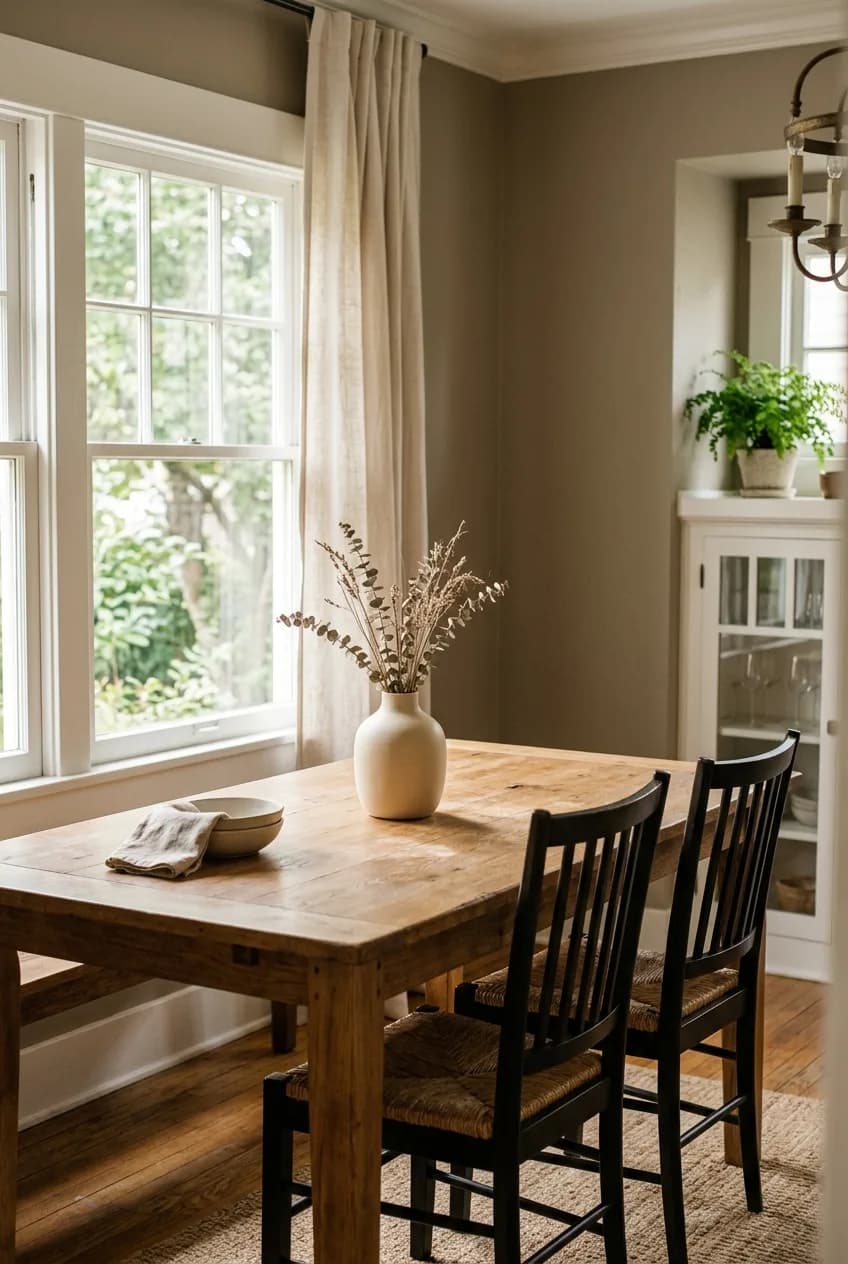
Sometimes the problem isn't too little light, but too much. In a south-facing room that gets blasted with sun all day, a high-LRV white can be genuinely blinding. The constant glare can be uncomfortable and wash out your furniture and decor. The solution is to step down into the mid-range LRVs (around 35-55). A color in this range will still feel bright but will absorb enough of that intense light to cut the glare and create a much more comfortable, welcoming environment.
More in Home Decor
Your Mismatched Furniture Can Look Amazing—Here’s How
Choosing a White Paint That Isn't Blinding
Not all whites are created equal. If you want the clean look of a white wall without the stark, clinical feel, pay close attention to LRV. A pure white might have an LRV of 90+, which is great for a ceiling but can be harsh on all four walls. For a softer, more livable white, look for off-whites with an LRV in the 75-85 range. These colors will read as 'white' to the eye but have just enough pigment to take the edge off, creating a warm and inviting glow instead of a sterile glare.
Beyond the Number: How Lighting and Sheen Affect LRV in Real Life
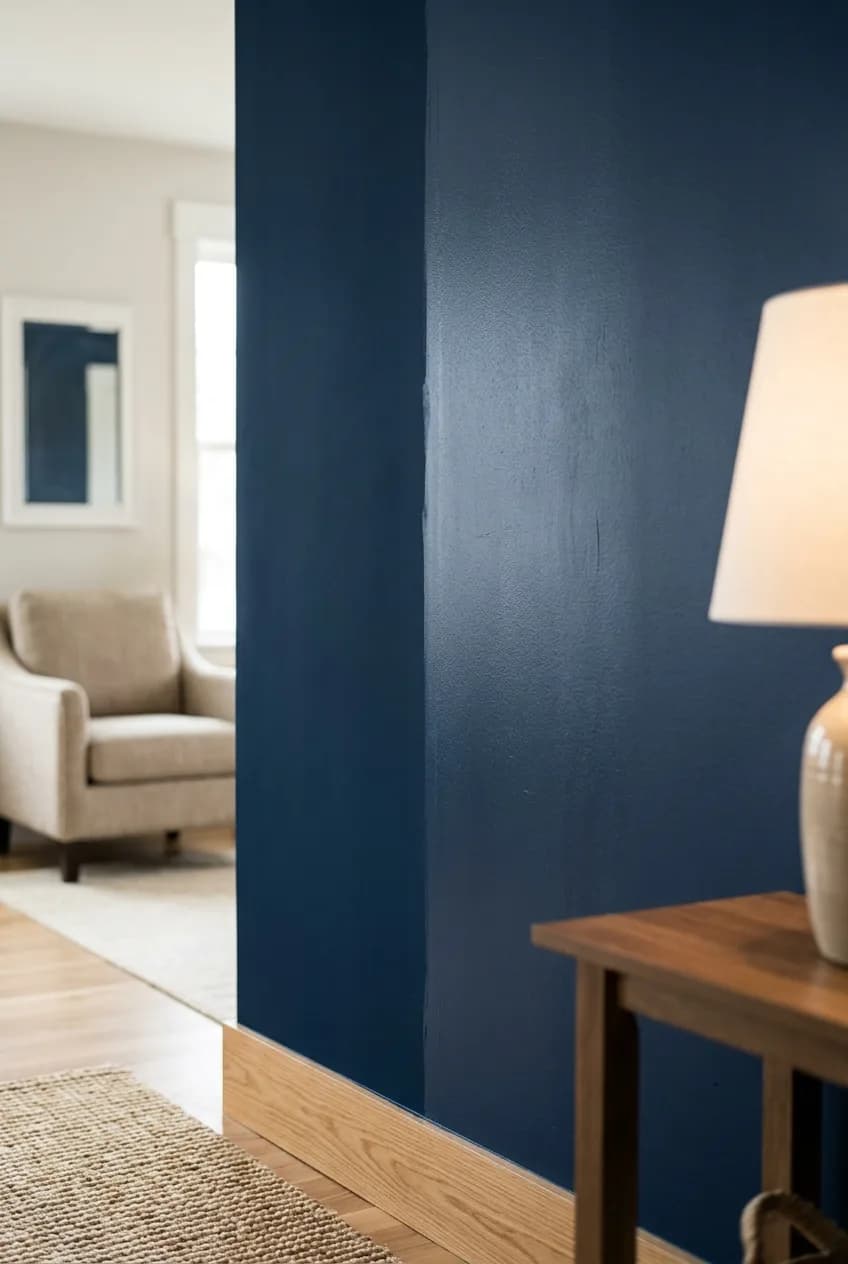
The LRV number on the chip is a fantastic starting point, but it's not the end of the story. The real-world effect of a paint color is also influenced by two other major factors: the light in your room and the sheen you choose.
The quality and direction of your natural light play a huge role. North-facing rooms receive cool, indirect light, which can make colors appear darker and more muted. South-facing rooms get intense, warm light for most of the day. East- and west-facing rooms see dramatic shifts, with warm morning light and shadowy afternoons, or vice versa. A color's LRV will be perceived differently as the light changes throughout the day.
Paint sheen is just as critical. A high-gloss finish reflects much more light than a flat or matte finish. This means a high-gloss paint will make any color's LRV seem higher in practice. A deep charcoal gray in a matte finish will feel velvety and light-absorbing, while the exact same color in a high-gloss finish will reflect light sources and feel more energetic and slick. The most important insight here is that a high-LRV paint doesn't *create* light; it only reflects what's available. In a windowless room, the quality of your artificial light bulbs (look at the kelvins for warmth and lumens for brightness) is arguably more important than hitting a specific LRV number.
This is why the final step is always non-negotiable: you must test paint samples in your actual space. Paint large swatches on different walls and observe them at different times of day—morning, noon, and night, with the lights on and off. It’s the only way to be truly confident in your choice.
Putting It All Together: A Quick LRV Checklist Before You Buy
Feeling empowered? LRV is your new best friend in the paint aisle. Before you commit to a color, run through this quick mental checklist to make sure you're using LRV to your advantage.
- What is the mood I want to create? (Airy and open? Cozy and intimate? Dramatic and moody?)
- How much natural light does this room get, and from which direction? (Is my goal to maximize it or tone it down?)
- What is the primary function of this room? (e.g., A bright, energetic kitchen versus a dark, calming media room).
- What are the LRVs of my top 2-3 color choices? Do they align with my goals for the space?
- What are the other fixed elements in the room? Consider the undertones of your flooring, cabinets, and large furniture, and choose a paint color that complements them.
And remember our final, most important tip: don't choose a color based on LRV alone. Start by finding colors you love—the ones with the right undertones that work with your decor. Then, use LRV as a final filter between your top contenders to ensure the paint will perform the way you need it to in your space. It's the perfect blend of art and science for a beautiful home.
Putting It All Together: A Quick LRV Checklist Before You Buy
Feeling empowered? LRV is your new best friend in the paint aisle. Before you commit to a color, run through this quick mental checklist to make sure you're using LRV to your advantage.
- What is the mood I want to create? (Airy and open? Cozy and intimate? Dramatic and moody?)
- How much natural light does this room get, and from which direction? (Is my goal to maximize it or tone it down?)
- What is the primary function of this room? (e.g., A bright, energetic kitchen versus a dark, calming media room).
- What are the LRVs of my top 2-3 color choices? Do they align with my goals for the space?
- What are the other fixed elements in the room? Consider the undertones of your flooring, cabinets, and large furniture, and choose a paint color that complements them.
And remember our final, most important tip: don't choose a color based on LRV alone. Start by finding colors you love—the ones with the right undertones that work with your decor. Then, use LRV as a final filter between your top contenders to ensure the paint will perform the way you need it to in your space. It's the perfect blend of art and science for a beautiful home.