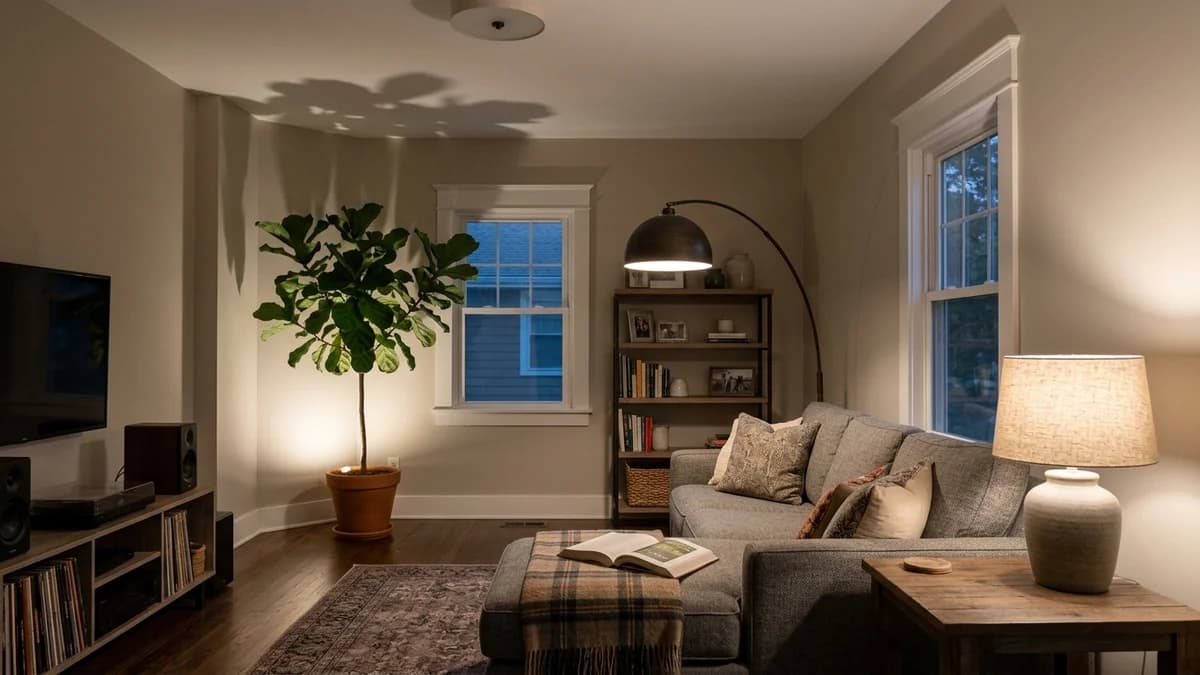
That feeling of a cramped living room? It often starts right at your feet. The floor is the visual foundation of the entire space, and the choice between wall-to-wall carpet and an area rug can make or break the illusion of openness.
It's a classic design dilemma with two very different philosophies. Wall-to-wall carpet aims for a seamless, unbroken plane of color and texture, trying to erase the room's boundaries to trick the eye into seeing a larger expanse. An area rug, however, does the opposite: it intentionally draws a new boundary, creating a defined, anchored 'zone' for your furniture that brings order and cohesion to a small footprint.
So, do you erase the lines or draw new ones? Let’s look at which strategy pays off in a small space.
The Top Priority: Making the Room Feel Bigger
Whether you choose carpet or a rug, the primary goal in a small room is to create a sense of space. Both can achieve this, but they use opposite visual tricks.
The Carpet Strategy: Create a Seamless Expanse
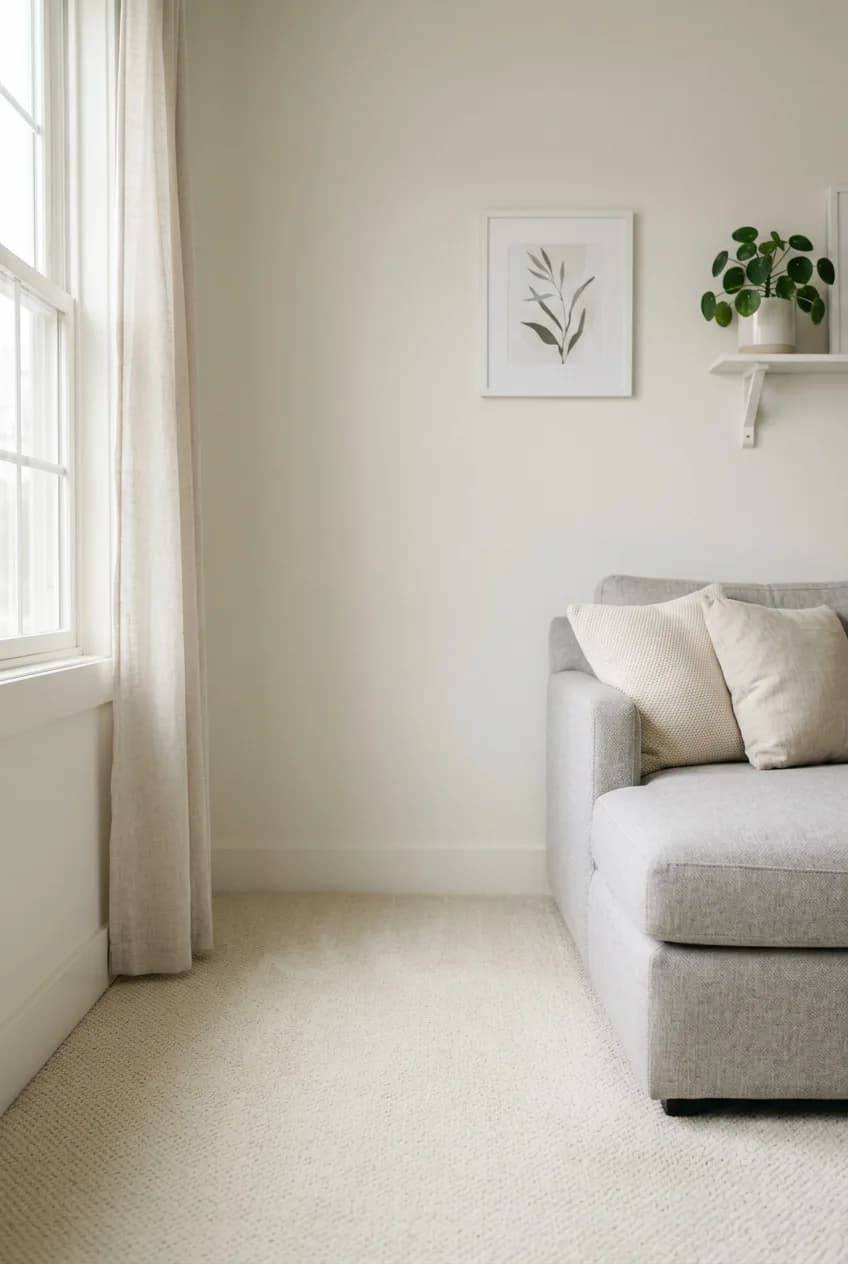
Wall-to-wall carpeting's greatest strength is its ability to create one unbroken surface. With no distracting lines, the eye sees the floor as a single large plane, tricking the brain into perceiving the room as bigger than it is. To make this work, choose a light color—soft beige, light gray, cream—and a low-pile or Berber style. A deep, plush shag will feel heavy and do the opposite.
Here's an insider tip: this effect is most powerful when the carpet color closely matches the wall color. This 'color drenched' approach blurs the boundary between floor and wall, making the room feel significantly more spacious and serene.
The Area Rug Strategy: Define and Layer
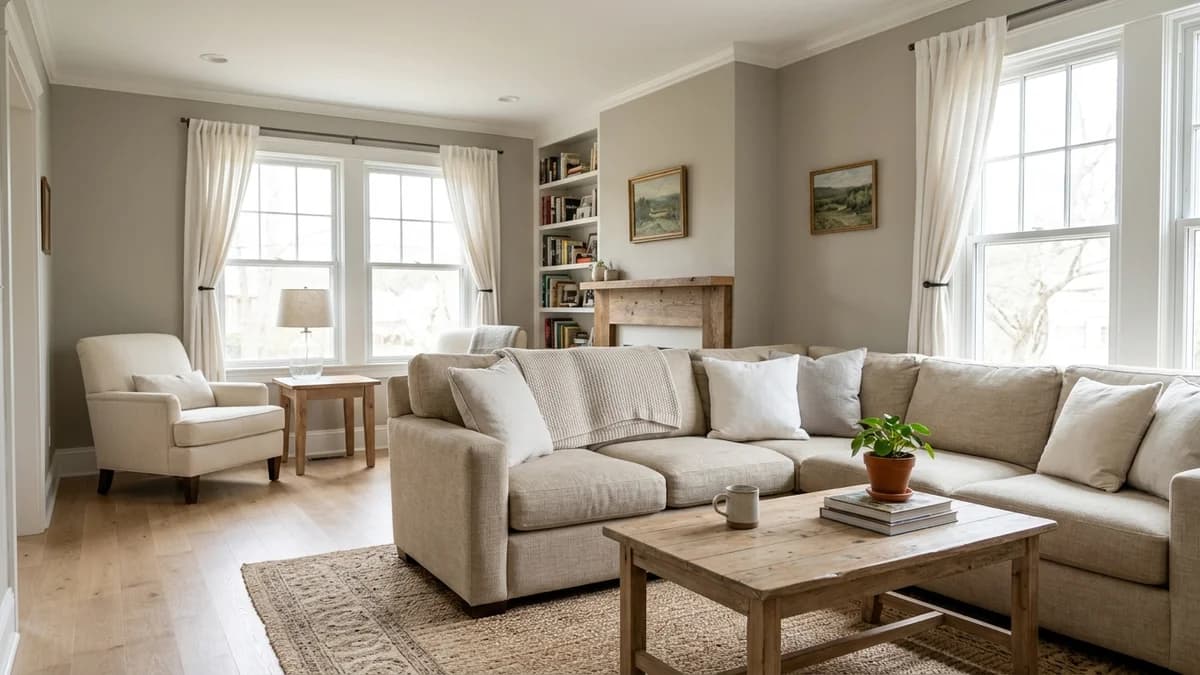
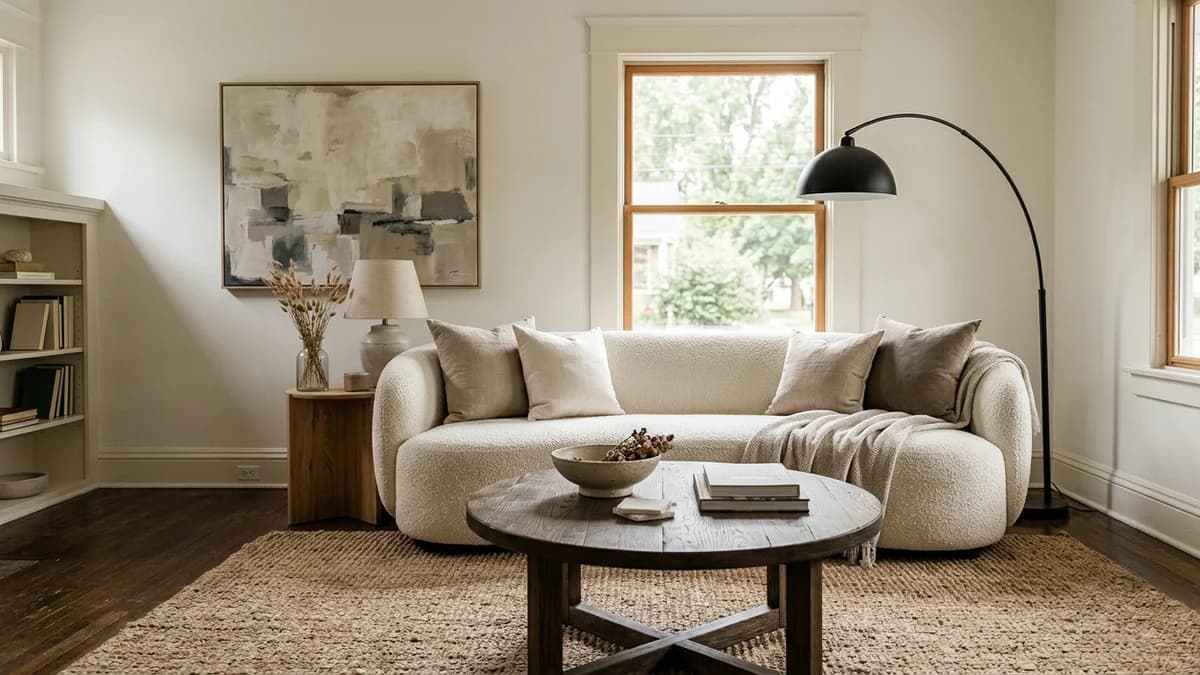
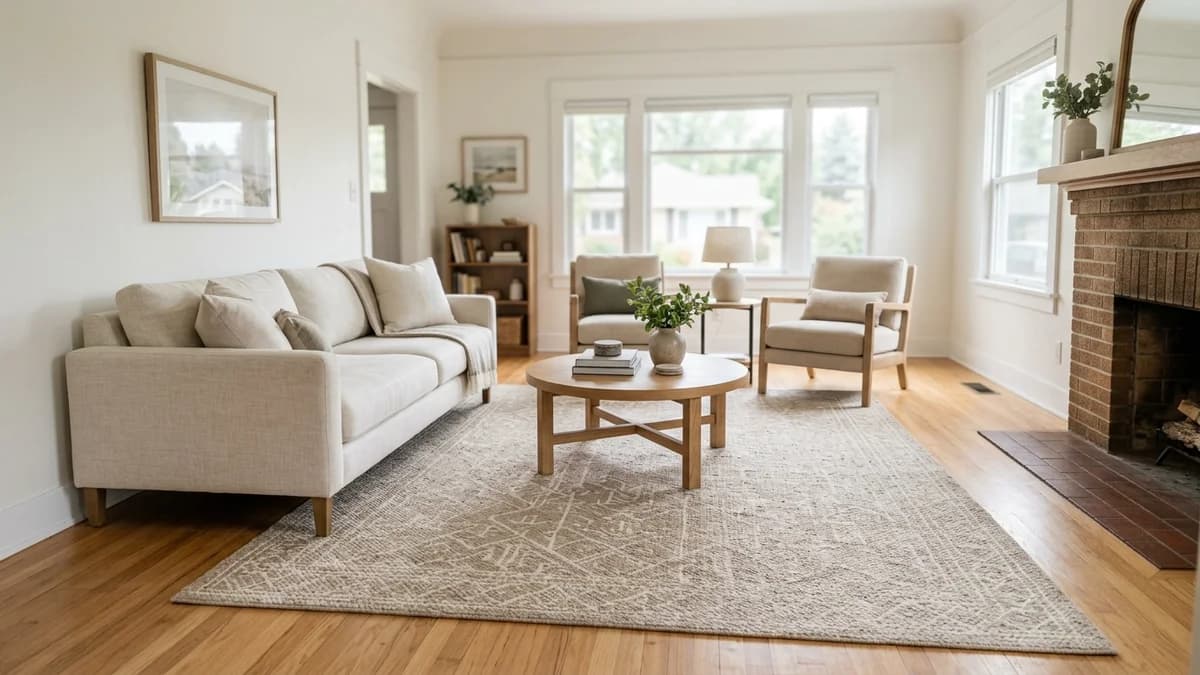
An area rug works differently. By leaving a border of the original flooring visible—ideally 12-18 inches between the rug's edge and the walls—you create a sense of layering and depth. Seeing that perimeter of bare floor ironically makes the entire floor plan feel larger.
More in Home Decor
A Beginner's Guide to Understanding Paint Undertones
The Golden Rule of Rug Size
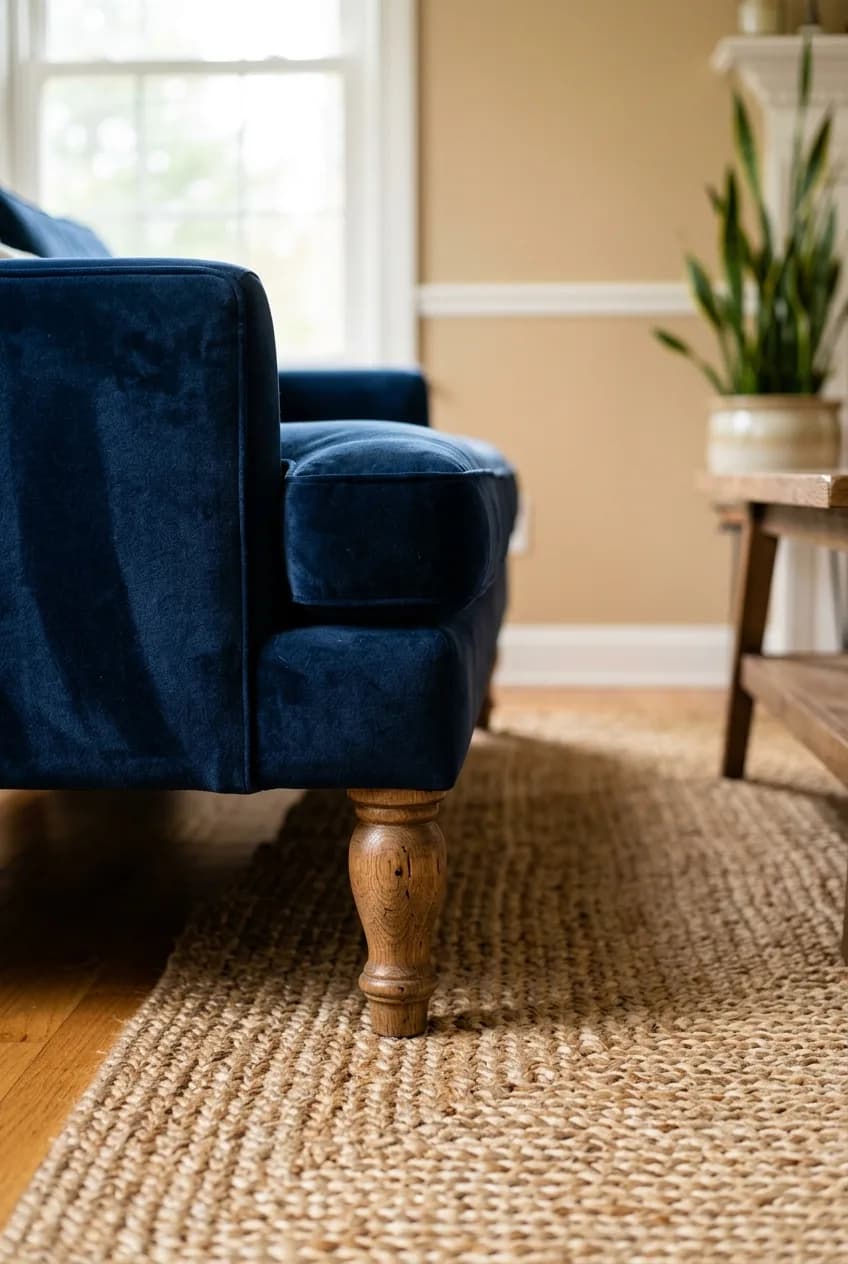
But this only works if the rug is sized correctly. This is the single most common mistake: choosing a rug that’s too small. A little 'postage stamp' rug floating between your furniture visually shrinks the seating area and makes everything feel disconnected.
To make the room look bigger, the rug must be large enough to unify the furniture. Follow these rules:
- The 'Front Legs On' Rule: At a minimum, the front legs of your sofa and any armchairs must sit comfortably on the rug. The back legs can be on the bare floor.
- Unify the Grouping: The rug should be wide enough to extend at least 6-8 inches past the ends of your sofa on both sides.
- Mind the Gap: In a small room, try to leave about 12-18 inches of bare floor between the edges of the rug and the walls on all sides. This creates that pleasing visual border.
When in doubt, always go for the larger size. A generous rug makes the entire arrangement feel more expansive and luxurious.
Defining Your Style: Personality vs. Serenity
Beyond making the room feel larger, the floor is your biggest canvas for expressing style. Here, the choice between a rug and carpet presents a clear fork in the road.
Area Rugs: The Ultimate Style Accessory
A rug is a fantastic opportunity to inject personality. You can introduce bold color, a dynamic pattern, or rich texture without the overwhelming commitment of wall-to-wall. A vibrant rug can become the focal point of an otherwise neutral room, while a simple jute or sisal rug can add organic warmth. Because they are layered over your existing floor, they add a decorator's touch that feels intentional and curated.
Wall-to-Wall Carpet: A Quiet, Unifying Foundation
Wall-to-wall carpet, on the other hand, excels at creating a quiet, calming backdrop. If your living room is already filled with bold patterns in pillows, curtains, and art, a serene, neutral carpet provides a much-needed visual rest. It unifies the space with a single, soft texture, which can feel incredibly cozy and luxurious. It says 'comfort' more than it says 'look at me'.
Practical Comparison: Cost, Cleaning, and Commitment
Beyond aesthetics, the practical differences in cost, cleaning, and long-term flexibility can be the deciding factor. Let's compare them side-by-side for a typical small living room (around 12x15 feet, or 180 square feet).
Factor | Wall-to-Wall Carpet | Area Rug |
|---|---|---|
Upfront Cost | Higher. Includes material ($2-$7 per sq. ft.), padding ($0.75-$1.50 per sq. ft.), and professional installation ($1-$2 per sq. ft.). Total: $700 - $1,800+. | Lower. A large, decent quality 8x10 or 9x12 rug can range from $200 - $800+. No installation costs. |
Daily Maintenance | Requires regular vacuuming of the entire surface. Stains must be treated immediately as they can become permanent. | Requires vacuuming, but you can also easily sweep/mop the surrounding bare floor. Can be rotated to even out wear. |
Deep Cleaning | Typically requires professional steam cleaning ($50-$100 per room) every 12-18 months to remove deep-seated dirt. | Many smaller rugs can be taken outside for a thorough shaking. For deep cleans, professional off-site rug cleaning is an option. |
Flexibility & Style | Low. A very permanent choice that you will live with for 7-10 years. Changing it is a major project. | High. Easy to swap out if you redecorate or move. You can take it with you to your next home. |
For renters, the choice is clear. An area rug offers a huge style impact without any permanent alterations or a significant investment in a property you don't own. It's also a fantastic solution for covering up less-than-perfect floors, providing an instant upgrade without a major renovation.
The Verdict: Which Flooring Choice Wins for Your Small Living Room?
So, what's the final answer? As with most things in home decor, it depends on your priorities and the specific quirks of your room.
Choose wall-to-wall carpet if your primary goal is to create the ultimate seamless, quiet, and cozy environment. It excels at making a room feel visually cohesive and warm, especially if you opt for a light, neutral color that blends with your walls. It’s a great choice for a quiet den or a living room where softness underfoot is the top priority.
Choose an area rug if you prioritize flexibility, style definition, and budget. An area rug allows you to anchor your furniture, add a bold pop of personality, and keep your beautiful hardwood or laminate floors visible. It's the more practical and less permanent choice, making it ideal for renters, frequent redecorators, or anyone wanting to avoid the higher upfront cost of carpeting.
Ultimately, the best choice works in harmony with your other decor. If you have simple, solid-colored furniture, a patterned rug can act as the stunning centerpiece of the room. But if your living room is already filled with bold patterns in pillows, curtains, and art, a serene, neutral wall-to-wall carpet can provide a much-needed calming foundation. Think of the floor not in isolation, but as part of the complete picture.