You spend an entire Saturday organizing the pantry into satisfying, perfect rows. By Wednesday, it's chaos again. A half-used bag of chips is shoved in front of the flour, you can't find the paprika you know you bought, and the jumble is back.
If this cycle sounds frustratingly familiar, we have good news: The problem isn't a lack of effort. You’re not failing at organization. The real issue is that your pantry's fundamental 'operating system'—from the depth of its shelves to the way you shop—is likely flawed and working against you. The cycle of organizing and re-cluttering is simply a symptom of a mismatch between your storage system and how you actually live and cook.
The solution isn’t just buying more matching bins. It’s about diagnosing the root causes and building a new system that works with you. Let's fix it for good.
Architectural Sabotage: The Hidden Flaws in Your Pantry's Design
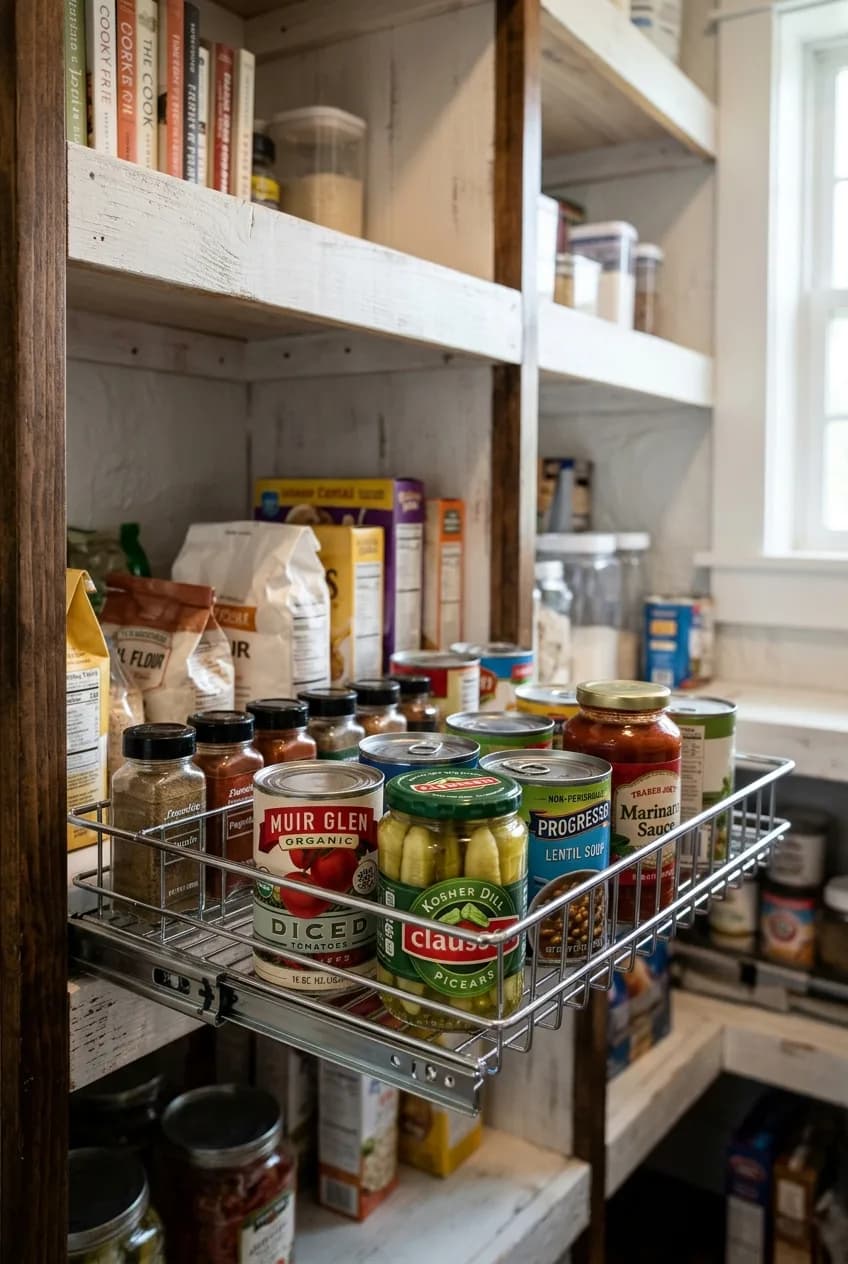
Many pantries, especially in older homes, are simply not designed for modern life. They look spacious, but much of that volume is deceptive. You aren't running out of space; you're running out of *accessible* space. A significant portion of your pantry's volume is likely unusable due to its physical design.
The Black Hole of Deep Shelves
Shelves deeper than about 12-14 inches are a primary culprit. Anything pushed to the back effectively vanishes. It gets lost, it expires, and you end up buying duplicates because you can't see what you own. It's a frustrating and wasteful setup that no amount of tidy stacking can truly fix.
Wasted Vertical Space
Another common issue is excessive height between shelves. When you have 18 inches of clearance above a row of 6-inch-tall cans, what happens? You start stacking. Cans get stacked precariously, bags get piled on top of boxes, and soon you have unstable towers that you have to dismantle just to get to one item at the bottom. This wasted vertical space encourages unstable, inefficient storage.
Poor Lighting
A single, dim overhead bulb is the enemy of an organized pantry. It casts shadows and leaves corners dark, rendering half of your inventory invisible. If you can’t see it, you can’t use it. It's that simple.
The Design Flaw | Why It Causes Clutter | The Practical Fix |
|---|---|---|
Deep Shelves (over 14") | Items get lost at the back, leading to duplicates and expired food. | Install pull-out drawers or use long, narrow bins as 'drawers' you can slide out. Turntables (lazy susans) work wonders in corners. |
Excessive Shelf Height | Encourages unstable stacks and makes items at the bottom inaccessible. | Add shelf risers or under-shelf baskets to create tiers. You can double your usable surface area this way. |
Bad Lighting | You can't use what you can't see. Dark corners become dead zones. | Install motion-activated, battery-powered LED strip lights under each shelf. They're inexpensive and a total game-changer. |
The Inventory Illusion: How Shopping Habits Overwhelm Your System
A perfect pantry system can be defeated in a single shopping trip. That’s because pantry organization begins at the grocery store. No storage system, no matter how clever, can withstand a constant, unfiltered influx of goods that don't have a designated purpose or place.
The Bulk-Buy Backfire
Getting a great deal on a 5-pound bag of quinoa or a case of canned tomatoes feels like a win. But if you don't have a specific, accessible spot for that bulk purchase, it becomes clutter. It lives on the pantry floor, gets shoved into an already-full shelf, and breaks your entire system. Unplanned bulk buying is one of the fastest ways to overwhelm your storage capacity.
Aspirational Groceries and the 'Just-in-Case' Mentality
More in Room Ideas
5 Ways to Make That Awkward Bedroom Corner Functional & Stylish
Be honest: do you have a jar of preserved lemons for that one tagine recipe you saw three years ago? Or three kinds of specialty flour for a baking hobby you haven't started yet? These 'aspirational' groceries take up prime real estate. The same goes for the 'just-in-case' items—the extra bottles of ketchup or jars of olives you keep, even though you only use them a few times a year. Without a system to track what you have, you'll keep buying duplicates 'just in case,' creating an overflow that your shelves can't handle.
The lack of a simple inventory system is the direct cause. When you don't have a clear, quick way to see what you own before you shop, you're destined to buy things you don't need. The solution isn't to stop buying in bulk or trying new recipes, but to do so with intention and a plan for where everything will live.
The 'Zone Defense': Organizing by Use-Case, Not by Item
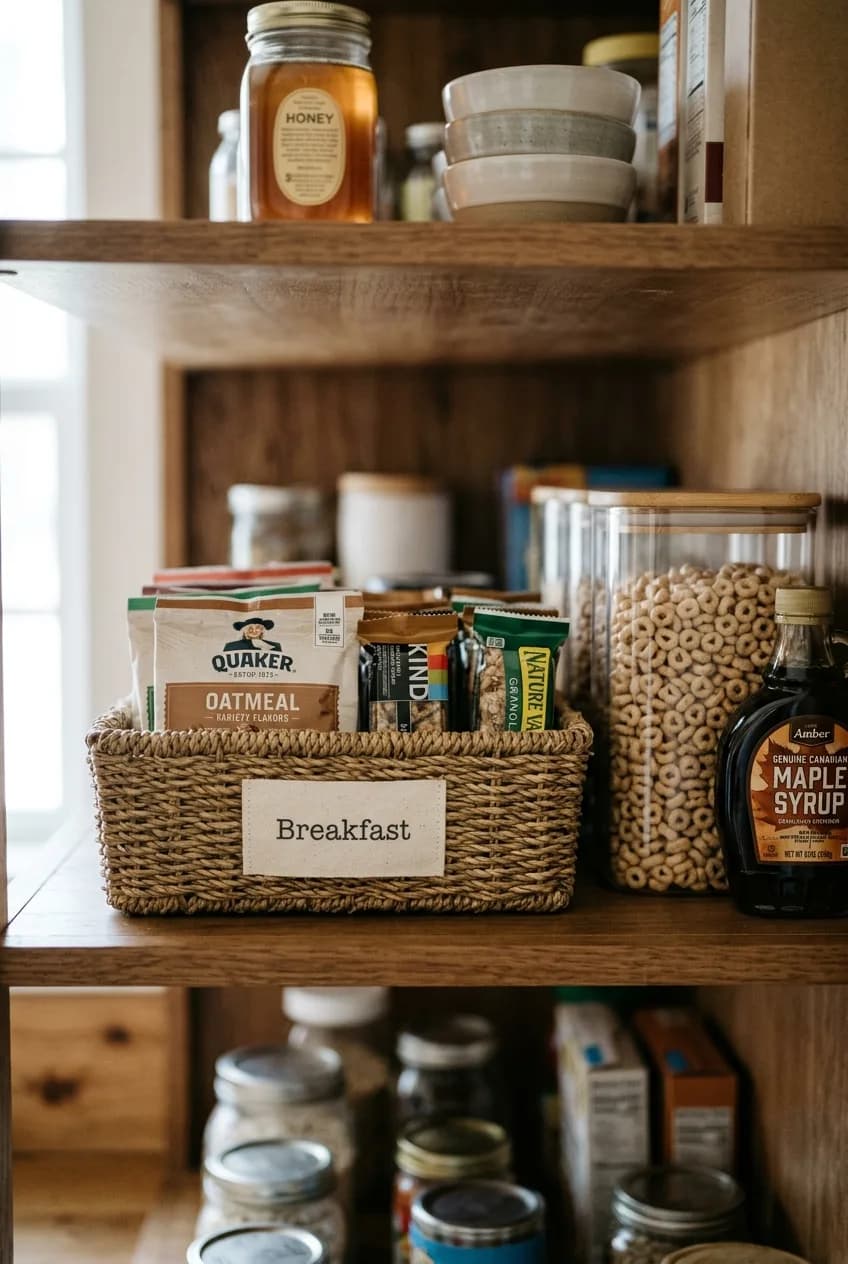
Here's the single most transformative shift you can make: Don't organize your pantry like a grocery store. Organize it like a chef's prep station.
From Grocery Aisles to Prep Stations
A grocery store groups all cans together, all baking goods together, all pasta together. This makes sense for them, but not for you. In your kitchen, you don't just grab 'a can'; you grab things to make a meal. The 'zone defense' strategy involves creating zones based on activity or meal type. Think of it as creating little 'kits' for your future self.
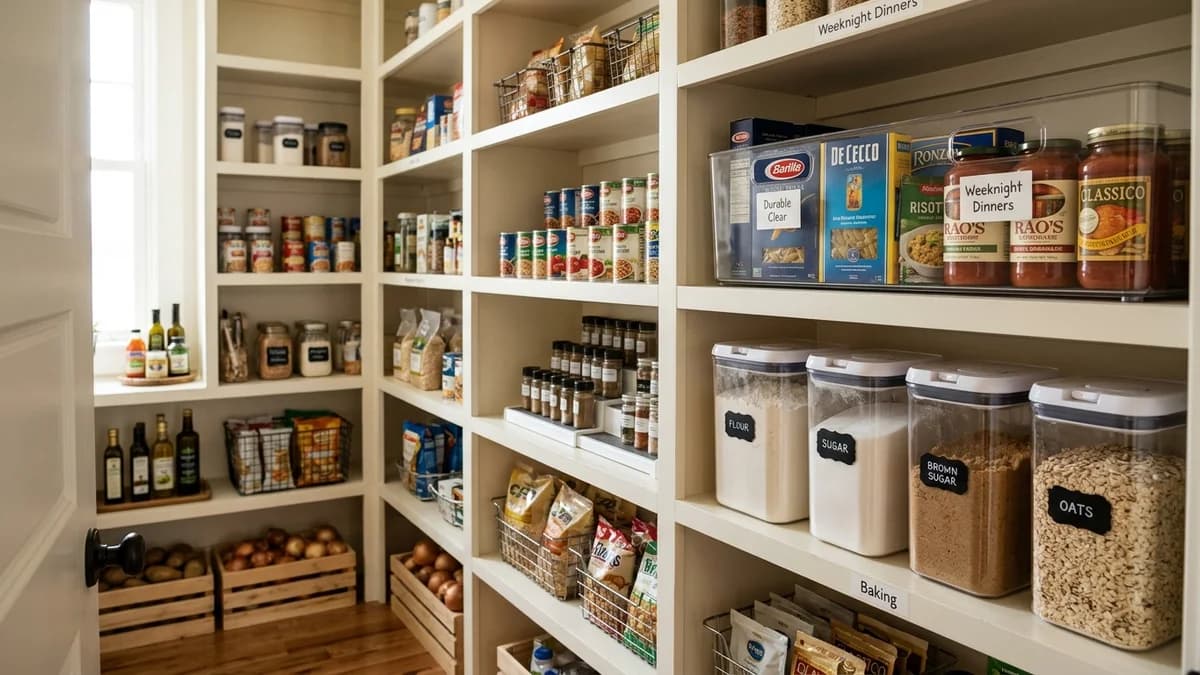
Instead of a shelf of random cans, you create a 'Weeknight Dinners' zone. In a single bin or on a dedicated shelf, you place the things you always use for quick meals: jars of pasta sauce, boxes of pasta and rice, canned tomatoes, and canned beans. When it's time to cook, you grab the whole bin or look in one spot, rather than hunting across three different shelves.
- Breakfast Zone: Oats, cereal, pancake mix, syrup, granola bars.
- Baking Zone: Flours, sugars, baking soda, vanilla extract, chocolate chips.
- Snack Zone: Crackers, pretzels, popcorn, fruit snacks—whatever your family reaches for.
- Caffeine Station: Coffee beans, tea bags, filters, sugar cubes.
- Oils & Vinegars: Keep cooking oils, vinegars, and soy sauce together near where you do your prep.
Using Containers to Define the Zones
This is where containers become truly useful—not as a magic bullet, but as a tool to enforce your zones. Use clear, open-topped bins for categories like 'Weeknight Dinners' or 'Snacks.' This allows you to see everything at a glance and pull the whole category out at once. Decanting items like flour, sugar, and pasta into clear, airtight containers serves two purposes: it keeps them fresh and, more importantly, makes your inventory instantly visible. You can see you're low on spaghetti without having to rummage through a pile of half-empty boxes.
The 10-Minute Reset: A Maintenance Plan That Actually Sticks
The goal isn’t a pantry that magically stays perfect forever. Life is messy! The goal is a system that can be fully restored to order in minutes instead of hours, preventing the slow slide back into chaos. A weekly 10-minute reset is the key.
Pick one time a week that works for you—maybe while you unload groceries or on Sunday evening before the week begins. Set a timer for 10 minutes and tackle these simple steps.
- Put Away New Groceries: Don't just shove them in. Take the extra 60 seconds to put new items into their designated zones. If you bought pasta, put it in the 'Weeknight Dinners' bin. Decant the new bag of flour into its container.
- Consolidate & Tidy: Combine half-empty boxes of crackers. Turn labels to face forward again. Quickly re-stack any cans that have gotten messy.
- Pull Forward the 'Use First' Items: If you bought a new jar of peanut butter, move the older, half-used one to the front so it gets finished first. This is called 'First In, First Out' (FIFO) and it drastically reduces food waste.
- Update Your Inventory List: As you tidy, take note of what you're low on. Add 'canned tomatoes' or 'oats' to a running grocery list. A small magnetic whiteboard on the pantry door or a list on the fridge is perfect for this. This simple habit is how you finally stop buying duplicate groceries.
That's it. Ten minutes. Because your system is logical and zone-based, maintenance is just a quick touch-up, not a full-scale excavation. This small, consistent effort is what makes a family pantry feel calm and manageable, even during the busiest of weeks.