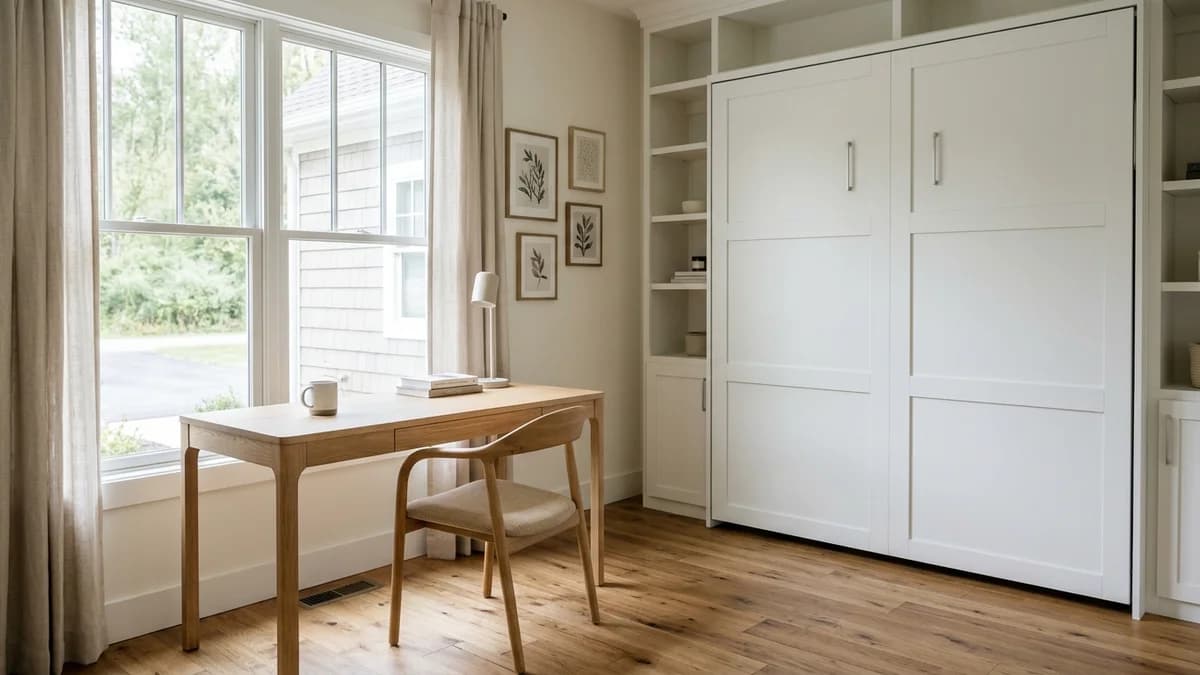
When you think of a Murphy bed, you probably picture a clever solution for a tiny studio apartment. And you're not wrong! But the decision to choose a wall bed over a traditional bed frame is about so much more than just raw square footage. It’s a choice about lifestyle, function, and how you truly want to live in a room.
Choosing between these two options isn't about which is universally 'better'—it's about which is better for *you*. We're going to move past the simple 'it saves space' argument and give you a practical framework for deciding. Think of this as a conversation to figure out if the flexibility a Murphy bed offers is worth the trade-offs in cost and daily routine.
The Core Question: Is Maximizing Floor Space Your #1 Priority?
At its heart, this is the fundamental trade-off: a regular bed offers constant, effortless comfort, while a Murphy bed offers ultimate spatial flexibility. A traditional bed is always a bed, creating a dedicated zone for rest. A Murphy bed, on the other hand, allows a room to have a split personality—a home office by day, a bedroom by night.
This is why the Murphy bed shines brightest in a truly multi-functional room. If your goal is to have a space that serves as a legitimate home gym, craft studio, or client-facing office, reclaiming that floor space is a game-changer. A queen bed occupies roughly 35 square feet. What would you do with that space every single day? If your answer is 'roll out a yoga mat,' 'set up an easel,' or 'have clear floor space for a kids' play area,' then you're on the right track.
But here’s the non-obvious insight: the decision isn't just about *gaining* space, but defining the *purpose* of that reclaimed space. An empty floor is not necessarily a more functional room. If you don't have a clear, daily purpose for that open area, you may find you're just going through the hassle of putting the bed away to create... a void. Be honest with yourself about your daily habits before you commit.
A Lifestyle Audit: Daily Sleeper or Occasional Guest Bed?
How a bed fits into your daily rhythm is just as important as how it fits into your room. This is where the practical realities of owning a Murphy bed come into focus.
The Daily 'Hassle Factor'
Making a regular bed might involve fluffing pillows and straightening a duvet. Making a Murphy bed involves that, plus buckling straps to hold the mattress and bedding in place, and then lifting the platform into the cabinet. Modern piston or spring mechanisms make the lifting part surprisingly easy, but it’s still a multi-step process. Will you do it every single morning? Or will the bed stay down 'just for today,' slowly defeating its purpose?
This leads to the biggest potential failure of a Murphy bed—it isn't mechanical, but behavioral. If the small but consistent effort to put it away prevents you from actually using the reclaimed floor space, the entire investment has failed its primary mission. This is also where you have to be honest about *who* will be operating it. While modern systems are user-friendly, it’s still a physical task. Is it for your primary bedroom where you'll handle it daily? Or is it for an elderly parent's room or a space young children use? A large, moving piece of furniture requires care, and the 'hassle' might be a bigger obstacle for some users than others.
Comfort and Mattress Limitations
More in Room Ideas
Why Your Pantry Never Has Enough Storage, No Matter How You Organize It
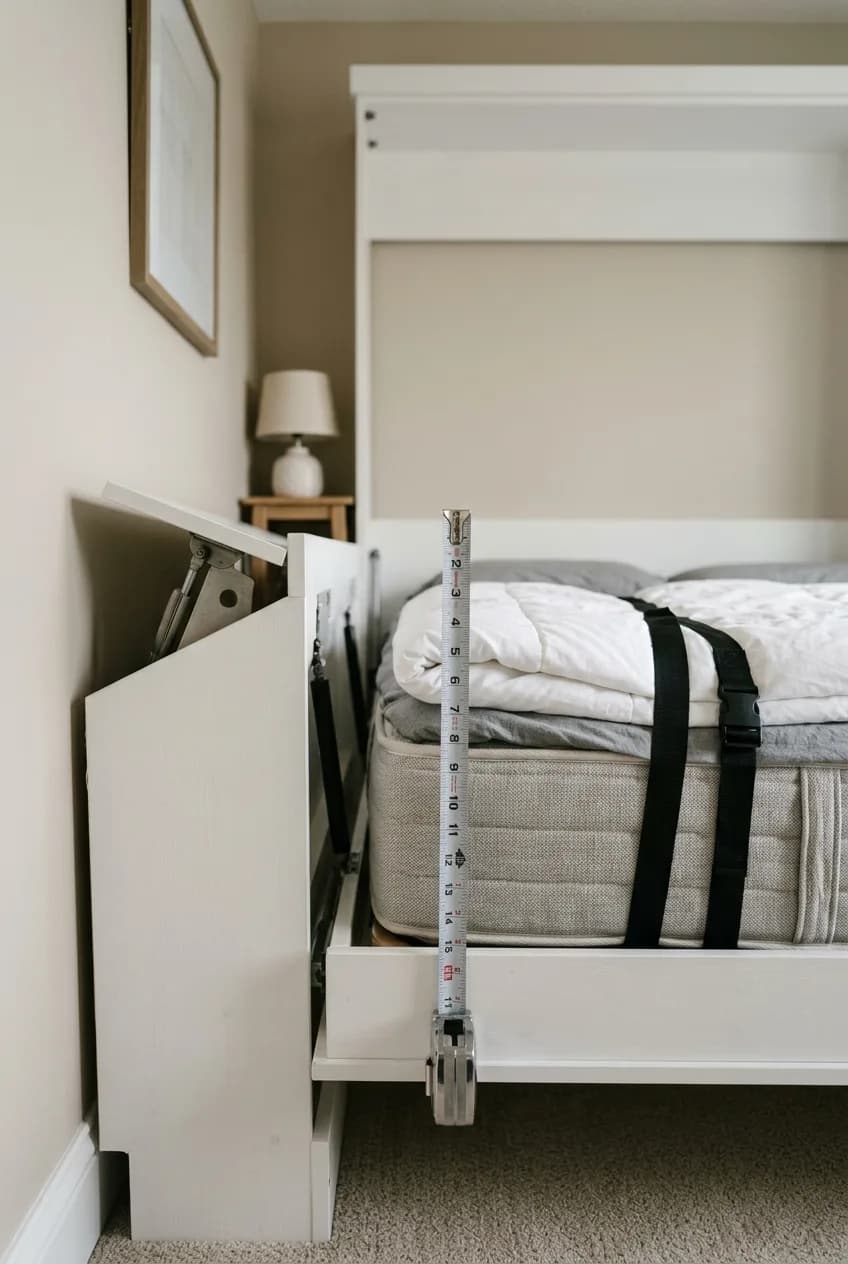
Can a Murphy bed be comfortable enough for everyday use? Absolutely. Long gone are the days of flimsy, cot-like wall beds. Most modern systems are designed to support high-quality mattresses, but they come with specific constraints you don't face with a standard frame.
Attribute | Murphy Bed Consideration | Regular Bed Consideration |
|---|---|---|
Mattress Thickness | Most systems require a mattress 10-12 inches thick or less to fit inside the cabinet. | Virtually no limit. You can use ultra-plush, 15-inch pillow-top mattresses. |
Mattress Weight | The lifting mechanism is calibrated for a specific weight range. A mattress that's too light or too heavy won't operate smoothly or safely. | Weight is not a factor for the frame's function, only for its structural limit. |
Mattress Type | Memory foam and many hybrid mattresses work well. Most systems don't use a box spring. | Compatible with any mattress type, including traditional innerspring with a box spring. |
The Real Cost: Comparing the Price of Versatility
Let's be direct: a Murphy bed is an investment in functionality, not a budget-friendly alternative to a regular bed. When you compare the total cost, it's important to look at the entire setup.
Breaking Down the Murphy Bed Investment
You aren't just buying a bed frame. You're buying a complex piece of furniture that includes the cabinet, the lifting mechanism, and often, integrated shelving or storage. A quality, safe system involves several costs:
- The Murphy Bed Kit/Cabinet: $1,500 - $5,000+
- A Compatible Mattress: $500 - $1,500
- Professional Installation: $400 - $800 (Strongly recommended for safety and proper function)
Side-by-Side Cost Comparison
When you put the numbers head-to-head, the difference is clear. You are paying a significant premium for the ability to hide the bed away.
Component | Typical Murphy Bed Setup (Queen) | Typical Regular Bed Setup (Queen) |
|---|---|---|
Frame / System | $2,000 - $5,000+ | $400 - $1,500 (frame + headboard) |
Mattress | $500 - $1,500 | $500 - $1,500 |
Installation / Assembly | $400 - $800 (Professional install) | $0 - $200 (DIY or delivery service) |
Total Estimated Cost | $2,900 - $7,300+ | $900 - $3,200 |
The best way to think about the cost is that you're buying two pieces of furniture in one: a bed frame and a large, high-quality cabinet. If you value that consolidation and the floor space it creates, the premium price can be justified.
Deal-Breakers: When a Regular Bed Frame Is the Clear Winner
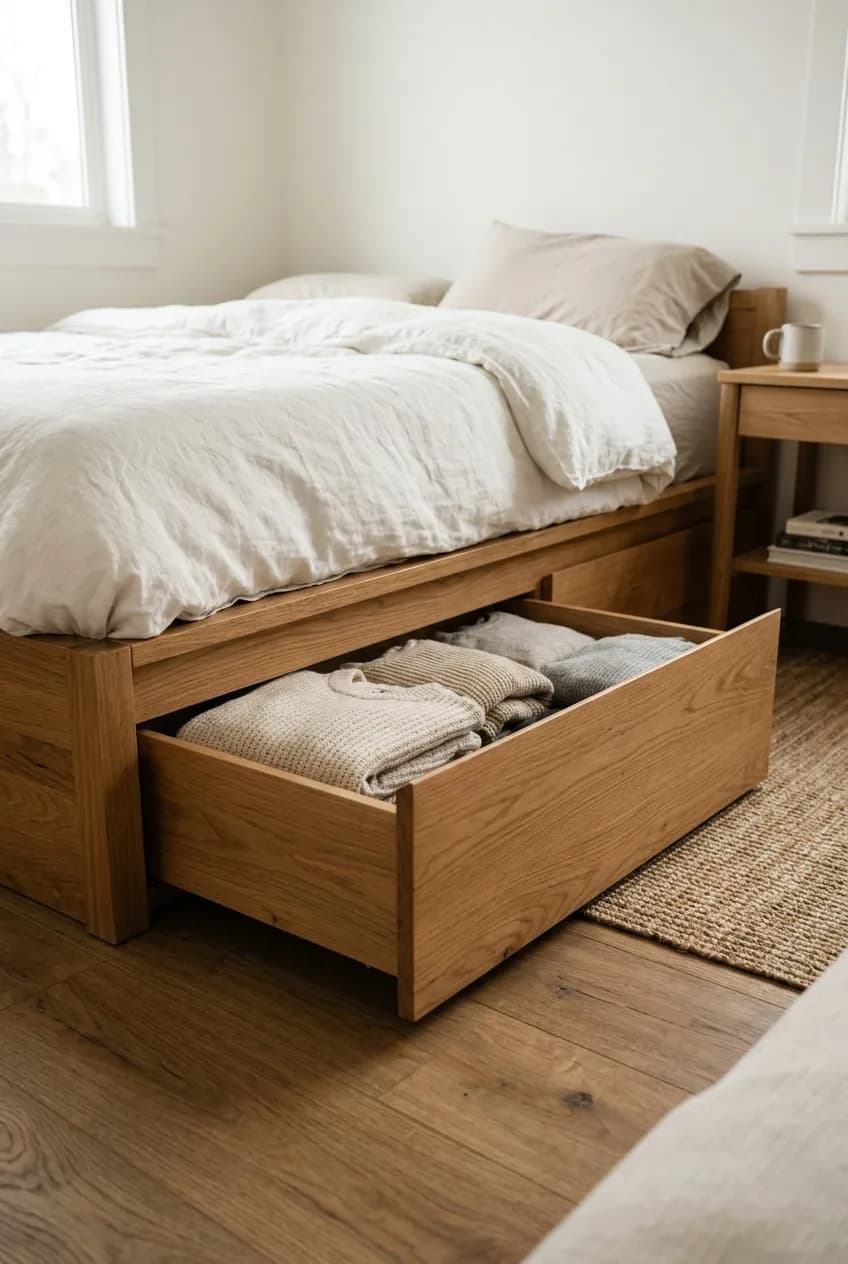
Sometimes, no matter how appealing the idea of a disappearing bed is, the practical realities of your room or lifestyle make it a non-starter. Here are a few clear signs that a traditional bed frame is the better, and sometimes only, choice.
- Structural and Layout Limitations: Murphy beds need to be anchored securely into wall studs. They also require significant vertical clearance, typically 85-95 inches for a vertical-mount queen. If your chosen wall has a window, an off-center door, a baseboard heater, or ceilings are too low, a Murphy bed simply might not fit.
- You're a Renter: Because secure installation involves drilling several large bolts into wall studs, many rental agreements prohibit it. A freestanding Murphy bed is not a safe alternative, as the risk of tipping is too high. Always check with your landlord before even considering one.
- The Need for Under-Bed Storage: This is perhaps the most overlooked downside. A Murphy bed offers zero under-bed storage. If you rely on those drawers in a captain's bed or shallow bins under a platform frame to store linens, shoes, or seasonal clothes, losing that prime real estate can be a major problem in an already small space.
- Desire for a Decorative Centerpiece: If your dream bedroom includes a dramatic upholstered headboard, a classic four-poster, or a rustic timber frame, a Murphy bed will never fulfill that vision. It is designed for stealth, not to be the star of the show. A regular bed gives you unlimited stylistic freedom to create a focal point.
Your Final Decision Checklist
The right choice comes down to an honest assessment of your space, budget, and daily life. Use this final checklist to see which option aligns better with your priorities.
Factor | Choose a Murphy Bed if... | Stick with a Regular Bed if... |
|---|---|---|
Space Function | You need the room to be a functional office, gym, or studio 90% of the time. | The room's primary function is always a bedroom, even if it's small. |
Daily Effort | You are diligent and don't mind the 2-minute daily ritual of putting it away. | You value a 'jump right in' bed and know you'll just leave it down most days. |
Budget | You have a budget of $3,000+ and see it as an investment in dual-purpose furniture. | You need a quality sleep setup for under $2,500. |
Storage | You have ample closet and dresser space for all your belongings. | You rely on under-bed drawers or boxes for essential storage. |
Aesthetics | You prefer a minimalist, built-in look and value open floor space above all. | You want the bed itself to be a permanent, decorative centerpiece. |
Before you make a final call, measure everything. Measure the wall height and width, check for studs, and measure the bed's projection into the room when it's open to ensure you still have walking space. There are no shortcuts here!
Ultimately, the decision boils down to one question: Are you trying to add a bed to an office, or are you trying to add an office to a bedroom? The first scenario points toward a Murphy bed, which prioritizes the room's daytime function. The second suggests a regular bed is best, perhaps paired with a smaller, more compact desk. Your honest answer will lead you to the right choice for your home.