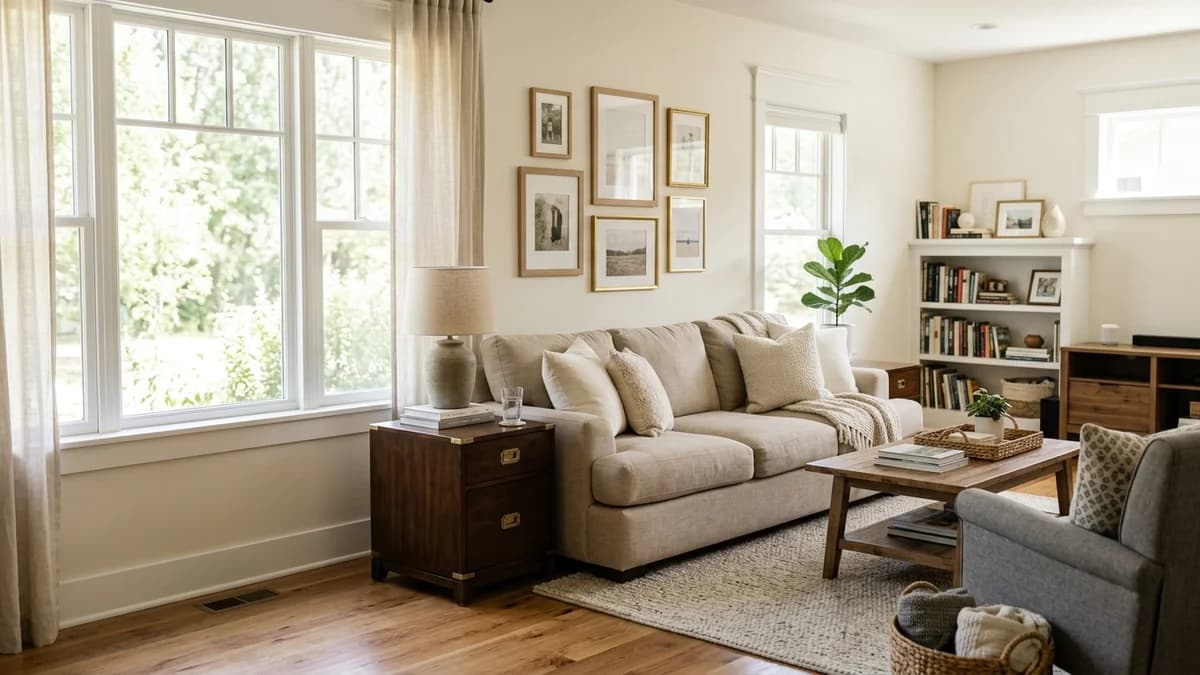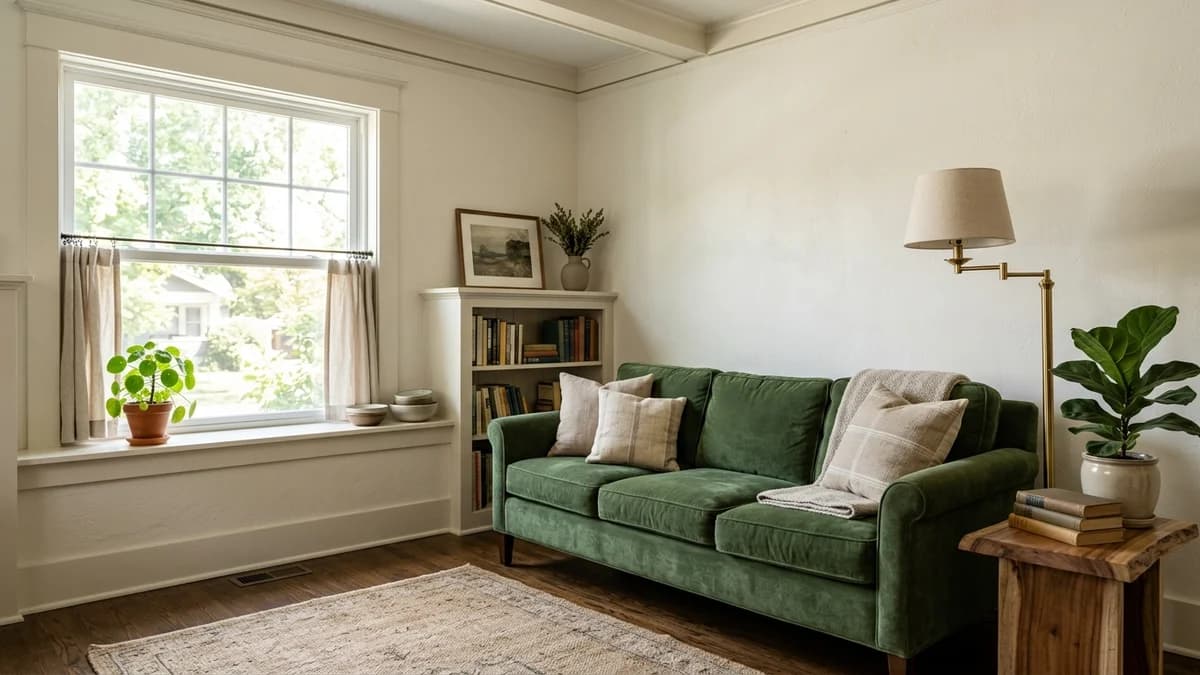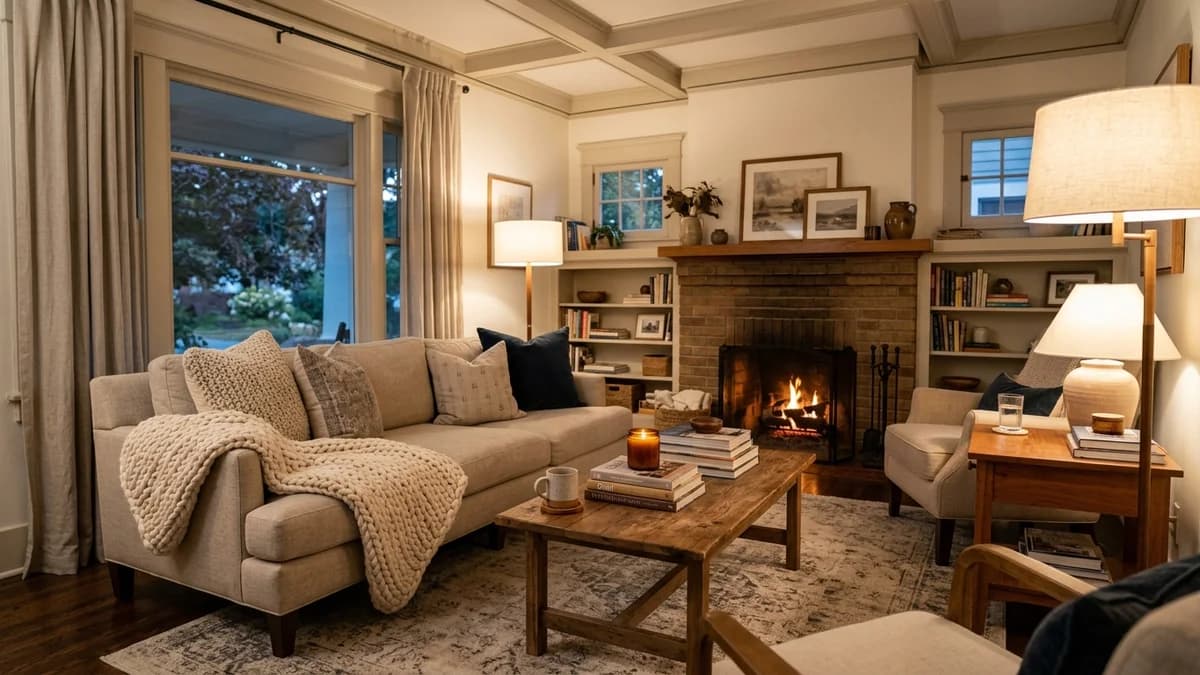
Does your living room give you the chills, even when the heat is on? You’ve arranged the furniture, maybe even painted the walls, but it just feels… off. Sterile, unwelcoming, and frankly, a little cold. It’s a common problem, and the solution usually has nothing to do with your thermostat.
The feeling of “cold” in a room is often a sensory issue, not a thermal one. It’s about the interplay of light, color, texture, and even the arrangement of your furniture. A room that looks cold will feel cold. The good news is that turning that sterile space into a cozy, inviting haven is easier than you think. By figuring out the real culprits, you can make targeted, effective changes that transform your room from uninviting to irresistible.
The Real Reasons Your Living Room Feels Cold
Before you can fix the problem, you need to understand what’s causing it. That feeling of an uninviting space comes from a few key sources that combine to create a visually chilly atmosphere. It’s a classic case of sensory mismatch: your eyes see cool colors and slick surfaces, and your brain interprets that as 'cold,' no matter what the thermostat reads.
Understanding 'Visual Temperature'
Every color has an undertone that we perceive as either warm or cool. Cool-toned colors have blue, green, or pure white undertones—think crisp whites, stark grays, icy blues. Warm-toned colors have yellow, red, or brown undertones, like cream, beige, terracotta, and olive green. A living room dominated by cool tones, especially in a room with northern-facing light, can feel perpetually stark and uninviting.
The Impact of Surfaces and Light
Just as important as color are the room's surfaces. Hard, reflective materials like glass, high-gloss metal, polished stone, and bare tile floors bounce light around aggressively. This creates a sharp, clinical feeling. In contrast, soft, absorbent textures—wood, wool, linen, velvet—soak up light and sound, creating a softer, quieter, and warmer ambiance. A single, harsh overhead light blasting down on a room full of hard surfaces is a guaranteed recipe for a cold-feeling space.
Cold Culprit | Warm Solution |
|---|---|
Paint with cool, blueish undertones (e.g., stark gray) | Paint with warm undertones (e.g., greige, creamy white) |
Glass coffee table and metal accents | Wood coffee table and brass or bronze accents |
Bare tile or laminate flooring | A large, plush area rug over the floor |
A single, bright overhead light | Multiple lamps with warm-toned bulbs |
Sleek leather sofa with sharp lines | Draping a chunky knit throw over the sofa |
Let There Be Warmth: Fixing Your Lighting for Instant Coziness
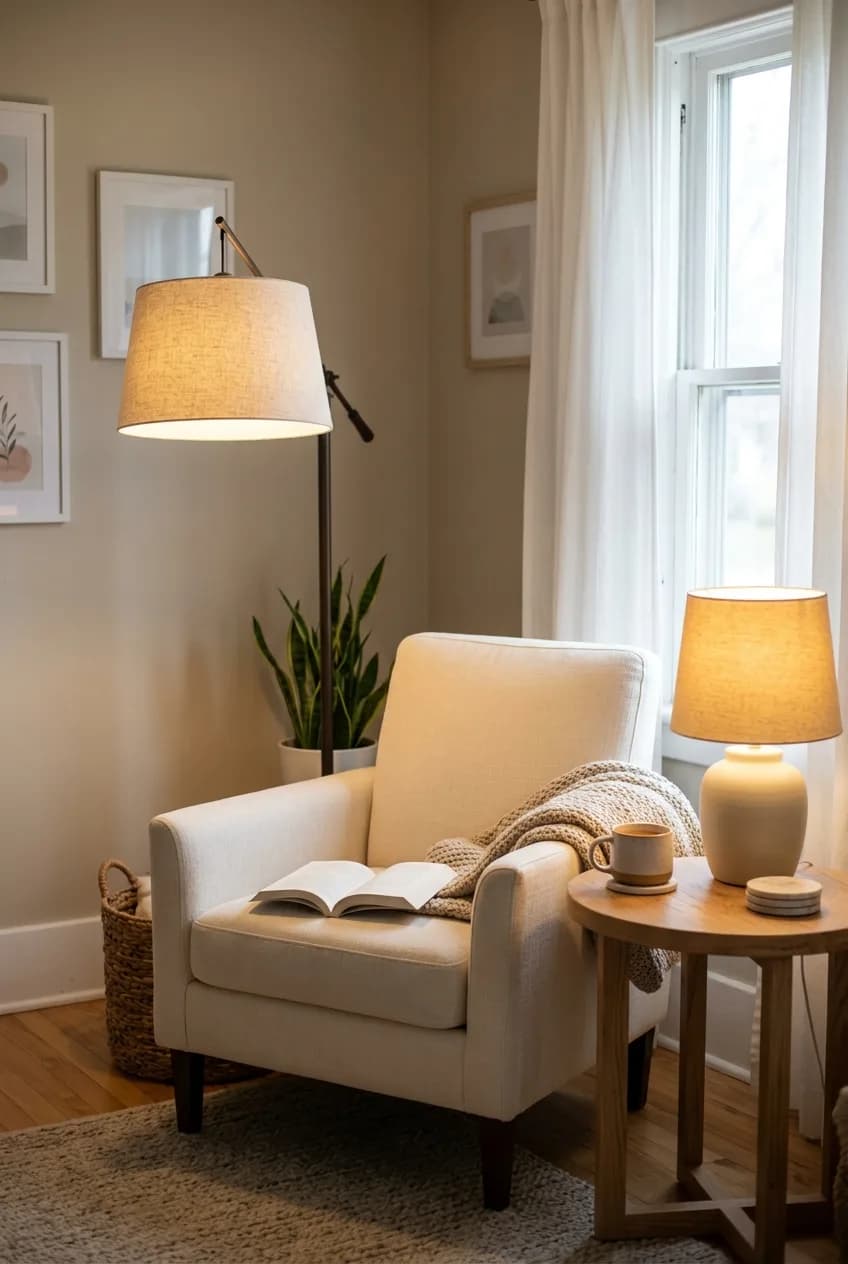
If you make only one change to your living room, let it be the lighting. Nothing makes a space feel more like a sterile operating room than a single, harsh ceiling fixture flooding the room with cool, blue-toned light. This kind of lighting casts unflattering shadows and eliminates any sense of intimacy.
The key is to create layers of light. Pros often use the 'rule of three,' ensuring every room has at least three different light sources. You want to combine ambient (overall illumination), task (for specific activities like reading), and accent (to highlight art or architectural features) lighting. This approach creates warm, overlapping pools of light that make a room feel dynamic and welcoming.
This is probably the single fastest, cheapest fix you can make. Your first step is to check your bulbs. Look for a color temperature of 2700K (Kelvin). This is the 'warm white' sweet spot that mimics the gentle glow of an incandescent bulb. It’s that dramatic—swapping a harsh, cool-toned bulb for a $5 warm-white one can instantly make a chilly gray wall feel more inviting. For ultimate control, install dimmers on your main light switches. Being able to lower the lights in the evening is the essence of creating a cozy mood.
Think about placing lights at different heights. A floor lamp in a dark corner, a table lamp on an end table next to the sofa, and maybe even a small, battery-powered picture light over a favorite piece of art will do more for the room's atmosphere than any other single change.
Embrace the Cozy: Introducing Texture to Banish the Bleakness
A room full of hard, flat surfaces will always feel cold. Your mission is to introduce soft, tactile elements that invite touch and add visual depth. Texture is what makes a room feel finished and comfortable.
Start From the Ground Up with a Rug
If you have hard floors, an area rug is non-negotiable. A rug does more than just warm your feet; it visually 'grounds' the furniture, defining a conversation area that feels more intimate and contained. This is the essence of coziness. In a large or open-plan living room, a rug is crucial for creating a distinct 'zone' that feels separate and less cavernous. For maximum warmth, choose natural fibers like wool or a thick-piled synthetic that feels good underfoot.
Layering Throws, Pillows, and Curtains
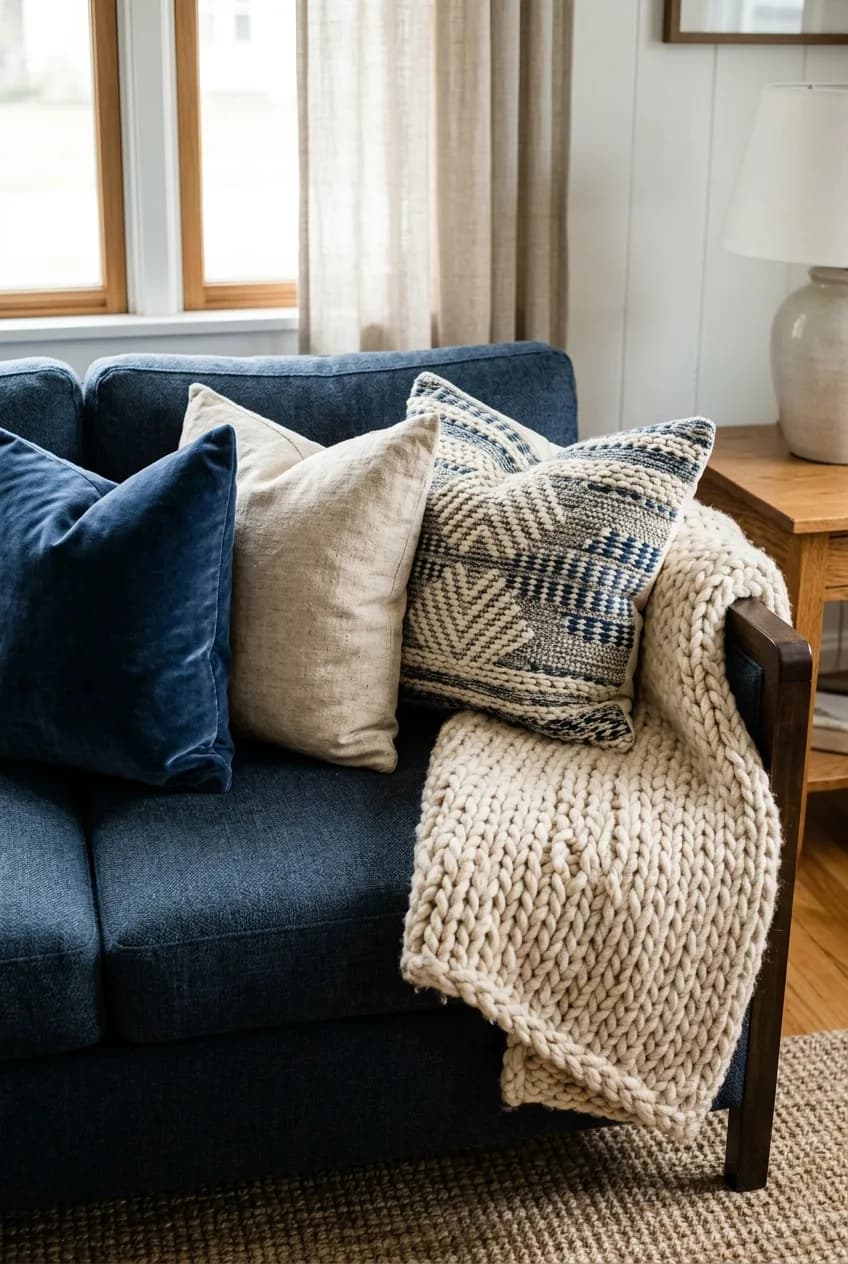
Now, add softness to your furniture and windows. Think in layers and varied materials. A chunky knit wool throw blanket draped over a sleek leather sofa adds instant warmth. Velvet or faux fur pillows bring a touch of luxury and comfort to a simple linen couch. Don't be afraid to mix and match; the contrast between different textures is what creates interest.
More in Home Decor
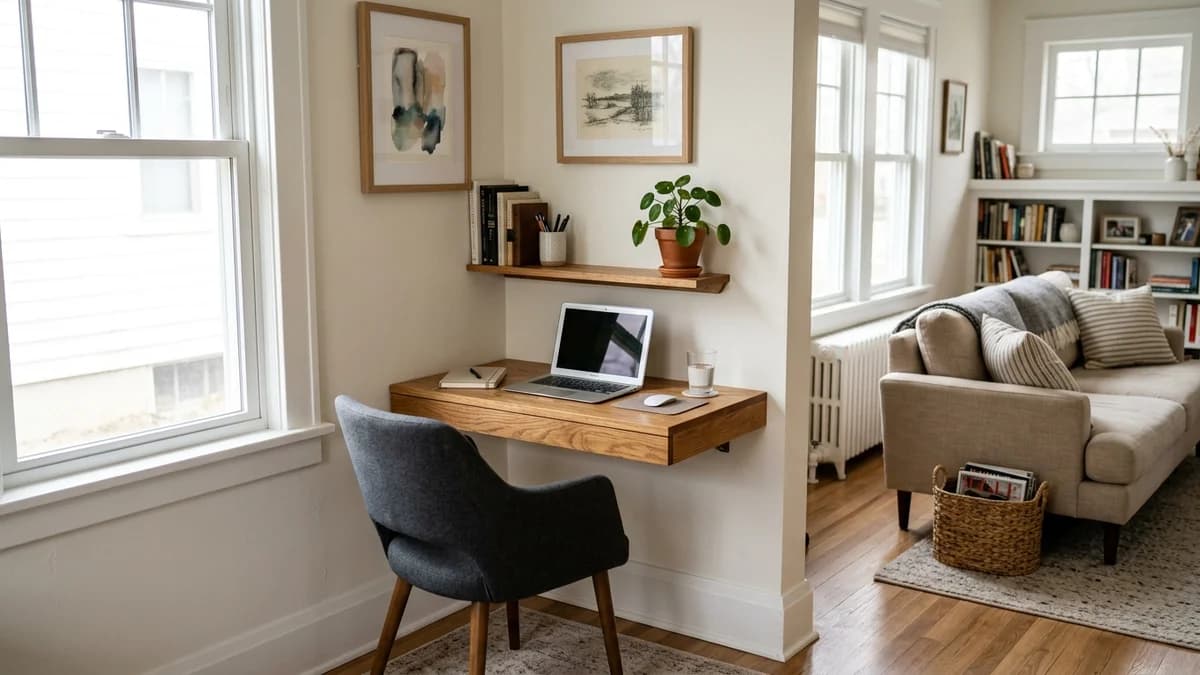
7 Clever Home Office Nook Ideas for Small Apartments
Finally, look at your windows. Bare windows or stark plastic blinds can feel chilly. Swapping them for fabric curtains adds a significant layer of softness and can even provide a bit of literal insulation. Even simple, unlined linen or cotton panels will absorb sound and soften the light filtering into the room, making the whole space feel calmer and more inviting.
Arranging for Coziness: Layout and Color
Sometimes a room feels cold simply because it's arranged like a doctor's waiting room. Pushing all the furniture flat against the walls creates a strange, empty void in the middle of the room that feels impersonal and formal. Coziness, on the other hand, is about intimacy.
Try 'floating' your furniture. Pull your sofa and chairs away from the walls, even if it's only by a few inches, and arrange them to face each other. This creates a clear conversation zone that encourages people to gather and connect. The goal is to create a layout that feels like it’s hugging you, not holding you at a distance.
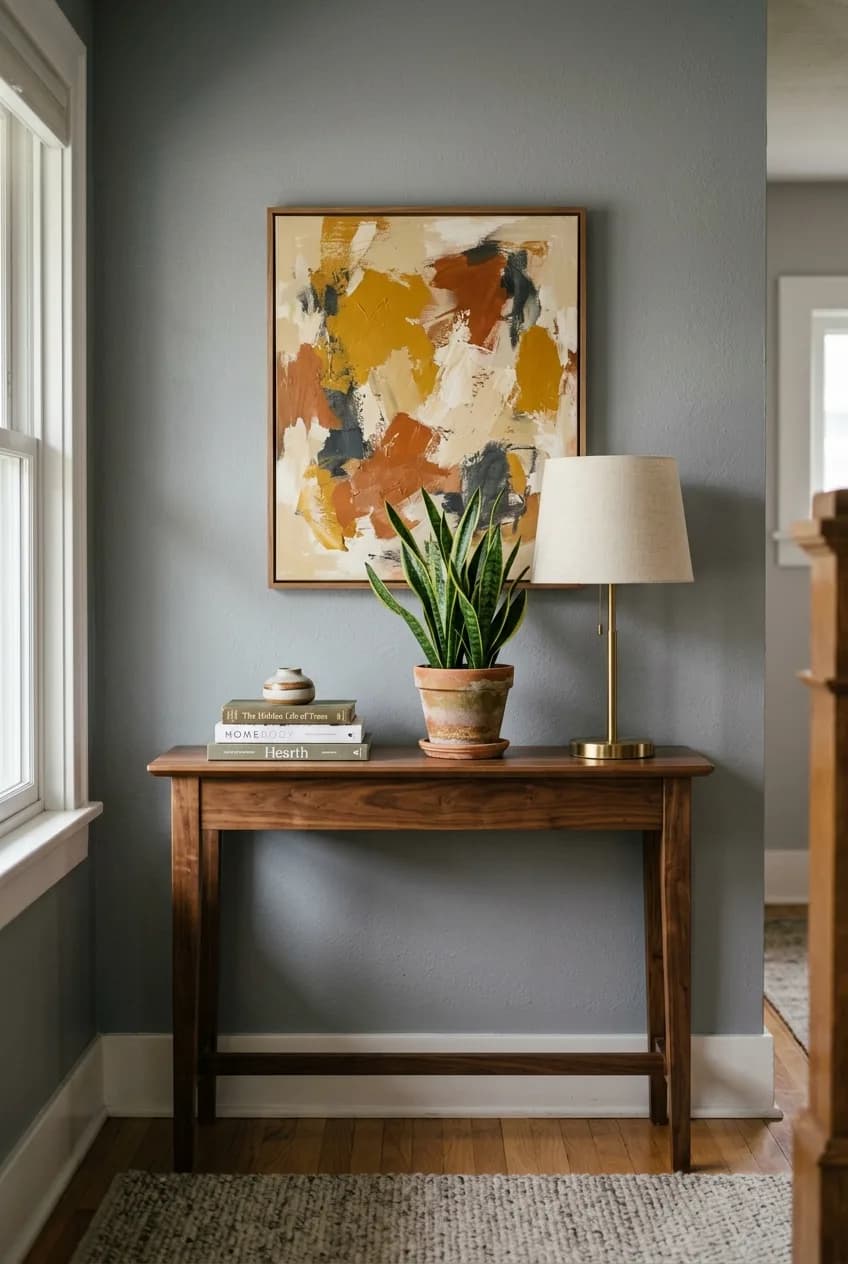
Many people think a cool-toned room is a lost cause without a paintbrush. Not true. You can keep your gray or blue walls and still create warmth. The secret is contrast. Deliberately introduce 'opposite' elements. Bring in the organic warmth of natural materials like wood—a walnut side table, a teak bowl, or even a stack of firewood in a basket. Add life with a few houseplants. Then, introduce warm-toned accents through your decor: a cognac leather chair, terracotta-colored pillows, or art with splashes of mustard and rust. This contrast between the cool background and the warm foreground is what creates a dynamic, sophisticated, and inviting space.
The Final, Personal Layer: A Home, Not a Showroom
If you’ve addressed the lighting, texture, and layout, but the room still feels off, the culprit might be a lack of personality. A space that looks like a furniture showroom—perfectly coordinated but devoid of personal history—can feel just as uninviting as a cold, empty one. Warmth comes from signs of life.
This is where you inject *you* into the room. A perfectly styled, minimalist room can often be the coldest of all. Deliberately adding a bit of 'imperfect' life is what signals that it's a space for relaxing, not just for looking at. Think about adding elements that tell a story:
- Meaningful art or framed photos of friends, family, and travels.
- Stacks of books or magazines you're actually reading on the coffee table.
- A tray on an ottoman with a favorite candle, a small plant, and a beautiful object you picked up on vacation.
- A collection of vintage pottery on a bookshelf.
Don't forget the invisible layers of comfort. Scent plays a huge role in how we experience a space. A subtle, warm scent from a candle, an essential oil diffuser, or even a vase of fresh flowers can instantly make a room feel more welcoming. The goal isn't a pristine, untouched look, but a thoughtfully 'lived-in' one. It's these final, personal touches that truly turn a house into a home.