Standing in the paint aisle, you’re faced with what feels like an impossible task: choosing a white paint. Dozens, maybe hundreds, of chips all look nearly identical under the harsh store lighting. You know, however, that on your living room walls, one might look sunny and inviting, while another could feel cold and sterile. So how do you find the right one?
The secret isn't about finding the 'whitest' white. It’s about understanding the subtle yet powerful undertones that give each white its unique character. This guide will help you decode those undertones and choose the perfect warm or cool white by looking at the three things that matter most: your room's light, its fixed finishes, and the atmosphere you want to create.
The Foundation: Understanding Warm vs. Cool White Undertones
Before you even grab a paint chip, it helps to grasp the concept of undertones. Nearly every white paint has a tiny hint of another color mixed in, and this is what separates a cozy, creamy white from a crisp, modern one. These undertones—not the 'whiteness' itself—are what determine how a paint will actually look and feel on your walls. A seemingly neutral white chip can reveal surprisingly strong yellow or blue hues once it covers a large surface.
Simply put, whites are split into two main families:
- Warm Whites have undertones of yellow, red, or pink. Think of the color of cream, ivory, or a seashell. They feel soft, inviting, and can make a space feel cozier.
- Cool Whites have undertones of blue, green, or gray. Think of the color of a cloud or clean linen. They feel crisp, bright, and can make a room feel more spacious and modern.
Why not just use a 'pure' white with no undertones? In a living space, a pure, stark white can often look sterile and clinical, reflecting light so intensely that it creates glare. It lacks the depth and softness needed for a comfortable room. The subtle undertones in off-whites are what give them life.
Another term you'll see is Light Reflectance Value (LRV), a scale from 0 (absolute black) to 100 (pure white). It measures how much light a color reflects. Most popular interior whites fall in the 75-90 LRV range. A higher LRV means the paint will bounce more light around, making the room feel brighter. A lower LRV in the white family will feel a bit softer and less stark.
Characteristic | Warm Whites | Cool Whites |
|---|---|---|
Common Undertones | Yellow, Beige, Cream, Pink | Blue, Gray, Green |
Creates a Feeling of... | Coziness, Comfort, Intimacy | Spaciousness, Calm, Crispness |
Best For... | Traditional, Farmhouse, 'Hygge' styles | Modern, Minimalist, Coastal styles |
Let There Be Light: How Natural and Artificial Light Transform White Paint
You’re never choosing a paint color in a vacuum. You’re choosing a color for your room's specific lighting conditions, which change constantly throughout the day and night. The same can of white paint can look dramatically different from one room to the next—or even from one wall to another in the very same room.
Reading Your Natural Light
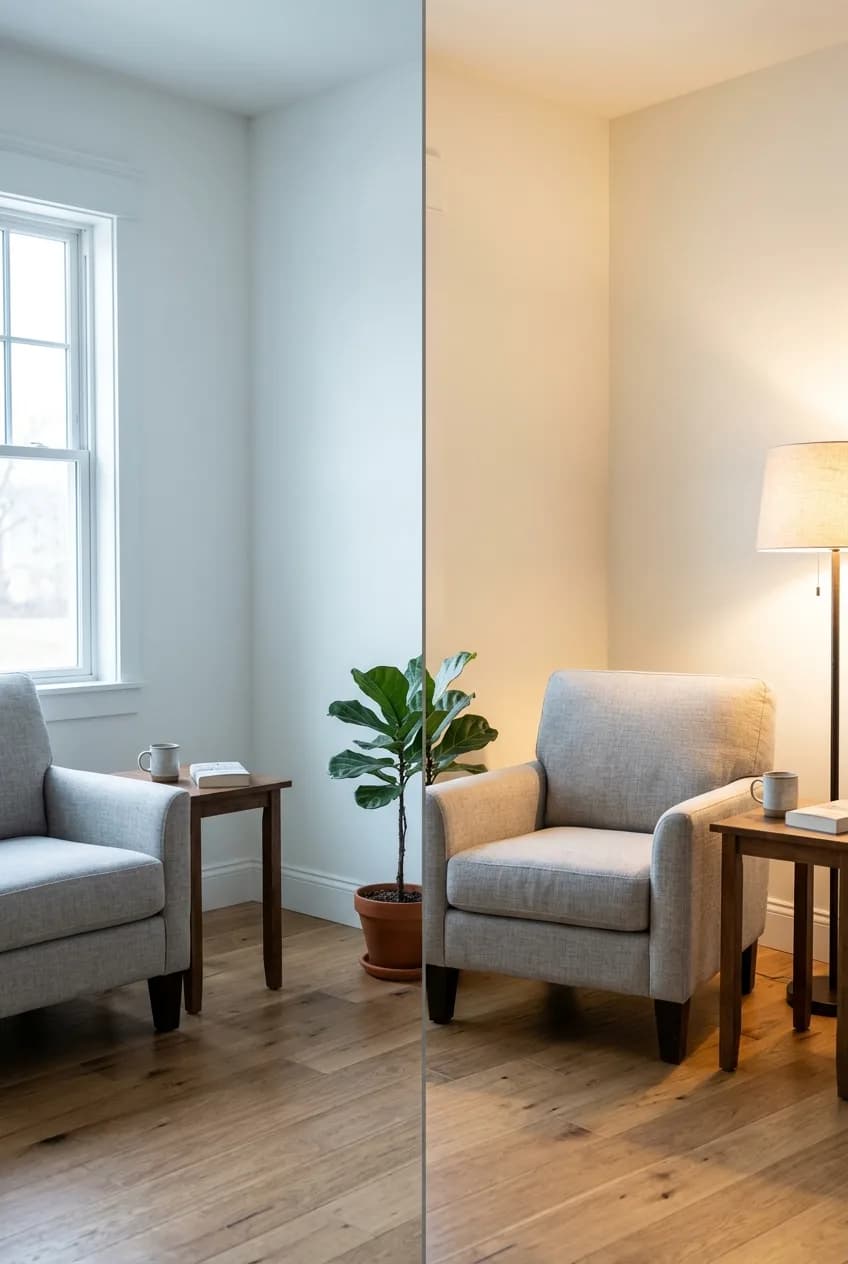
The direction your living room windows face is the single biggest influence on how paint will look, because the quality of natural light is not all the same.
- North-Facing Rooms: Receive indirect, cool, blue-toned light all day. This light can make colors look flatter and grayer than they are. A warm white is often the best choice here, as its yellow undertones will balance the cool light and prevent the room from feeling chilly and clinical.
- South-Facing Rooms: Get intense, bright, warm-toned light for most of the day. This golden light can make warm whites look *too* yellow. A cool white with blue or gray undertones can temper that intensity and create a balanced, bright space.
- East-Facing Rooms: Enjoy bright, warm light in the morning that becomes cooler and more indirect in the afternoon. A versatile white is key. Consider when you use the room most; if it's a morning coffee spot, a cooler white might balance the bright sun, but a warmer white will keep it from feeling stark in the evening.
- West-Facing Rooms: Have the opposite schedule—shadowy in the morning, then flooded with very warm, almost orange light in the late afternoon. A cool white can help neutralize the intense evening glow, which a warm white might amplify to an overpowering degree.
Accounting for Artificial Light
Don't forget your light bulbs! The color temperature of your artificial lighting plays a huge role after the sun goes down.
Older incandescent bulbs cast a strong yellow-orange glow, which will make any white appear much warmer. Modern LED bulbs are more nuanced. Their temperature is measured in Kelvins (K): a bulb around 2700K gives off a 'warm white' light similar to incandescent, while 3500K is more neutral, and 5000K produces a cool, bluish 'daylight' glow. For a consistently comfortable living room atmosphere, stick with bulbs in the 2700K–3000K range; they provide the most predictable and pleasing results.
Harmonizing Your Home: Matching White Paint to Existing Finishes
Your wall color doesn't exist in isolation. It has to work with the most permanent features of your living room. The smartest approach is to let your largest, most unchangeable items—like your flooring or that giant sofa you love—dictate the paint's undertone. Think of the paint as a supporting actor; it should serve the existing elements, not fight against them.
More in Home Decor
7 Clever Home Office Nook Ideas for Small Apartments
Pairing with Flooring
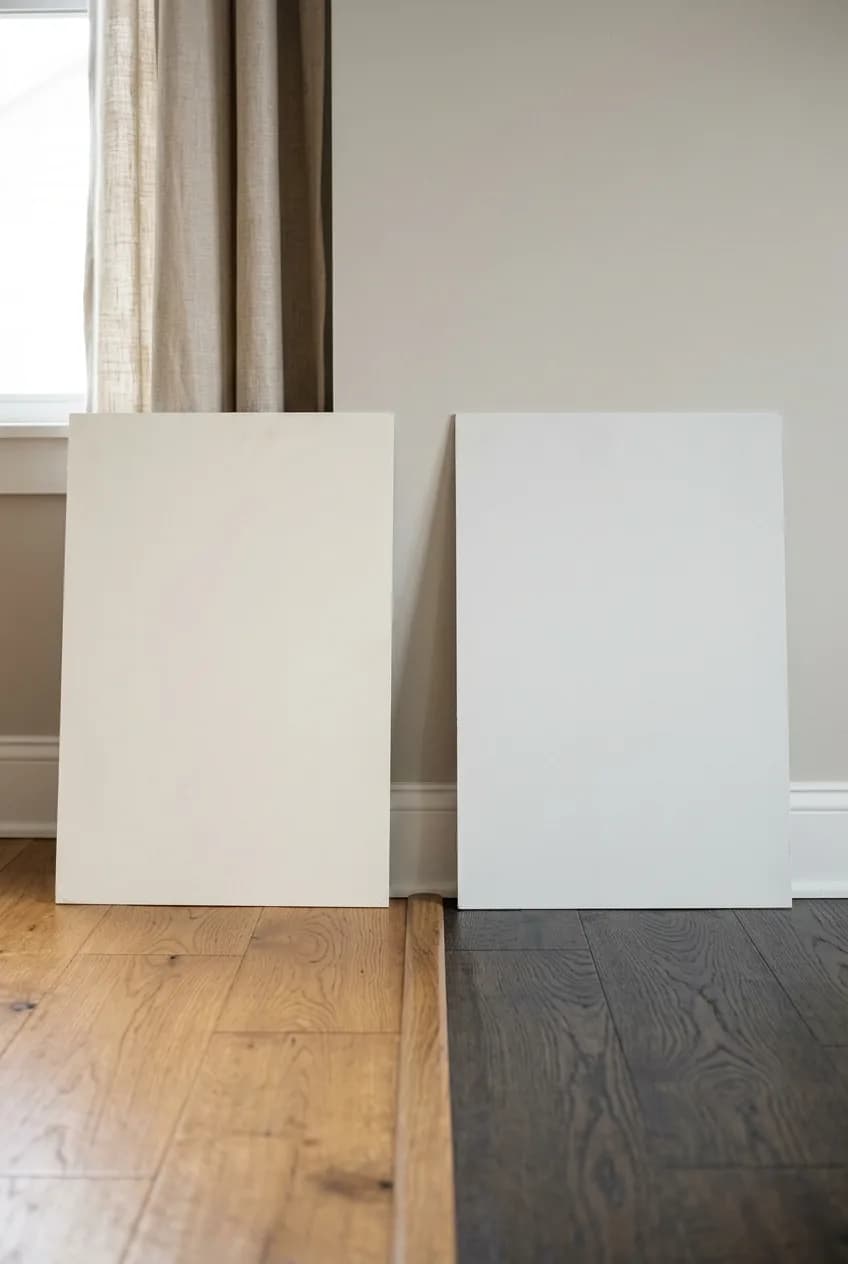
Look down. Your floor is a massive plane of color that your walls will sit directly against. Let its undertone be your primary guide. If you have warm, honey-toned oak, cherry, or maple floors, a warm white with creamy or beige undertones will create a seamless, harmonious look. A stark, cool white next to these floors can look jarring and almost blue in comparison. Conversely, if your floors are a cool gray laminate, dark ebony-stained wood, or a cool-toned tile, a cool white with gray or blue undertones will feel intentional and sophisticated.
Coordinating with Furniture and Decor
Next, consider your largest furniture pieces. Do you have a big, warm beige sectional? Or maybe an heirloom cherry wood cabinet? These pieces introduce strong warm tones. Painting the walls a cool, crisp white could make your beloved furniture look dingy or yellowish by contrast. A warm white is the natural choice to complement them.
If your anchor pieces are cool-toned, like a gray tweed sofa, a blue area rug, or sleek black leather chairs, then a cool white is your best bet. A creamy, warm white in this scenario would likely look dated and out of place.
Matching Metals and Finishes
This is a detail that really pulls a room together. Look at your hardware, light fixtures, and metal accents. Warm whites are a natural partner for warm metals like brass, gold, bronze, and copper. Cool whites pair beautifully with cool metals like brushed nickel, chrome, and matte black. Matching your wall's undertone to your metals creates a polished, cohesive design.
Designing an Atmosphere: What Vibe Do You Want for Your Living Room?
Beyond complementing your light and finishes, your choice of white is fundamentally about creating a feeling. This isn't just an aesthetic decision; it's a psychological one. The temperature of the white you choose will directly influence the energy and mood of the room, affecting how you and your guests feel within the space.
Warm whites excel at creating spaces that feel cozy, inviting, and intimate. Their soft, yellowish undertones are enveloping and comforting, perfect for a traditional living room, a rustic farmhouse look, or achieving that sought-after Danish 'hygge' vibe. If you want your living room to be a snug retreat for conversation and relaxation, a warm white is a fantastic choice. In a very large, open-concept room, a warm white can also help the space feel less vast and impersonal.
Cool whites, on the other hand, are the go-to for a modern, crisp, and formal atmosphere. Their blue and gray undertones create a clean, gallery-like backdrop that makes artwork and architectural details pop. If you're aiming for a minimalist aesthetic or a sophisticated, airy feel, a cool white is your ally. Cool colors tend to recede visually, which can make the walls seem farther away and the room feel larger and more open—a great trick for smaller living rooms.
The Fail-Safe Method: How to Test White Paint Samples Like a Pro
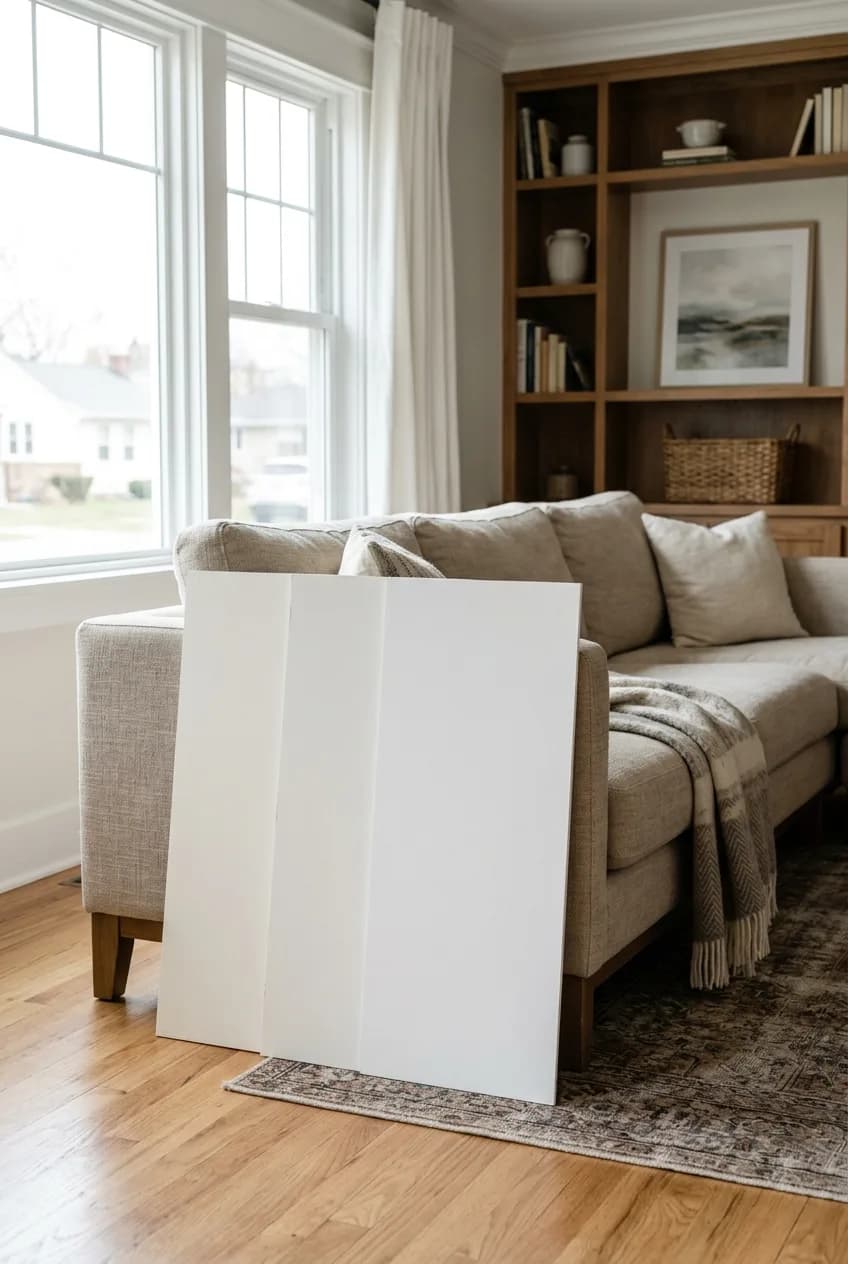
After all this analysis, you might have it narrowed down to a few contenders. Now comes the most important step: testing. Please, do not choose your final color based on that tiny chip you brought home from the store. It's simply not enough information.
The most common mistake people make is painting a small test swatch directly onto their current wall. The problem? The existing color will visually distort your perception of the new white's undertones. A yellowing beige wall will make your sample look cooler than it is, and a gray wall will make it look warmer. A separate sample board is the only way to see the color's true character.
Follow these steps for a foolproof test:
- Buy Sample Pots: Once you have 2-3 final candidates, buy small sample pots of each. Don't skip this; it's the best few dollars you'll spend on the project.
- Create Large Sample Boards: Get two large pieces of white poster board or foam core for each color. Paint two full coats on each board, leaving a white border around the edge to isolate the color.
- Let Them Dry Completely: Let them dry completely for several hours to cure. The color can change slightly as it dries.
- Move Them Around: Place your sample boards in different spots around the living room. Put one on the sunniest wall and another in the darkest corner. Tape one near the ceiling and one near the baseboard.
- Observe Over Time: Look at the samples throughout the day—in the bright morning light, the warm afternoon sun, and at night with all your lamps turned on. This is when undertones really reveal themselves.
- Check Against Key Elements: Most importantly, hold your sample boards directly against your sofa, your window trim, and your flooring. Which one looks best next to the things that aren't changing? The winner will be obvious.