Choosing curtains can feel overwhelming, with endless fabrics and colors to consider. But one detail often gets overlooked until the very end: the length. And truthfully, getting the length right is one of the most powerful decisions you can make in a room. It’s the difference between a window that looks like a polished, intentional design element and one that feels like a bit of an afterthought.
Think of curtains as the vertical architecture of your space. The right length can create the illusion of soaring ceilings, make a small window feel grand and expansive, and set the entire mood of the room, from cozy and casual to dramatic and formal. It's one of the most cost-effective ways to dramatically alter the perceived architecture of a room without calling a contractor.
So, before you fall in love with a pattern, let’s talk about the principles behind choosing the perfect length. We'll walk you through the standard styles, how to measure like a pro, and how to tackle those tricky windows, so you can hang your curtains with total confidence.
Why Curtain Length Matters More Than You Think
Creating an Illusion of Height
Curtain length isn't just about covering the glass for privacy; it's a fundamental design tool. The line your curtains create, from the rod down to the hem, has a profound psychological effect on how we perceive a space. A long, uninterrupted vertical line draws the eye upward, instantly making ceilings feel higher and the room more spacious. Conversely, curtains that stop awkwardly in the middle of a wall can visually chop the space in half, making it feel shorter and more cluttered.
Setting the Mood of the Room
The mood is also directly tied to length. Long, flowing drapes that puddle on the floor evoke a sense of luxury and formal drama, perfect for a dining room or master bedroom. Shorter curtains, like those ending at the windowsill, create a crisp, casual, and practical feel, which is why they work so well in busy kitchens and bathrooms. The length you choose dictates whether the window treatment is a simple, functional covering or a statement piece that frames the view like a work of art.
The 4 Key Curtain Lengths: A Visual Breakdown

While there are endless custom options, most curtains fall into one of four main categories. Understanding these will give you the vocabulary to choose the right style for your home's needs and architecture.
Sill Length
These curtains end right at or just below the windowsill. This is a very practical, clean, and casual look. It's the go-to choice for windows where long curtains would be impractical, such as in a kitchen behind a sink, in a child's playroom, or in a bathroom where moisture is a concern.
Apron Length
Apron-length curtains extend about 4-6 inches below the bottom of the window frame (the "apron"). This style was traditionally used to clear obstructions like radiators, deep window ledges, or furniture placed directly against the wall. It’s a very specific choice, and it's often the most misunderstood. If there isn't a functional reason to use this length, it can sometimes look dated or unintentional, as if you bought curtains that were simply too short. Use it with purpose!
Floor Length
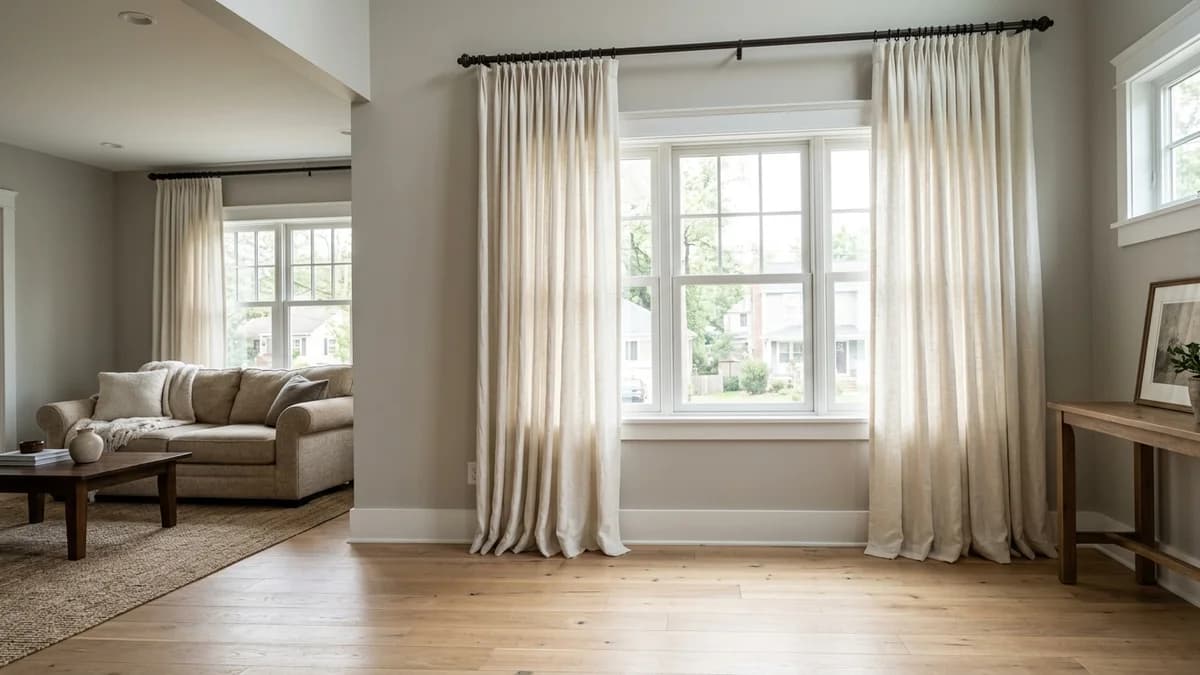
This is the modern standard for a reason. Floor-length curtains, which either hover just above the floor or barely graze it, provide a polished, elongated, and intentional look that suits nearly any room, from the living room to the bedroom. They create a strong vertical line that adds height and a touch of elegance without being overly formal.
Puddle Length
For a look of pure drama and luxury, puddle-length curtains extend onto the floor by anywhere from 1 to 6 inches (or even more). This creates a 'puddle' of fabric that is undeniably romantic and formal. It works best in traditional or opulent spaces where the curtains are more decorative than functional, as they need arranging each time they're moved. This style demands heavier, richer fabrics like velvet or lined silk that have the weight to pool beautifully.
Curtain Length | End Point | Best For | Vibe |
|---|---|---|---|
Sill | At or 1/2 inch below the windowsill | Kitchens, bathrooms, windows over counters | Casual & Practical |
Apron | 4-6 inches below the window frame | Windows over radiators or built-in furniture | Functional & Traditional |
Floor | 1/2 inch above floor to just touching | Living rooms, dining rooms, bedrooms—almost anywhere | Polished & Versatile |
Puddle | 1-6+ inches extra length on the floor | Formal dining rooms, grand bedrooms, spaces with high ceilings | Dramatic & Luxurious |
How to Measure Your Windows Like a Pro
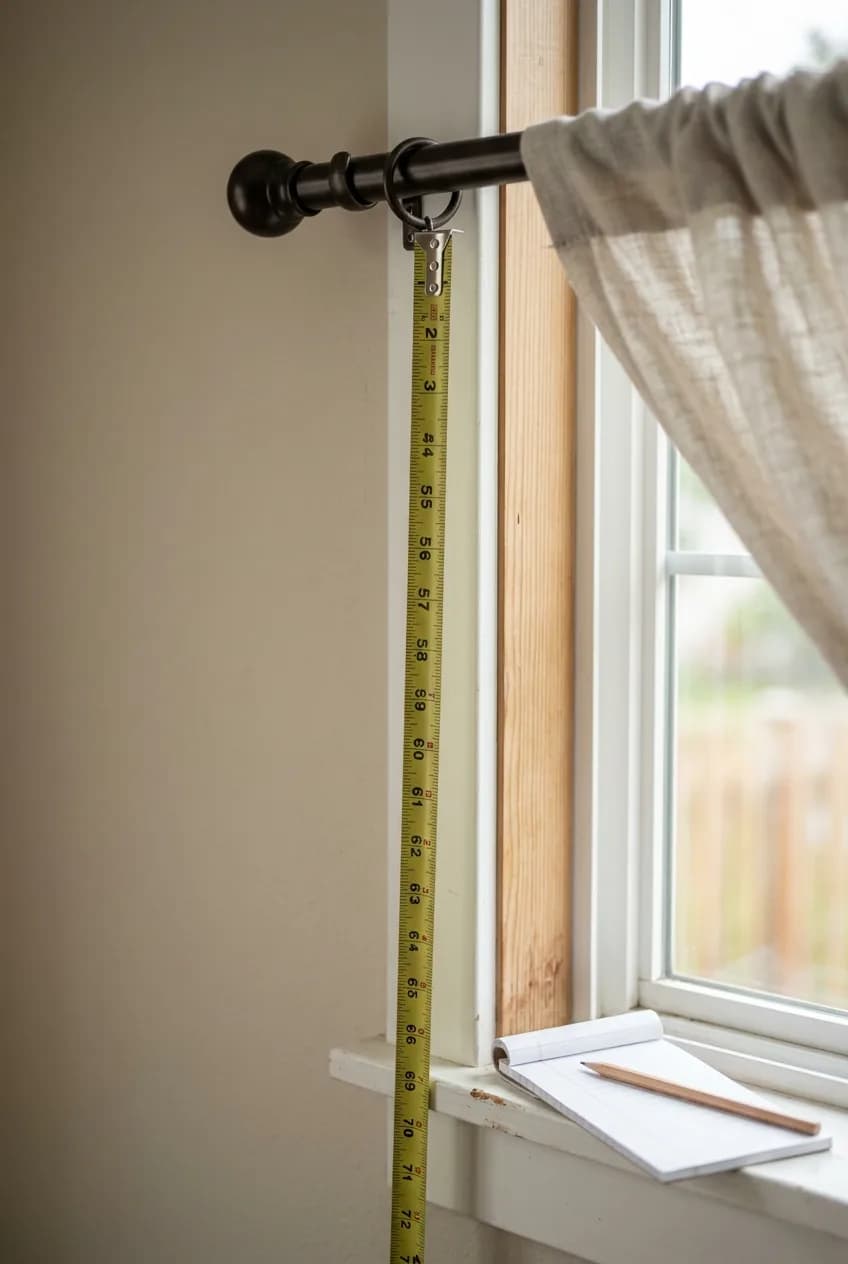
Accurate measurements are everything. Taking a few extra minutes here will save you the headache of returns or the disappointment of curtains that just don't hang right. The key rule? You're not measuring the window; you're measuring from where the rod will be.
The Step-by-Step Process
- Establish Your Rod Height: For a modern, height-enhancing look, plan to mount your curtain rod at least 4 to 6 inches above the top of the window frame. If you have plenty of wall space, you can even go higher, up to halfway between the frame and the ceiling. Also, extend the rod 6 to 10 inches wider than the frame on each side. This allows the panels to be pulled completely clear of the window, maximizing natural light and making the window appear larger.
- Measure from Rod to Floor: Once you've marked where your rod brackets will go, take your metal tape measure and measure from that mark down to your desired end point. For floor-length, measure to the floor. For sill, to the sill. For apron, to about 4 inches below the sill.
- Measure Twice (or Thrice!): Here’s an insider tip: always measure in at least two places, on the left side and the right side of the window. Floors and windowsills are rarely perfectly level, especially in older homes. If you find a discrepancy for floor-length curtains, use the shorter of the two measurements. This ensures your curtains won't drag awkwardly on the higher side.
- Buy Standard and Adjust: Off-the-shelf curtain panels typically come in standard lengths like 63, 84, 96, and 108 inches. It's often much more affordable to buy the standard length that's closest to (but longer than) your measurement and then slightly adjust your rod height up or down to get that perfect 'kiss' on the floor. This gives you a custom look without the custom price tag.
The Number One Measuring Mistake
The most common mistake is measuring only the window frame itself and forgetting to account for the 'high and wide' rod placement. This leads to buying curtains that are far too short once the rod is installed properly.
Solving Tricky Scenarios: Curtains for Every Window
Not every window is a simple rectangle in the middle of a blank wall. Here’s how to approach some of the more challenging situations with confidence.
Challenging Window Architecture
For bay windows, you can use a custom-curved or angled bay window rod and hang one continuous set of panels. Alternatively, treat each window individually with its own smaller rod and panels. In either case, floor-length is almost always the most elegant choice. For arched or palladium windows, a popular solution is to mount a straight rod high above the arch, treating it as one large rectangular unit. This emphasizes the room's height and doesn't hide the beautiful architectural detail of the arch when the curtains are open.
When Furniture Gets in the Way
More in Home Decor
Warm White vs. Cool White Paint: How to Choose the Perfect Shade for Your Living Room
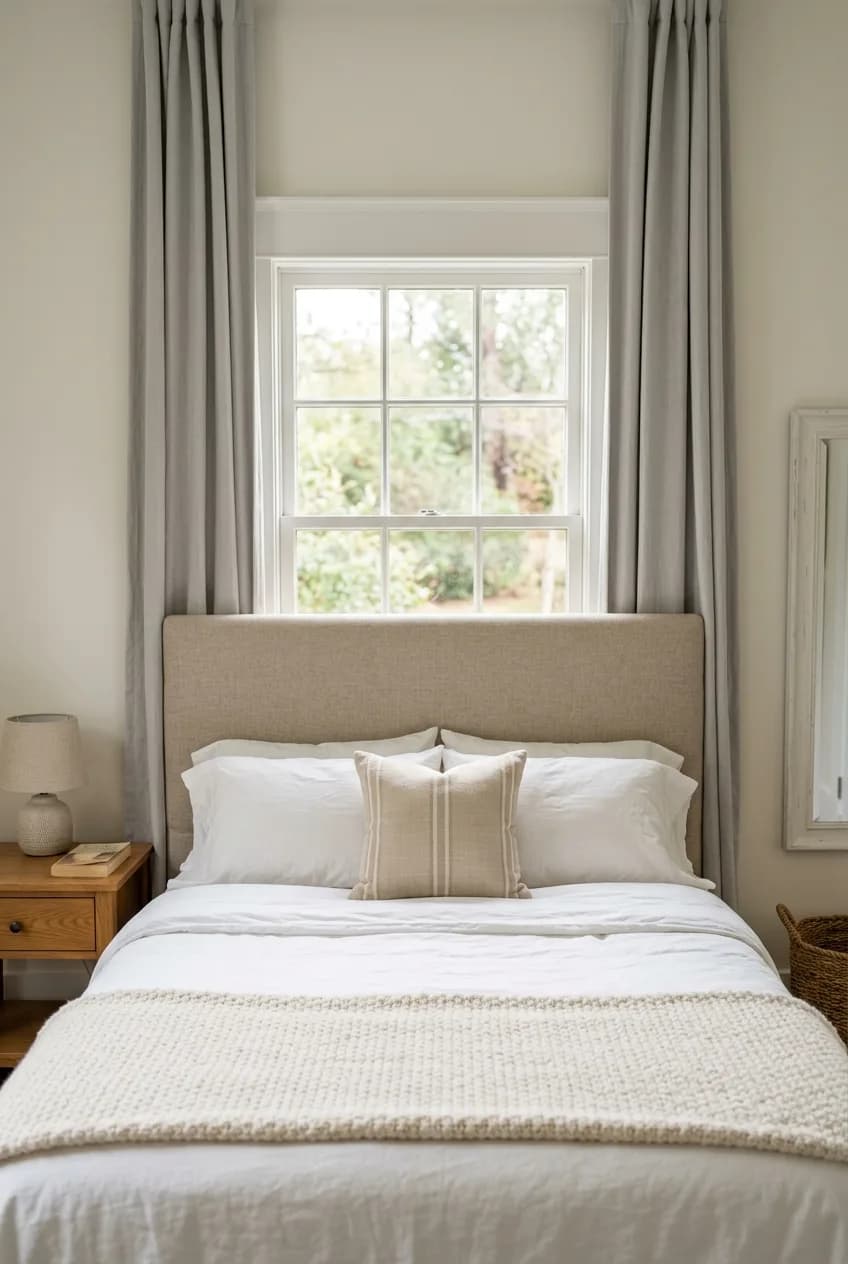
What about a window with a bed, desk, or sofa pushed up against it? You have two great options. The first is to opt for a shorter, more functional length like sill or apron curtains that won't get crushed behind the furniture. The second, and often more stylish, option is to simply let floor-length panels hang straight down behind the furniture. This maintains the clean vertical lines and sophisticated look, even if the bottom few inches are hidden.
Practicalities for Kids, Pets, and High-Traffic Zones
In a child's bedroom, playroom, or a busy entryway, safety and practicality are paramount. Floor-length curtains that puddle are a definite no-go—they are a tripping hazard and a magnet for dust, pet hair, and sticky fingers. Here, a 'float' style (ending about an inch above the floor) is perfect. It's easy to clean under and won't get tangled. For ultimate practicality, sill or apron lengths keep fabric completely out of the way.
And remember the trick for making any small window feel grander: use a wide rod and floor-length curtains. By mounting a rod that extends at least 6-10 inches beyond the frame on each side, the open curtain panels will stack against the wall, not the glass. This tricks the eye into seeing a much larger, more impressive window, maximizing both light and style.
The 'Finished' Look: Customizing Your Curtain Hang
Once you've decided on floor-length curtains—the most popular choice—there are still subtle variations in how they meet the floor that can perfect the final look. These small details are what give a room that professionally designed feel. Let's look at the three main styles.
The Float: Crisp and Practical
With this style, the hem hangs about a half-inch to one full inch above the floor. This is a great practical choice for high-traffic areas or homes with pets, as it stays clean and allows for easy vacuuming. It creates a very crisp, clean, no-fuss line.
The Kiss: Tailored and Elegant
This is where the curtain just grazes the surface of the floor. It’s arguably the most tailored and custom-looking option. It requires very precise measurement to achieve, but the result is incredibly sharp and elegant, creating a perfect vertical line without accumulating dust like a puddle.
The Break: Relaxed but Chic
Also called a 'trouser break,' this look involves about 1-2 inches of extra length, creating a small, stylish fold at the bottom, much like a pair of well-tailored trousers. It's a bit more relaxed and casual than the kiss but still looks very intentional and chic.
Why Fabric and Header Style Matter
Your fabric choice will hugely influence the final hang. Lightweight fabrics like linen or sheer cotton hang beautifully in a 'kiss' or 'float' style. Heavier materials like velvet, tweed, or lined silk have the structure and weight needed to create a luxurious 'puddle' or a handsome 'break'. Also, don't forget the header! A grommet top will cause the effective length to be slightly shorter than a pinch-pleat style hung from rings, so always measure from where the fabric will actually begin.