Every gardener faces this crossroads eventually. You see a beautiful climbing plant—maybe a sprawling indeterminate tomato, a heavy-duty winter squash, or a magnificent climbing rose—and you know it needs support. The store offers a quick, convenient solution: a trellis in a box. But when we move past the simple calculation of time versus money, what's the real difference? The core question for any serious gardener is about sturdiness. Which option will still be standing tall after a summer thunderstorm, laden with a 50-pound squash vine?
This isn't just a simple comparison. We're going to break down the specific factors that define real-world strength: materials, joint integrity, and anchoring. It's not truly 'store-bought vs. DIY,' but rather 'mass-produced design vs. purpose-built engineering.' And with a DIY project, you get to be the engineer.
Anatomy of a Store-Bought Trellis: What Are You Really Buying?
When you pick up a trellis from a garden center, you're primarily paying for convenience and aesthetics. They often look lovely on the shelf, with elegant curves and a neat finish. But to keep costs down and shipping easy, manufacturers make compromises, and those compromises are almost always in the areas that determine long-term strength.
Common Materials and Their Failure Points
Most affordable trellises are made from a few common materials, each with its own inherent weakness. Thin-gauge tubular steel is a popular choice; it’s lightweight and often powder-coated for color. But the problem is that the walls of the tubing are incredibly thin. Under a heavy load or strong winds, they bend easily and permanently. Once creased, the structural integrity is gone for good.
Vinyl or plastic trellises won't rust, but they become brittle over time with sun exposure. A cold snap can make them surprisingly fragile. Lightweight wood trellises look charming but are held together by tiny staples or brad nails that pull apart as the wood weathers and the plant grows.
Weak Joints: The Achilles' Heel
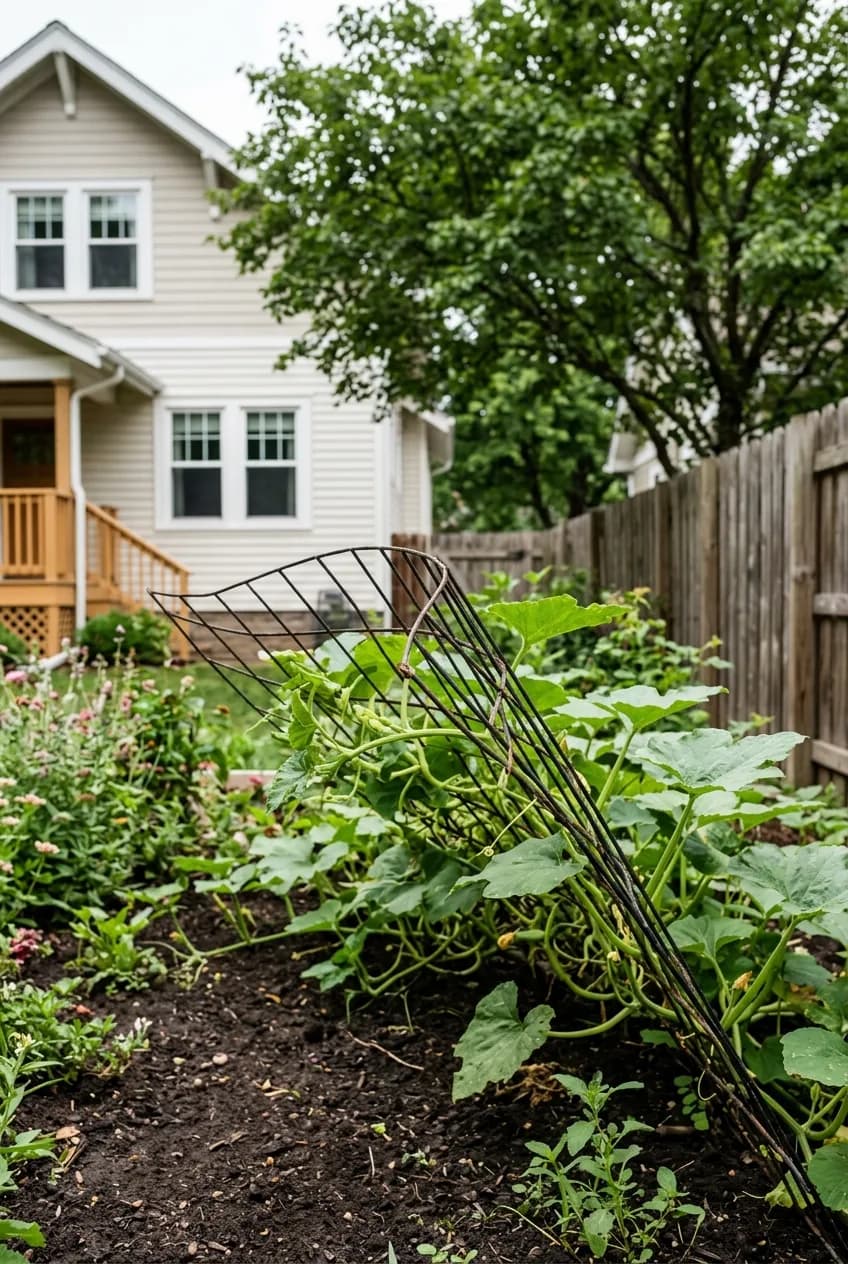
The single biggest point of failure for most commercial trellises is the joinery. Look closely at how they're assembled. Metal trellises often use tiny spot welds to connect pieces—these welds are small and brittle, and a good gust of wind can pop them right off. Other designs use small screws that thread into the thin metal, providing very little purchase and stripping out easily.
Snap-together plastic joints are another common feature. While easy to assemble, they introduce a point of flex. A sturdy trellis should be a single, rigid structure, but these joints allow the whole frame to twist and sway, putting stress on every other part of the trellis until it fails. The non-obvious insight here is that many of these attractive trellises are designed with lightweight annual flowers like clematis or morning glories in mind, not the sustained, ever-increasing weight of a productive vegetable harvest. Their sturdiness is often just for show.
Inadequate Anchoring
Finally, consider how these trellises meet the ground. Most come with short, simple spikes that push just a few inches into the soil. For a small plant in a pot, that might be fine. But in open ground, supporting a 10-foot tomato vine, these short anchors offer almost no resistance to leveraging forces. A strong wind can turn your plant-covered trellis into a sail, pulling the whole thing over from the base.
Component | Typical Store-Bought Approach | Common Point of Failure |
|---|---|---|
Main Frame | Thin-walled hollow steel tubing, vinyl, or lightweight wood | Bending, kinking, or snapping under load; becoming brittle in the sun. |
Joints | Small spot welds, tiny screws, staples, or plastic snap-fittings | Welds pop, screws strip, staples pull out, and plastic joints flex and break. |
Anchoring | Short (4-6 inch) spikes pushed into the ground | Leverage from wind and plant weight easily pulls the entire structure over. |
The DIY Advantage: Engineering for Your Specific Garden
Building your own trellis shifts the dynamic entirely. You are no longer accepting a one-size-fits-all product; you are designing a custom piece of garden hardware specifically to handle the demands of your plants, your soil, and your climate. This control is what creates a truly sturdy structure.
Access to Superior Materials
Your local hardware store or farm supply outlet is full of materials that are exponentially stronger than what's used in packaged trellises. Instead of hollow tubes, you can use solid rebar or thick-walled electrical conduit (EMT). These materials have immense bending resistance and will last for decades. Want something even bigger? A cattle panel or hog panel is a pre-welded grid of thick, galvanized steel that is incredibly rigid and can be shaped into an arch or used as a large wall.
For a wooden trellis, you can bypass the flimsy pine and go straight for pressure-treated lumber or naturally rot-resistant woods like cedar or redwood. Using standard 2x4s or 2x2s creates a frame that can support hundreds of pounds without flinching. That same short list of rot-resistant woods is exactly what we recommend in our guide to building a rot-proof raised garden bed, if you're planning more than one wooden garden structure this season.
Fundamentally Stronger Construction
More in DIY
How to Build a Raised Garden Bed That Will Last Forever
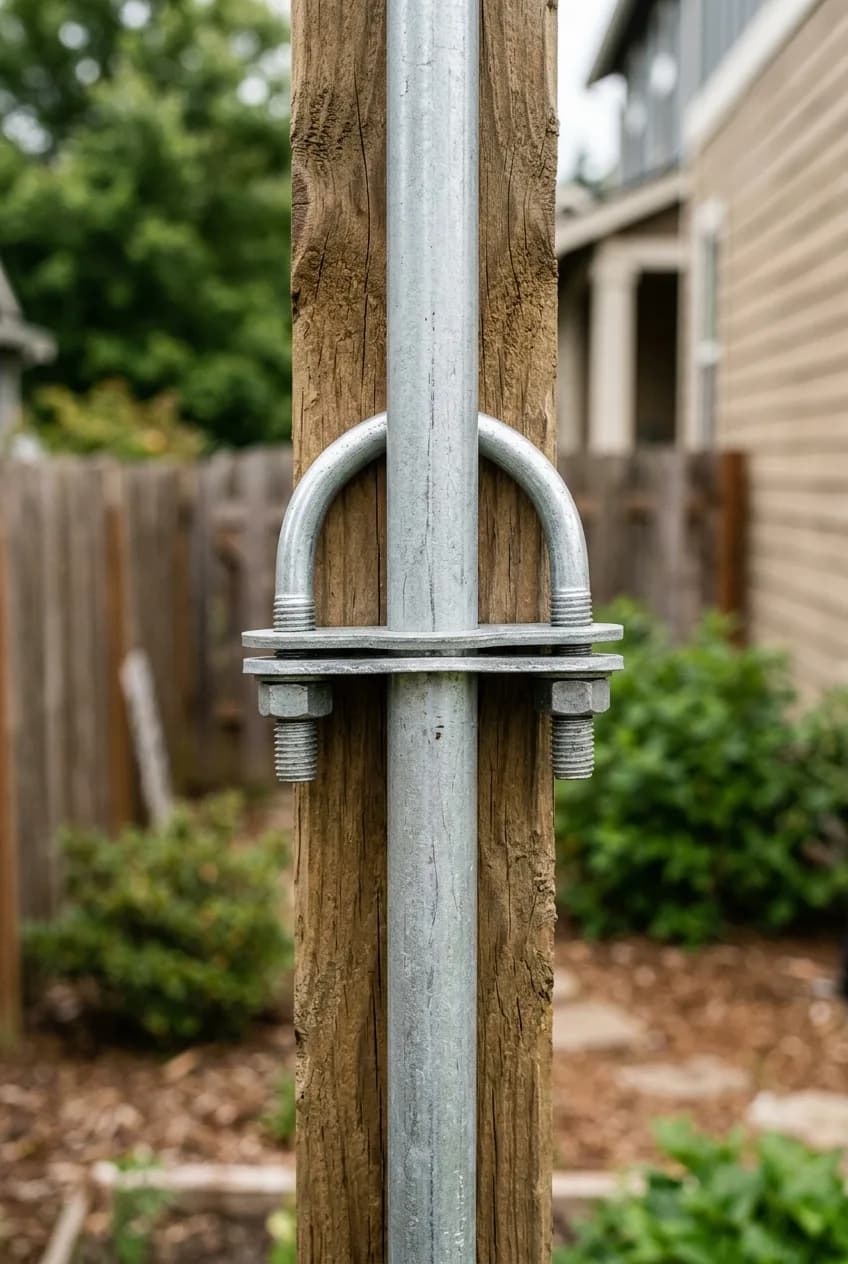
This is where DIY truly shines. Instead of weak spot welds, you can join metal conduit with set-screw connectors or drill through it and use nuts and bolts. For a wooden structure, you can use deck screws, lag bolts, and half-lap joints.
These methods create connections that are as strong, or even stronger, than the materials they're holding together. The key advantage here isn't just about using a bigger screw. It’s about creating a fully integrated, rigid frame. A properly built DIY trellis doesn't have the wobble points inherent in snap-together kits; every joint is a point of strength, transferring the load from the plant directly down into the ground without flexing.
Customized and Secure Anchoring
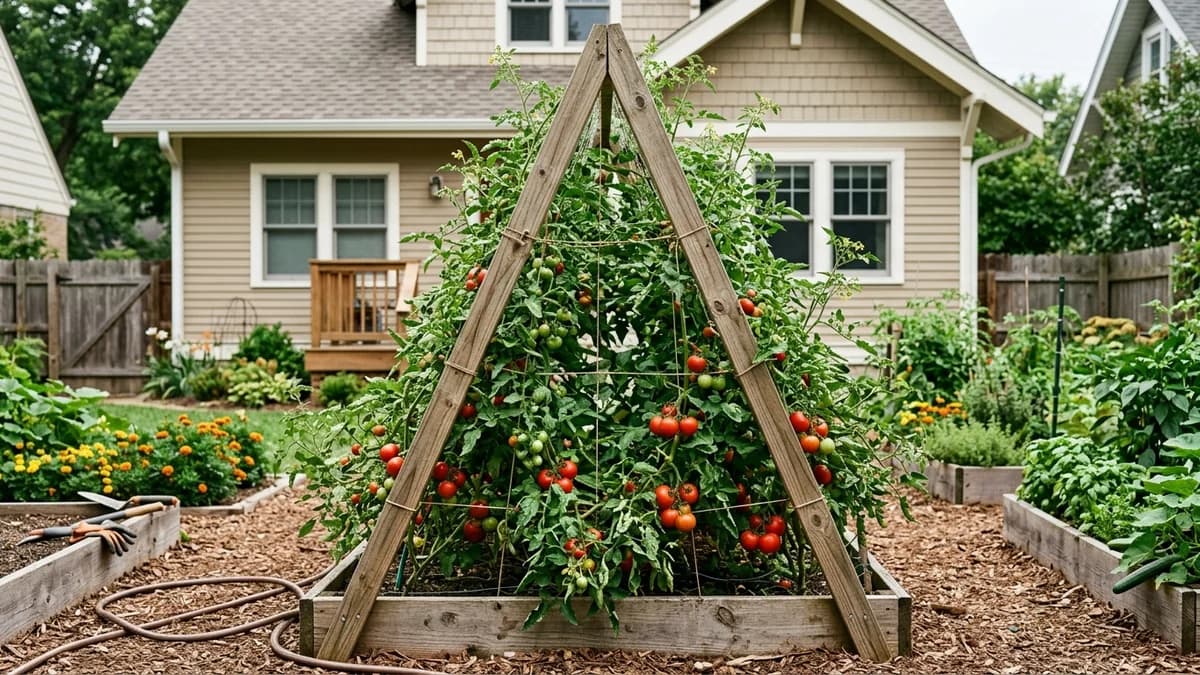
How can you make sure a DIY trellis won't fall over in a storm? By giving it a proper foundation. With a DIY build, you control the anchoring. You can use taller posts and drive them two feet into the ground for stability. For maximum, permanent strength, you can even set the main support posts in concrete, just like a fence post. An A-frame design with a wide base is another incredibly stable option. This level of secure anchoring is something you simply cannot get from an off-the-shelf product. The same DIY-over-store-bought logic applies to building your own raised garden bed too.
Sturdiness Showdown: A Head-to-Head Comparison
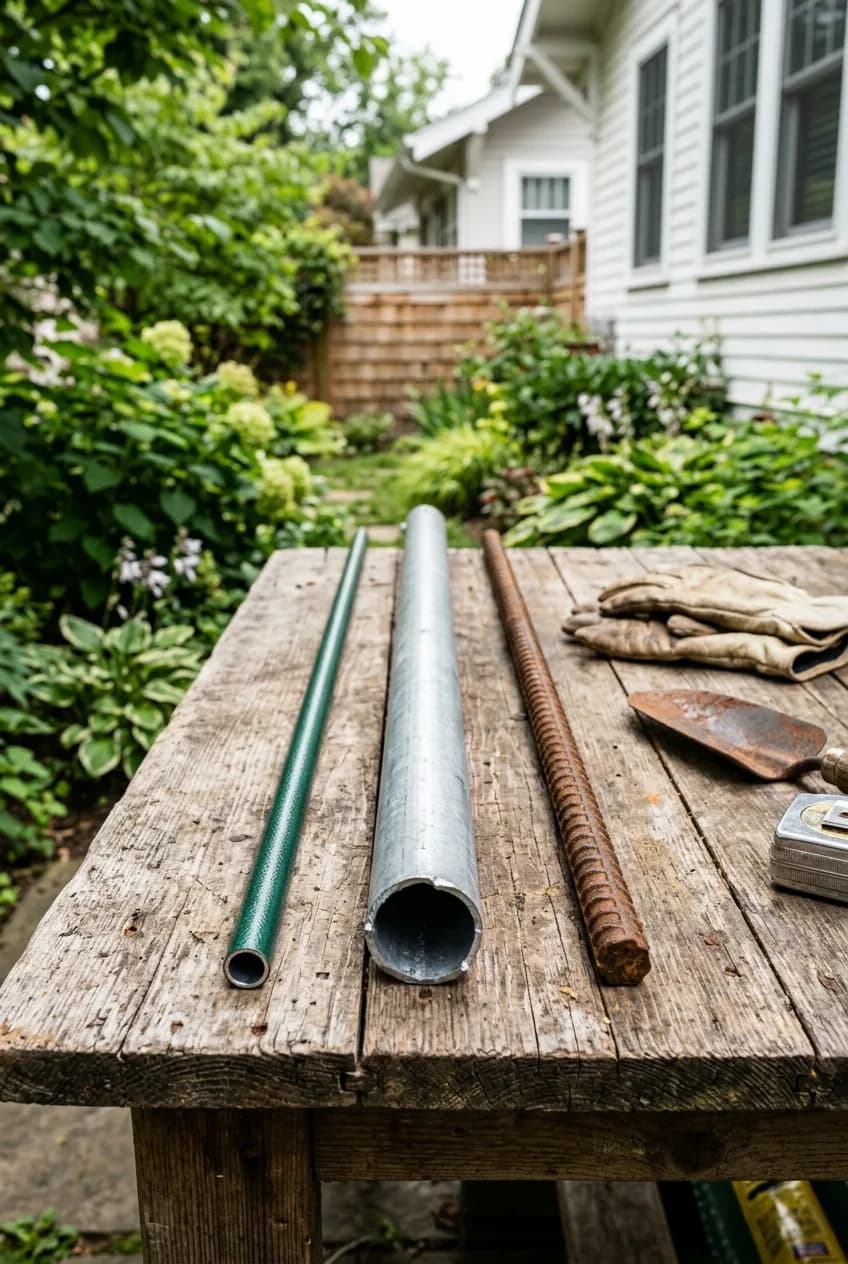
Let's put these two approaches side-by-side. When you look beyond the initial price tag and consider performance and lifespan, the choice becomes very clear for anyone growing more than a few sweet peas. The key insight from this comparison is that the connection points, not the main material, are often the primary point of failure in store-bought models. This is the easiest and most impactful area to 'over-engineer' in a DIY build. Using galvanized bolts instead of tiny screws provides a massive leap in sturdiness for very little extra cost.
Attribute | Typical Store-Bought Trellis | Well-Built DIY Trellis |
|---|---|---|
Material Thickness | Thin-walled (often < 1/16 inch) hollow tubing. | Solid rebar, thick-walled conduit, or substantial lumber (e.g., 2x2s). |
Joint Strength | Weak spot welds or small screws with minimal grip. | Through-bolts with nuts, heavy-duty deck screws, or proper wood joints. |
Load Capacity | Often struggles with 10-20 lbs of plant weight. | Can easily be designed to support 100+ lbs. |
Weather Resistance | Thin powder coating chips, leading to rust. Vinyl becomes brittle. | Galvanized steel, pressure-treated wood, or cedar offer 10+ years of durability. |
Lifespan | 1-3 seasons before bending, breaking, or rusting out. | 10-20 years or more with good material choices. |
Cost Per Year | Higher. A $40 trellis lasting 2 years is $20/year. | Lower. An $80 trellis lasting 10+ years is <$8/year. |
To answer a common question: do wooden trellises last as long as metal ones? It depends entirely on the specific materials. A well-built trellis from cedar or pressure-treated lumber will easily outlast a cheap, thin-steel trellis that rusts through in two seasons. However, a DIY trellis made from galvanized conduit or heavy rebar will likely outlast even the best wooden one.
The Verdict: Which Is *Actually* Sturdier and For Whom?
After looking at the materials, construction, and anchoring, the conclusion is clear. For any gardener growing heavy climbing vegetables, fruits, or establishing a large, permanent perennial vine, a DIY trellis is unequivocally the sturdier choice. It's not even a close competition.
So, is a typical metal trellis from a big box store strong enough for indeterminate tomatoes or climbing squash? Almost always, the answer is no. These plants can easily top 25-50 pounds with fruit, and that's before accounting for the force of wind and rain. This doesn't mean store-bought trellises are useless, though. The 'sturdiest' trellis is the one correctly matched to the job; a store-bought model isn't inherently bad, it's just often misapplied.
They are perfectly 'sturdy enough' for specific situations:
- Lightweight annual vines like sweet peas, morning glories, or climbing nasturtiums.
- Supporting a single clematis vine with delicate stems.
- Use in containers where the plant's root system (and overall size) is limited.
- Situations where decorative appearance is far more important than load-bearing capacity.
Here is a final, actionable rule of thumb: If you anticipate the mature, fruit-laden plant will weigh more than 15 pounds, it's time to stop looking at pre-made kits. Your time, effort, and money are far better invested in a DIY solution that won't fail you mid-harvest.