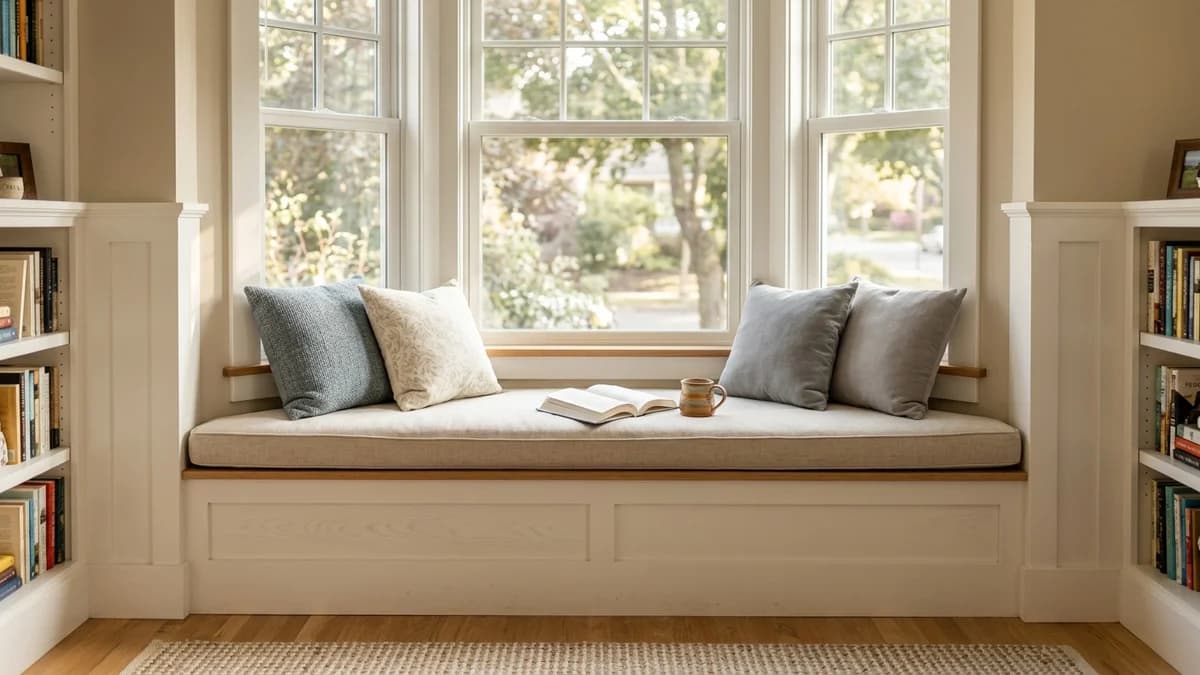
That sun-drenched spot under a window is just calling for a cozy place to sit. A window seat seems like the perfect solution, but then the big question hits: should you build a custom one or just buy a nice bench or chaise lounge?
It’s a classic home decor dilemma that pits permanence and potential against speed and simplicity. There’s no single right answer, but by comparing the two paths on cost, customization, and long-term value, you can find the perfect choice for your home, your budget, and your lifestyle.
The Financial Equation: A Head-to-Head Cost Comparison
At first glance, buying a bench seems like the obvious budget-friendly choice. But when you dig into the numbers and consider what you're getting for your money, the picture becomes much more nuanced. Let's break it down.
Option 1: The DIY Build
If you're comfortable with a saw and a drill, building your own window seat is the most affordable route to a custom fit. The primary costs are materials. For a basic 6-foot window seat, you can expect to need a sturdy frame (built from 2x4s), a plywood or MDF shell, and a top. Material costs can range from $300 to $800, depending heavily on your choice of wood.
- Framing Lumber (2x4s): $20 - $40
- Plywood/MDF (for box and top): $150 - $400. Cabinet-grade plywood is more expensive but provides a much better finish.
- Hardware (screws, hinges, drawer slides): $30 - $150+
- Finishing Supplies (primer, paint, wood filler): $50 - $100
Don't forget potential tool costs if you don't already have a circular saw, drill, level, and stud finder. This can add another $100-$300 to your startup budget.
Option 2: Hiring a Professional
For a flawless, integrated look without the hands-on work, hiring a carpenter or a general contractor is the way to go. Labor is the biggest factor here, with carpenters typically charging between $70 and $150 per hour. A well-built window seat can take anywhere from one to three days (8 to 24 hours) of labor. The total cost for a professionally built window seat often lands in the $1,200 to $3,500+ range, which includes materials, labor, and finishing.
Option 3: Buying Off-the-Shelf Furniture
This is the most straightforward option. You can find seating that fits your space at retailers like Wayfair, Crate & Barrel, or Pottery Barn. Prices vary wildly by style, material, and brand. A simple upholstered storage bench might be $200-$500, while a high-quality chaise lounge or a set of two accent chairs could cost anywhere from $600 to $2,000+.
The 'Hidden' Costs and the Real Value
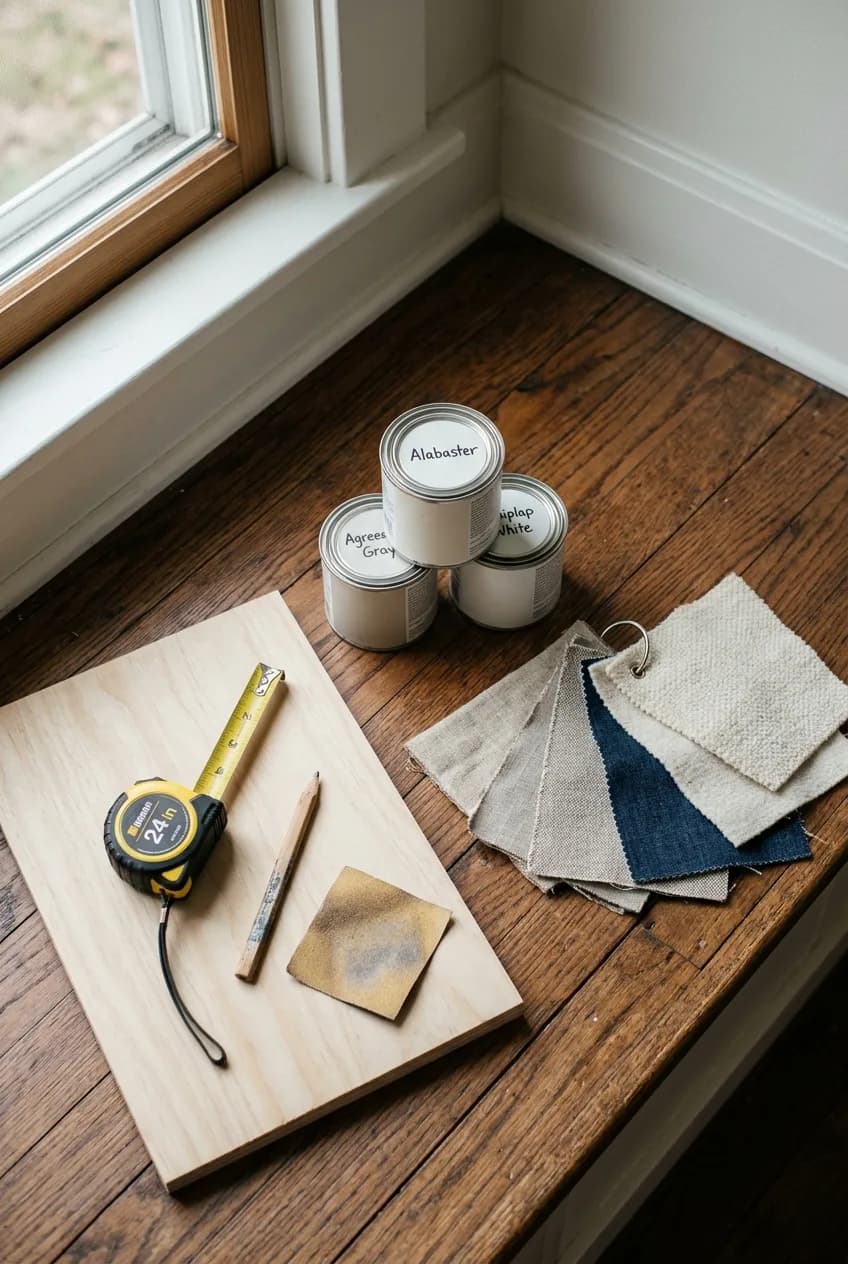
For any option, the cushion is a significant and often overlooked expense. A custom-made cushion with quality foam and upholstery-grade fabric can easily cost $200 to $600. For store-bought furniture, be wary of delivery fees or potential assembly charges.
Here's the non-obvious insight: while the initial sticker price of buying furniture might seem lower, the 'cost per cubic foot' of integrated storage gained from a custom build often makes it a more financially efficient use of space. A $1,500 built-in that adds 20 cubic feet of seamless storage has a different value proposition than a $600 bench that holds a couple of blankets.
Factor | DIY Build | Professional Build | Buy Furniture |
|---|---|---|---|
Typical Cost | $300 - $800 (materials) | $1,200 - $3,500+ | $200 - $2,000+ |
Time Commitment | 2-5 days | 2-4 days (of disruption) | 1-2 hours (shopping/assembly) |
Customization | Total | Total | Limited to available options |
Skill Level Needed | Intermediate | None | None |
Unlocking Potential: The Unmatched Value of Customization
The single greatest argument for building a window seat is the power of a perfect fit. Off-the-shelf furniture is designed for average spaces, but a custom-built solution can turn your home's unique quirks into its greatest strengths.
Solve for Awkward Spaces
Do you have a charming bay window, a lonely nook at the end of a hallway, or a wall under a sloped ceiling? These are notoriously difficult spots to furnish well. Standard benches leave awkward gaps, and chairs can look lost. A built-in window seat, on the other hand, can be tailored to the exact dimensions of the space, making it feel intentional, integrated, and completely utilized.
Maximize Every Inch with Storage
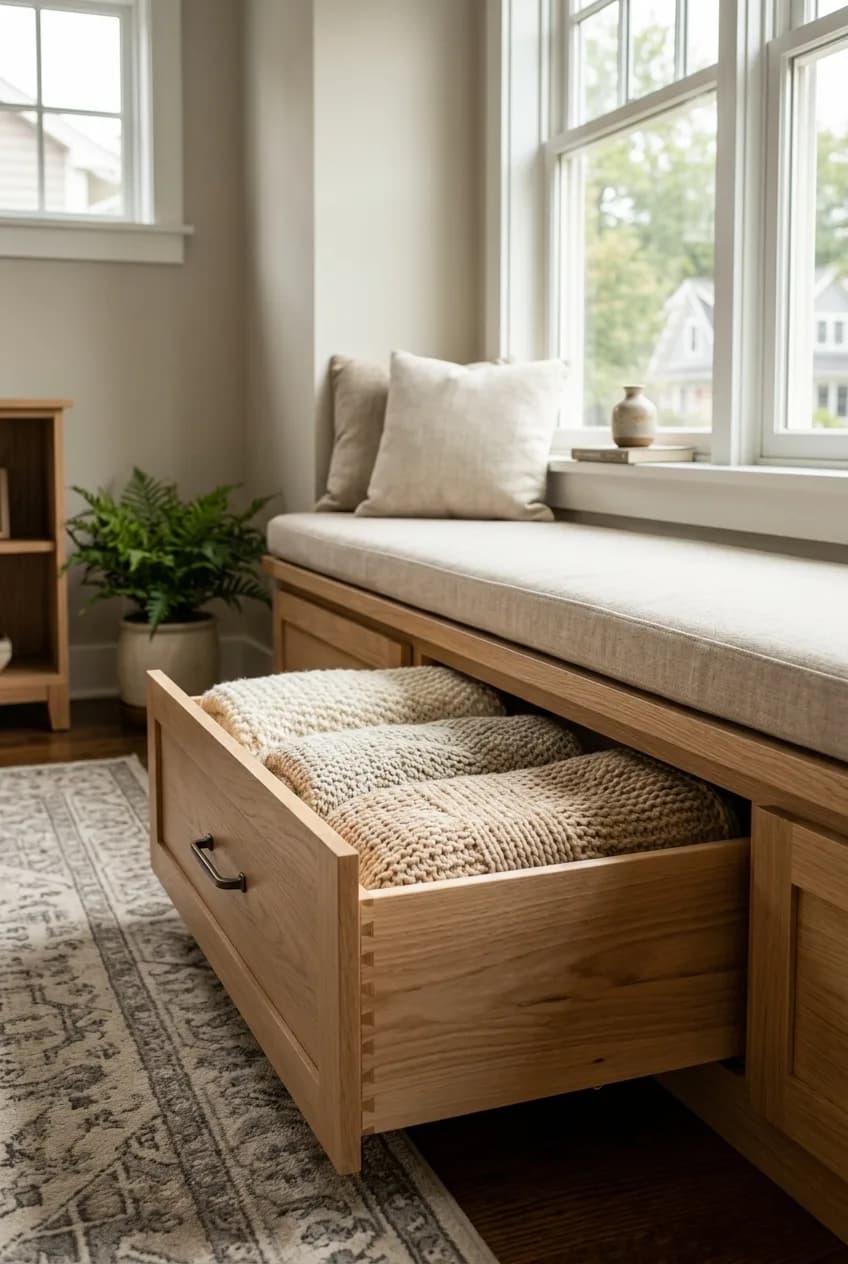
So, how much storage can a window seat really provide? A lot more than you might think. A typical 6-foot-long by 20-inch-deep window seat offers over 16 cubic feet of storage volume—that's equivalent to a large dresser or cedar chest. You can design it to fit your exact needs, whether it's deep drawers for bulky sweaters and blankets, a flip-top lid for storing seasonal decor, or even open cubbies on the sides to serve as built-in bookshelves. This is a huge advantage over most store-bought benches, which offer minimal, often awkward storage.
Achieve a Seamless, High-End Look
With a built-in, you have complete control over the final look. You can match the trim and baseboards to the rest of the room, choose the exact paint color to complement your walls, and select hardware that ties in with your home's existing finishes. The result is a feature that looks like it has always been part of the house's architecture.
Ultimately, a custom window seat isn't just furniture; it's an architectural feature. It can solve multiple design problems at once—seating, storage, and aesthetics—creating a cohesive and polished look that standalone pieces rarely achieve.
The Case for Buying: Speed, Simplicity, and Flexibility
While a custom build offers perfection, the path of buying furniture is paved with convenience—and that holds tremendous value.
The most obvious benefit is immediate gratification. There is no construction dust, no loud saws in your living room, and no project stretching over multiple weekends. You can browse online, click 'buy,' and have a new seating area set up in a matter of days. For busy households, this lack of disruption is a major selling point.
More in Room Ideas
5 Ways to Make That Awkward Bedroom Corner Functional & Stylish
The marketplace for standalone seating is also vast. Whatever your style—from modern farmhouse to sleek minimalist—there is a bench, chaise, or set of chairs out there for you, at almost any price point. You can touch, feel, and test out options in a showroom, removing the guesswork of a custom project.
But perhaps the most overlooked benefit of buying furniture is its non-permanence. A built-in window seat is a commitment; you can't easily change your mind. A stylish bench, however, offers total flexibility. If you decide to rearrange the room, it can move to a new wall. If you move to a new home, it can come with you. This is especially critical for renters, for whom a permanent installation is simply not an option.
Thinking Long-Term: Resale Value and Durability
How does your decision today affect your home's value tomorrow? A built-in and a piece of furniture play very different roles in the long-term story of your home.
Let's be clear: a window seat won't add measurable square footage or get its own line item on an appraiser's report like a new bathroom would. But it absolutely adds value in a less direct way. For potential buyers, thoughtful, well-executed built-ins are a sign of a custom, cared-for home. They create a memorable, emotional connection. In a sea of similar houses, a charming reading nook can be the feature that makes your home stand out.
There's also the question of durability. A properly constructed window seat, built from solid wood framing and quality plywood, is fundamentally part of your house. It's designed to withstand decades of use. Much of today's mass-produced furniture, in contrast, relies on particleboard, veneers, and less robust joinery, which may not hold up as well over time. A built-in is an investment in permanence.
While it won't single-handedly raise your asking price, a thoughtful built-in is often viewed by buyers as a premium, custom feature that sets a home apart from cookie-cutter competition, justifying a higher perceived value and making your home more desirable.
Your Final Verdict: A Decision-Making Framework
Feeling pulled in both directions? That’s normal. To find your answer, walk through these key questions. Your priorities will point you toward the right choice.
- Are you renting or owning? If you rent, the decision is made for you: buy furniture you can take with you.
- What is your realistic budget? If your all-in budget is under $500, buying off-the-shelf or a dedicated DIY project is your most likely path.
- Is maximizing storage your primary goal? If you desperately need efficient, hidden storage, a custom build is almost always superior.
- How unique is your space? For a standard, rectangular space, you have many buying options. For a bay window or awkward nook, a build will look far better.
- What is your DIY skill and patience level? Be honest with yourself. A frustrating, half-finished project is worse than no project at all.
- How long do you plan to live in your home? If you see a move in the next couple of years, the flexibility of bought furniture might outweigh the benefits of a permanent built-in.
In short: Build if you own your home, need to maximize a unique space, crave integrated storage, and have the budget or skills for a permanent upgrade. Buy if you value flexibility, speed, a lower initial cost, or if you're renting.
But wait, there's a third option. For a 'best of both worlds' approach, consider a semi-custom build. You can use stock kitchen base cabinets from a store like IKEA or Home Depot as a sturdy foundation. By arranging a few cabinets, adding a custom top, and finishing with trim, you can get 80% of the custom feel for a fraction of the cost and effort of a full custom build. It's a brilliant shortcut that delivers a high-end look on a smarter budget.