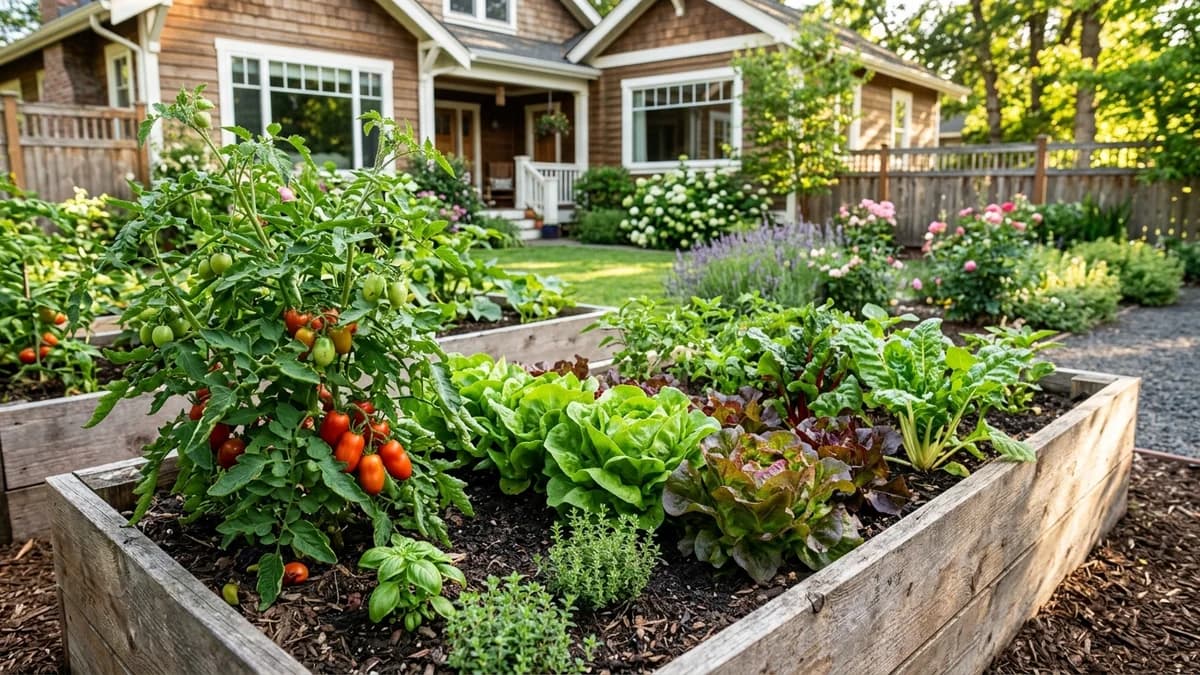
We've all seen the pictures: raised beds overflowing with a lush, dense carpet of green. It looks like the very definition of abundance, a sign of a thriving garden. But what if that 'jungle' look, the one so many of us aim for when we first start out, is actually an aesthetic trap? What if it’s the very thing sabotaging your harvest before it even has a chance?
It’s one of the most common and counter-intuitive mistakes in gardening. You want a big harvest, so you plant more seedlings. It makes perfect sense, on the surface. But the real action—and the real competition—is happening where you can’t see it: deep in the soil and under that dense canopy of leaves.
The truth is, a packed garden bed is often a stressed garden bed. Giving your plants room to breathe isn't about empty space; it's about providing the resources for each one to reach its full, productive potential.
The Invisible War Happening in Your Soil
Think of your raised bed as a buffet with a limited amount of food. When you have just a few guests, everyone eats well. But when you invite too many, they start elbowing each other for the last serving. That's exactly what's happening with your plant roots.
Root Competition is Relentless
In the confined space of a raised bed, plant roots are in a constant, fierce battle for finite resources. Every drop of water and every bit of nitrogen, phosphorus, and potassium is up for grabs. Even if you start with beautiful, rich soil, dozens of plants crammed into a few square feet will exhaust it far faster than a few well-spaced ones.
This leads to plants that are perpetually stressed and stunted. They may look green, but they never quite achieve the vigorous growth you see on the seed packet. This is the core insight many gardeners miss: overcrowding forces you to amend and water constantly, not because you're feeding individual plants, but because you're fueling a resource-draining war between them.
Signs of a Losing Battle
The first signs of trouble often mimic poor soil, which can be confusing. Are you seeing yellowing leaves (especially lower ones), weak stems, or plants that just seem 'stuck' and aren't sizing up? Before you rush to add more fertilizer, look at your spacing. If your plants are shoulder-to-shoulder, the problem isn't the quality of your soil—it's the quantity of competition within it.
Why Your Crowded Garden is a Haven for Disease
Battling powdery mildew on your squash or blight on your tomatoes? It's easy to blame a humid spell, but the real culprit is often a micro-climate you accidentally created by planting too closely.
The Anatomy of a Fungal Outbreak
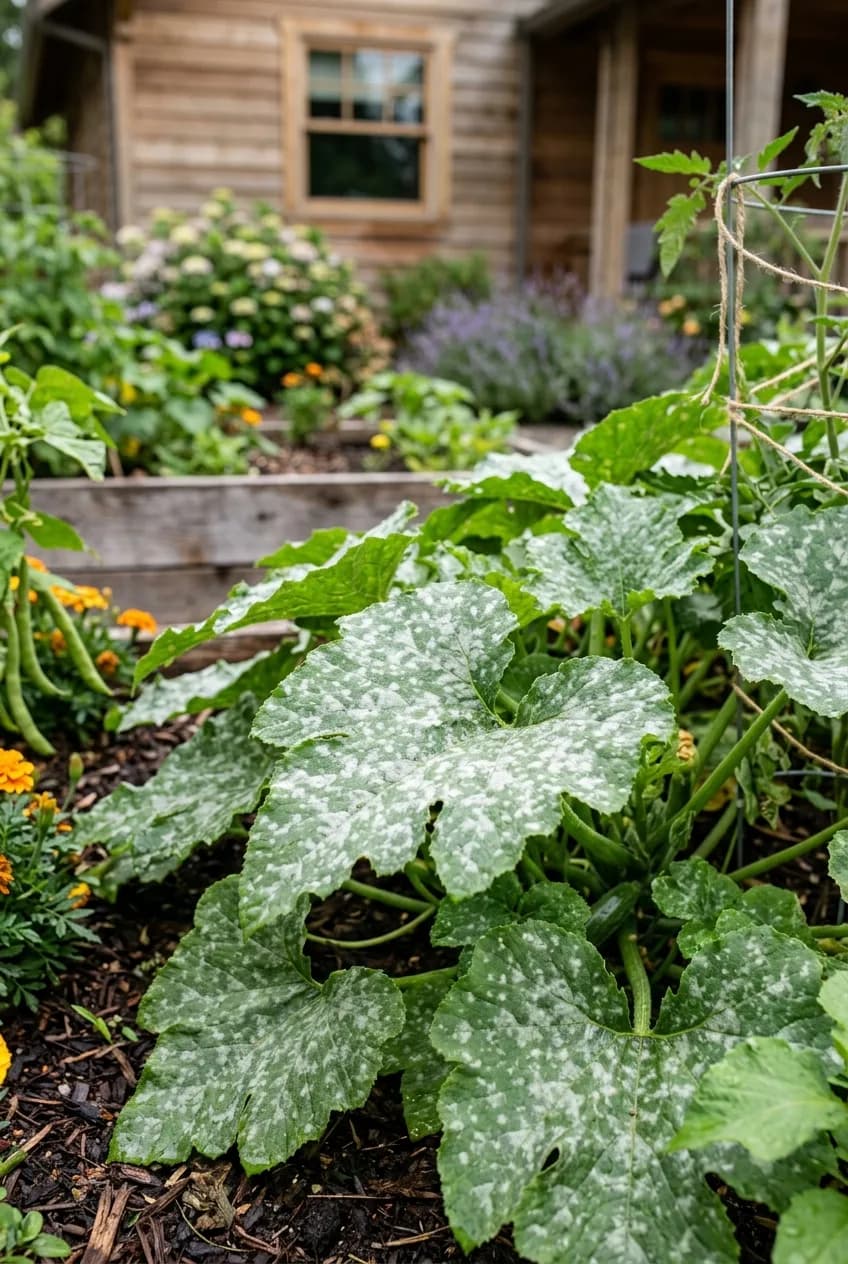
When leaves are packed together, airflow is drastically reduced. After a rain shower or morning dew, that moisture gets trapped between them, sometimes for hours. This damp, stagnant environment is the perfect breeding ground for fungal spores to take hold and multiply. Proper spacing is one of your best organic defenses against this exact problem.
Airflow as Your Best Defense
Many gardeners don't realize that a well-spaced garden can resist the exact same weather conditions that devastate a crowded one. It's simply because the moving air allows the foliage to dry quickly. Think of it as preventative medicine for your plants.
Factor | Crowded Bed | Well-Spaced Bed |
|---|---|---|
Airflow | Poor to non-existent | Excellent |
Leaf Drying Time | Slow; leaves stay wet for hours | Fast; breezes dry foliage quickly |
Humidity Level | High; trapped under the canopy | Low; dissipates with airflow |
Fungal Disease Risk | Very High (e.g., powdery mildew, blight) | Very Low |
An Open Invitation: How Overcrowding Attracts Pests
Just as a lack of airflow invites disease, a dense canopy of leaves is a welcome mat for pests. It’s a safe haven, shielding them from your watchful eye and from the beneficial insects that would normally prey on them.
A Perfect Hiding Place
Aphids, spider mites, and squash bugs love to hide on the undersides of leaves and deep within the plant's structure. In a crowded bed, this cover is absolute, making treatment with organic sprays like neem oil nearly impossible when you can't even reach the inner stems and lower leaves.
Stressed Plants Are Pest Magnets
What's more, the plants themselves, weakened by their constant competition for resources, are more susceptible. Stressed plants can emit chemical signals that actually attract certain pests—it's nature's way of culling the weak. This overcrowding also creates 'pest highways,' allowing a colony to migrate from one plant to the next without ever touching the ground, completely hidden from predators like ladybugs that patrol open spaces.
The Harvest Paradox: Getting More by Planting Less
This is where we get to the heart of the matter. The goal isn't the most plants per square foot; it's the most *harvest* per square foot. These are two very different things.
Yield vs. Number of Plants
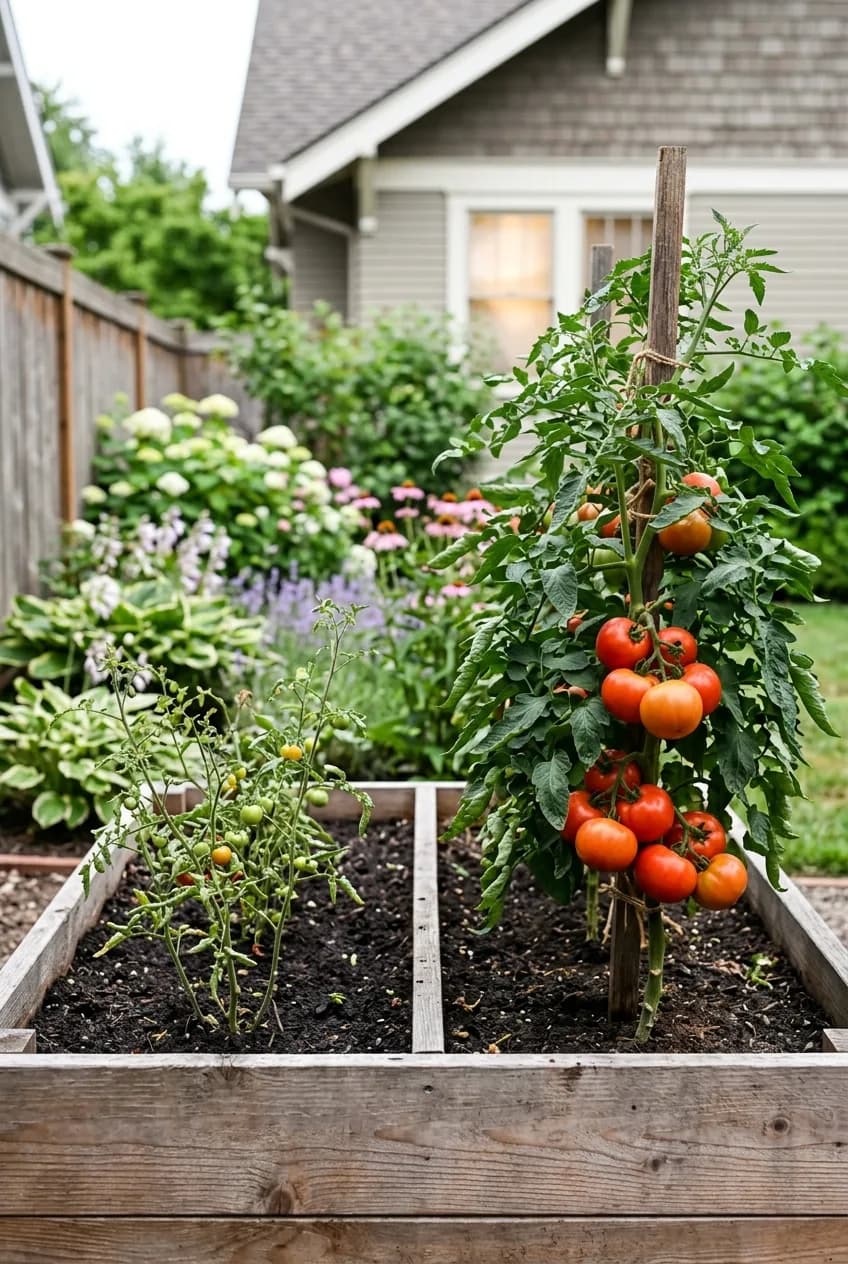
A single, healthy, unstressed plant with access to all the sun, water, and nutrients it needs will wildly outperform several crowded, struggling competitors. Let’s take zucchini. You might be tempted to plant four seedlings in a small area. The result? They'll compete, develop mildew, and you might get a handful of small squash before they give up. But one single zucchini plant, given a 3-foot radius, will become a massive powerhouse, giving you more zucchini than you know what to do with all season long.
The Hardest Job: Why You Need to Thin
This is why thinning is arguably the most important—and for many, the most difficult—task in the garden. Plucking out perfectly good seedlings feels wrong, but it is an act of sacrifice for the greater good of the harvest. You are choosing which plants will become champions.
Planting Strategy | Plants per 4x4 Bed | Typical Plant Health | Relative Harvest Outcome |
|---|---|---|---|
Crowded | 8-10 tomato plants | Stunted, yellowing, disease-prone | A small yield of undersized fruit |
Well-Spaced | 3-4 tomato plants | Large, vigorous, healthy | A large, continuous yield of full-sized fruit |
Your Action Plan: Spacing, Thinning, and Future Success
So, how do you put this into practice? Whether you're staring at a current jungle or planning for next year, here's how to reclaim your harvest.
Mid-Season Triage: Fixing a Crowded Bed
Is it too late to fix things? Not necessarily. If your plants are still in their growth phase, a bold intervention can make a huge difference. Get your snips or shears (don't pull, as this can disturb the roots of the plants you're keeping).
- Identify your strongest performers. Look for the thickest stems and the most vigorous growth.
- Now, identify which of the *other* plants are most aggressively blocking their light and airflow. These are your primary targets.
- Don't just remove the smallest seedlings. The insider tip here is to prioritize removing the plants, regardless of their size, that are causing the most interference for your chosen 'winners'. A slightly larger plant that's casting a huge shadow might be a better candidate for removal than a tiny one that isn't in the way.
- Cut the unwanted plants at the soil line. This leaves their roots to decompose in place, minimizing soil disturbance for the remaining plants.
Next Season's Strategy: Prevention
The best fix is to prevent the problem in the first place. When you get a seed packet, trust the spacing recommendations. They can seem ridiculously far apart, like 18 inches for a head of broccoli, but that space is there for a reason. That tiny seedling is meant to grow into a two-foot-wide plant! Getting the spacing and structure right from day one matters even more if you built your bed to last decades — see our guide to building a rot-proof raised garden bed for the full foundation-to-finish process.
A good rule of thumb for raised beds is to use the 'spacing between rows' recommendation as your all-around distance, since you won't have traditional rows. If it says 'plant 12 inches apart in rows 24 inches apart,' aim for a spacing somewhere in the middle, around 18 inches for each plant. And if you're building that bed from scratch, our guide to a raised bed that won't rot covers sizing it generously from the start.
Maximize Space Without Crowding
Wanting to make the most of your space is a great instinct. Just channel it differently. Instead of packing things side-by-side, think vertically. A trellis for cucumbers, pole beans, or indeterminate tomatoes can triple your effective growing area without creating a crowded, disease-prone mess on the ground. This allows sun and air to reach everything, giving you the best of both worlds: high density and healthy plants.