Have you ever walked into a room that just felt... right? It wasn't perfectly matched, but the sleek modern sofa, the antique armchair, and the rustic coffee table all seemed to be in a perfect conversation. Then you look at your own collection of inherited pieces, great finds, and new buys, and it feels more like a shouting match.
The fear of creating a space that looks like a chaotic thrift store jumble is real, but it shouldn't stop you from building a home that reflects your unique story. Mixing furniture styles is an art, but it's one based on a few simple, learnable principles. It’s not about luck; it’s about intention.
Forget the old rule that everything has to match. We're going to walk through a simple, rule-based approach that will give you the confidence to pair that mid-century credenza with your traditional sofa, creating a look that’s layered, personal, and anything but messy.
The Foundation: Find Your Common Thread
First things first: An intentionally eclectic space feels curated and personal, while a chaotic one feels accidental and unsettled. The difference is a 'common thread'—a unifying element that ties disparate pieces together and helps them make sense as a group.
Think of your room as a good dinner party. You wouldn't invite guests who have absolutely nothing in common and expect the conversation to flow. Instead, you'd find some shared interest or background to get them talking. Your furniture works the same way. A successful mix of styles is a conversation between pieces, and you're the host who needs to make the right introductions.
This common thread can be obvious, like a color or a material. But often, the most successful rooms are built on something more personal. The thread might be a story. Perhaps it’s a collection of pieces from your travels, or furniture inherited from family that shares a history. The 'common thread' isn't just a design rule; it's the very thing that makes the space uniquely yours.
The 80/20 Rule: Establish a Dominant Style
If you're feeling overwhelmed, the 80/20 rule is the perfect place to start. It's a beautifully simple principle that brings instant clarity: about 80% of your room should be dedicated to one primary style, which acts as the anchor. The remaining 20% is your playground for introducing a second, contrasting style.
Choosing Your 80%
Your dominant style is the foundation of the room. How do you choose it? Look around. What’s the architectural style of your home? A modern farmhouse will naturally lean into a rustic or transitional style, while a city apartment might feel more at home with modern or industrial pieces. Also, consider what you already own and love. If your biggest investment pieces—like your sofa and media console—are mid-century modern, that’s likely your 80%.
This dominant style will dictate your largest furniture pieces and the overall mood. It creates a calm, consistent backdrop that allows your accent pieces to shine without creating visual noise.
Introducing Your 20% Accent
This is where the magic happens. Your 20% is for the statement pieces, the interesting contrasts, and the items that bring personality. It could be a pair of ornate, traditional lamps on a sleek, modern console table. It might be industrial metal bar stools tucked under a classic wood kitchen island.
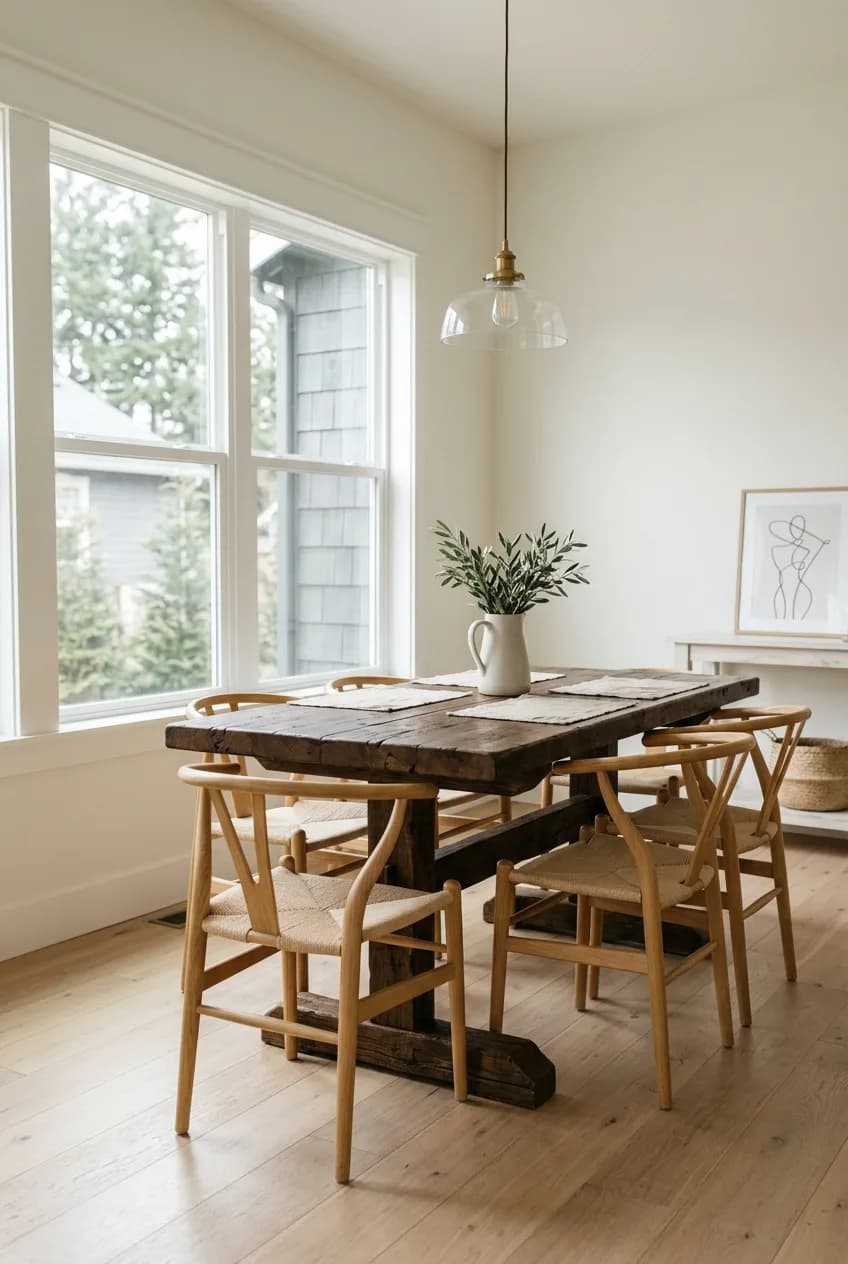
Here's a tip that really elevates this rule: don't just sprinkle your 20% around in tiny accessories. The most impactful use of the 80/20 rule is often a single, large-scale piece in the accent style. Imagine a dining room with six simple, modern chairs (the 80%) surrounding one huge, rustic, reclaimed-wood farmhouse table (the 20%). The contrast is confident and intentional, not accidental.
Unify with a Strategic Color Palette
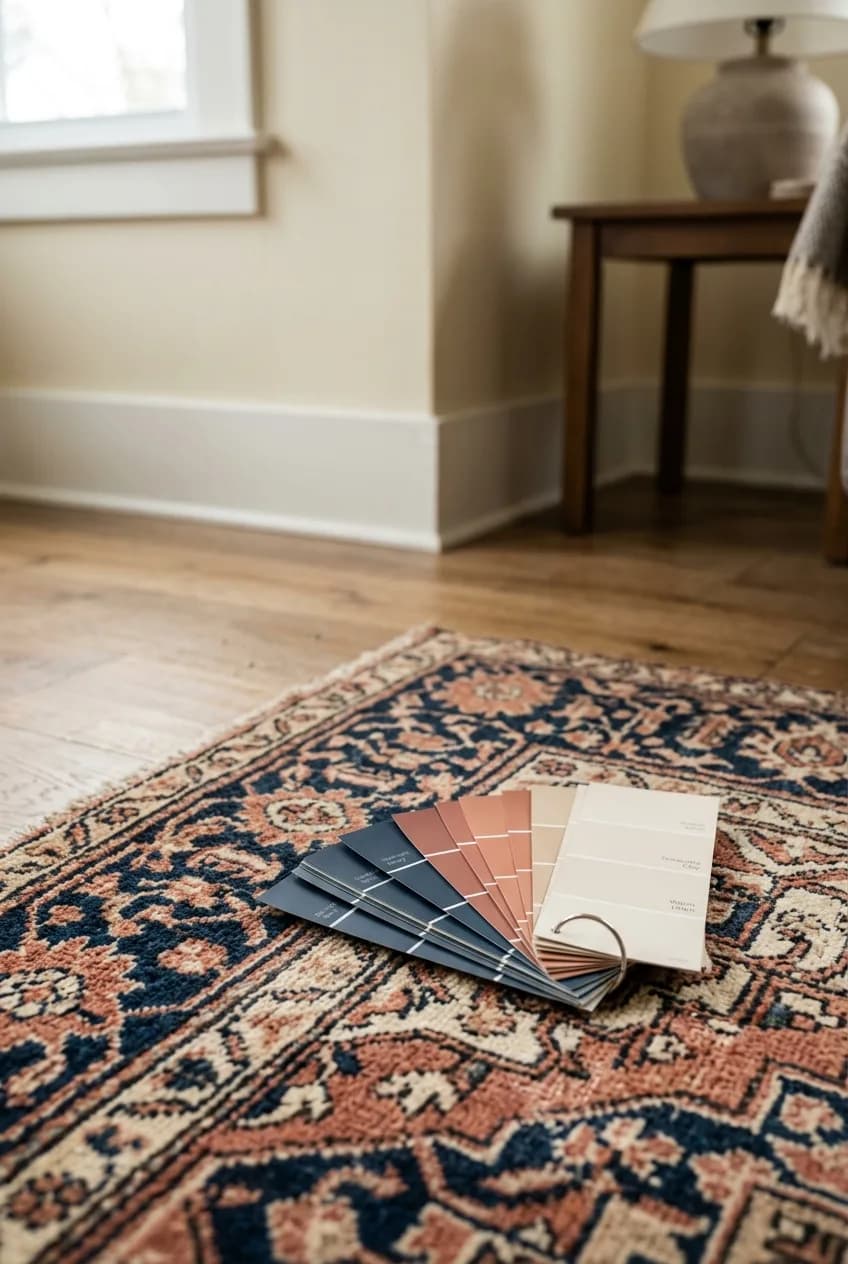
Color is the single most powerful tool for making different furniture styles look like they belong together. When you have a Victorian armchair and a minimalist coffee table that seem to have nothing in common, a shared color story can instantly connect them. A tight, consistent color palette will trick the eye into seeing harmony and unity, even among wildly different shapes and eras.
More in Home Decor
The Complete Guide to Choosing Curtain Length for Any Window
A great guideline for applying color is the 60-30-10 rule. Your room should be 60% a dominant color (think walls, sofa), 30% a secondary color (curtains, accent chairs, rugs), and 10% an accent color (pillows, art, decorative objects). This hierarchy ensures the colors feel balanced and not overwhelming.
Don't know where to start? Find a multi-colored piece you absolutely love—like a patterned rug, a large piece of art, or even fabric for throw pillows. Pull your three main colors directly from that one item. That way, you know they already work together beautifully, and you can confidently apply them across your mismatched furniture and decor.
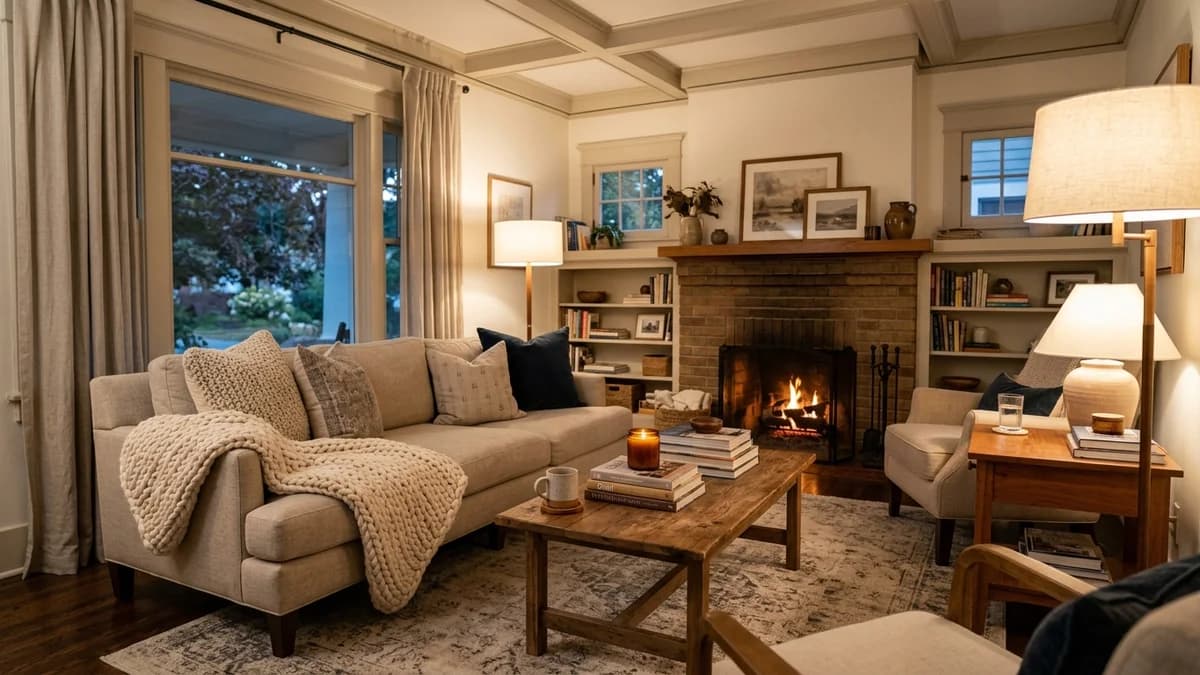
Here's a detail that makes a huge difference: don't just match colors, match undertones. A crisp, cool blue won't sit well with a warm, creamy beige. But a warm gray, a rich cream, and a brushed brass accent will unite pieces beautifully because they all share a warm 'temperature'. Pay attention to whether your neutrals are warm (yellow/red-based) or cool (blue/green-based) and keep them consistent. This is the exact same undertone logic behind our warm-vs-cool white paint guide.
Bridge the Gap with Shape and Texture
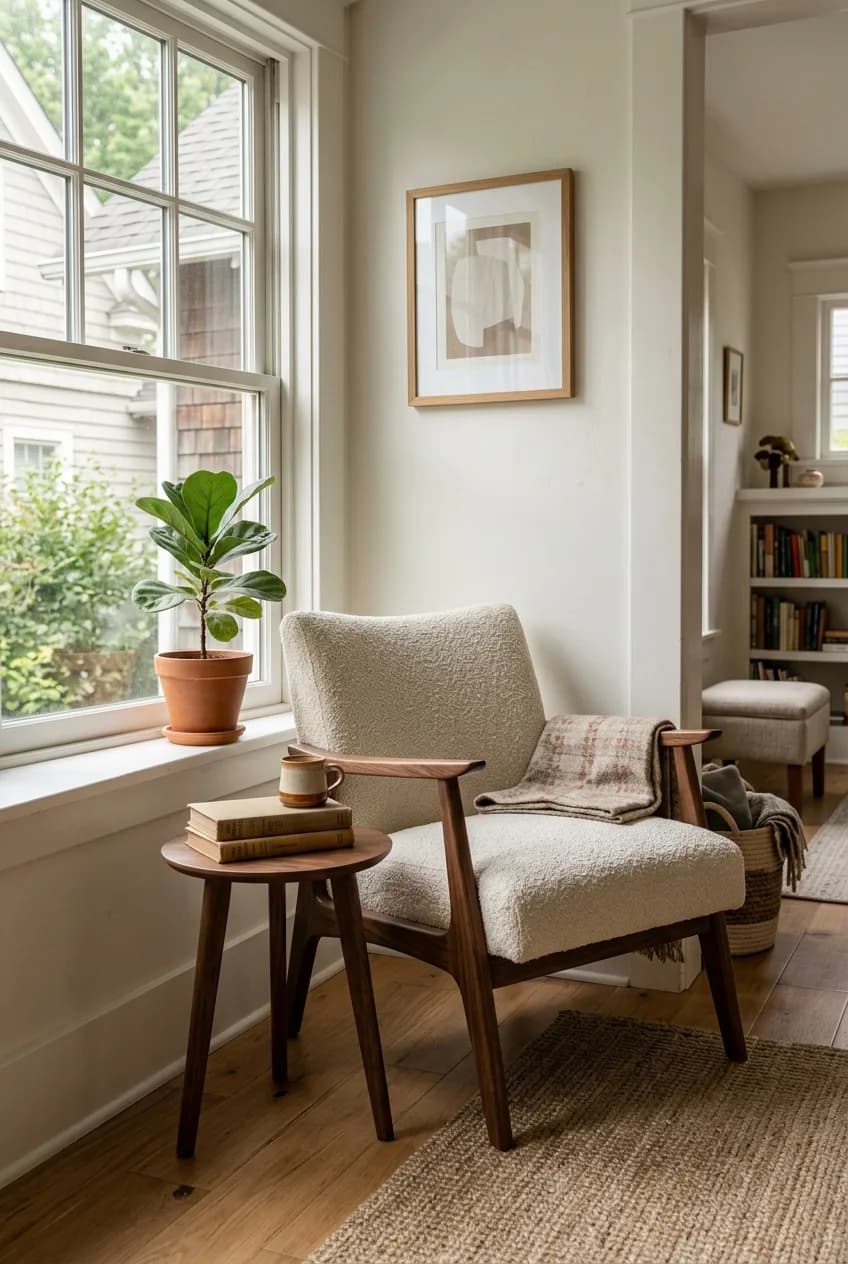
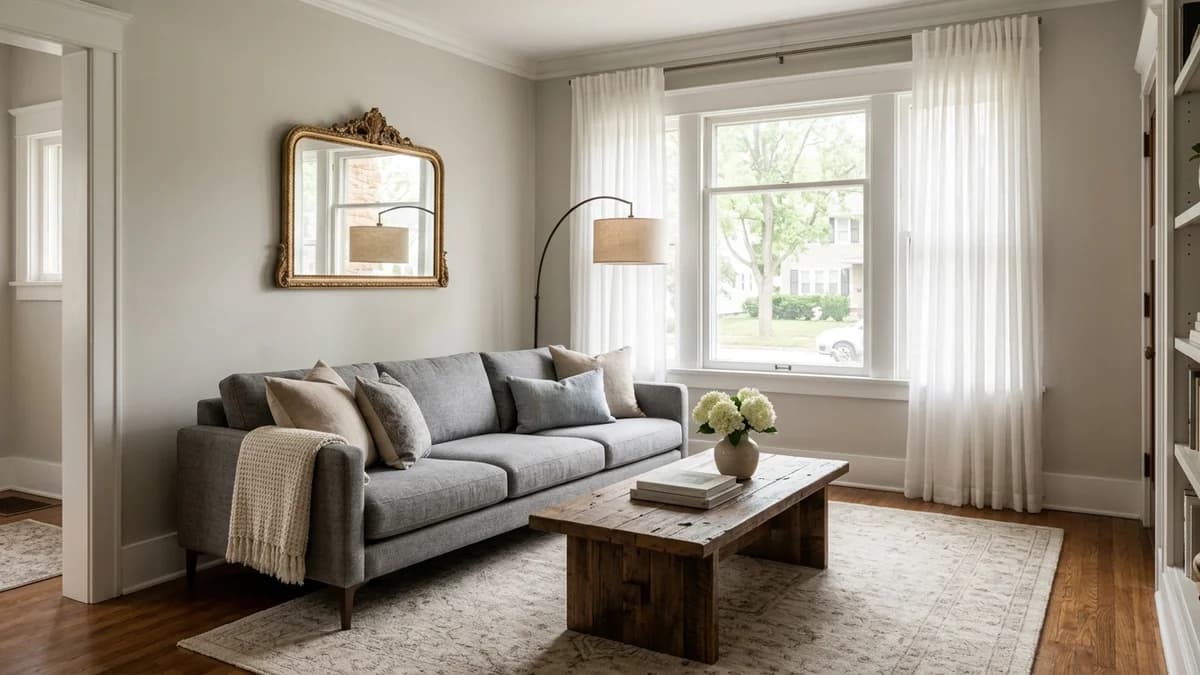
Once your color palette is set, you can create more subtle connections through shape, material, and texture. This is about creating visual links that your brain registers subconsciously, making the room feel more cohesive. For example, you can echo a shape: the gentle curve of a traditional sofa's arm can be repeated in the arc of a modern floor lamp or a round mirror on the wall.
Texture is just as important for creating balance. A room full of smooth, hard surfaces can feel cold and uninviting, while too many soft textures can feel stuffy. The goal is to create a pleasing contrast. Pair a sleek leather couch with a chunky, rough-hewn wood table. Place a plush velvet chair next to a cool, minimalist metal side table. This balance of opposites adds depth and interest.
A fantastic way to do this is to find a single piece of furniture that can act as a 'translator' between two styles. Think of a dining chair that has the clean, tapered legs of mid-century modern design but is finished in a traditional dark walnut. This single piece physically connects the modern and traditional elements in the room, making the whole mix feel deliberate.
- Line: Look for ways to repeat either straight, clean lines or soft, curved lines across different pieces.
- Material: Create a common thread by repeating a material, like using brass in your light fixtures, hardware, and the legs of a chair.
- Finish: Bridge different wood tones or styles by choosing a common finish, like having several pieces with a matte or a satin finish.
Master the Art of Curation and Balance
Finally, mixing styles successfully is as much about what you leave out as what you put in. The number one cause of a room feeling chaotic is simply too much stuff. Give your furniture room to breathe by embracing negative space—the empty areas on walls, floors, and surfaces. This negative space allows the eye to rest and appreciate the individual beauty of each piece.
Pay close attention to visual weight. This refers to the perceived 'heaviness' of an object based on its size, color, and shape. A large, dark, solid bookcase on one side of the room can make everything feel off-kilter. You need to balance it on the other side, not necessarily with another massive piece, but perhaps with a grouping of art, a tall floor plant, and an accent chair to create equal visual weight.
The same goes for scale. A room filled with furniture of all the same size feels monotonous. Create interest by mixing a large, statement sofa with more delicate side tables, or a chunky coffee table with a slim, airy armchair.
Chaos often comes from a lack of hierarchy. Not every piece can be the star of the show. Intentionally create a single focal point with your most interesting mixed-style combination—maybe it's your antique art collection above your modern media console—and let other pieces play a supporting role. When you tell the eye where to look first, the rest of the room falls into a beautiful, supportive harmony.