Let's be honest: the dream of a dedicated home office with a big window and floor-to-ceiling bookshelves is just that for many of us—a dream. The reality is often carving out a workspace wherever we can find it, and for lots of people, that means the bedroom. But how do you add a desk, chair, and all your work gear into a room meant for rest without creating a chaotic, stressful environment?
It’s entirely possible, and you don't have to sacrifice style or your precious sleep. The key is to be clever, intentional, and to think a little differently about what an 'office' can be. We're going to walk through how to transform even the most cramped bedroom into a functional, stylish, and separate-feeling home office that lets you be productive during the day and unplug completely at night.
The Golden Rule: Zone Before You Buy
Before you even think about browsing for that perfect desk, stop. The single biggest mistake people make is buying furniture first and trying to make it fit later. A desk might technically squeeze into a space, but if it blocks the closet door or makes the path to your bed feel like an obstacle course, the whole room will feel 'off.' You need to plan your zones first.
Grab a tape measure and sketch out your room's floor plan. Mark the non-negotiables: the door swing, the closet opening, the space needed to pull out dresser drawers. Now, identify your distinct 'zones.' The 'rest zone' is sacred—it’s your bed and the immediate area around it. The 'work zone' is where your desk will go. This mental separation is crucial for telling your brain when it's time to work and when it's time to switch off.
Consider the natural traffic flow. Can you get from the door to your bed without shimmying sideways? A clear path is essential for a room that feels calm, not cluttered. Once you have a potential spot for your desk, use painter's tape on the floor to mark out the exact dimensions of the furniture you're considering. Live with it for a day. This simple trick lets you feel the impact on your space before you spend a dime, preventing the classic buyer's remorse of a desk that technically fits but ruins the room's flow.
Rethink the Desk: Smart Choices for Tight Spaces
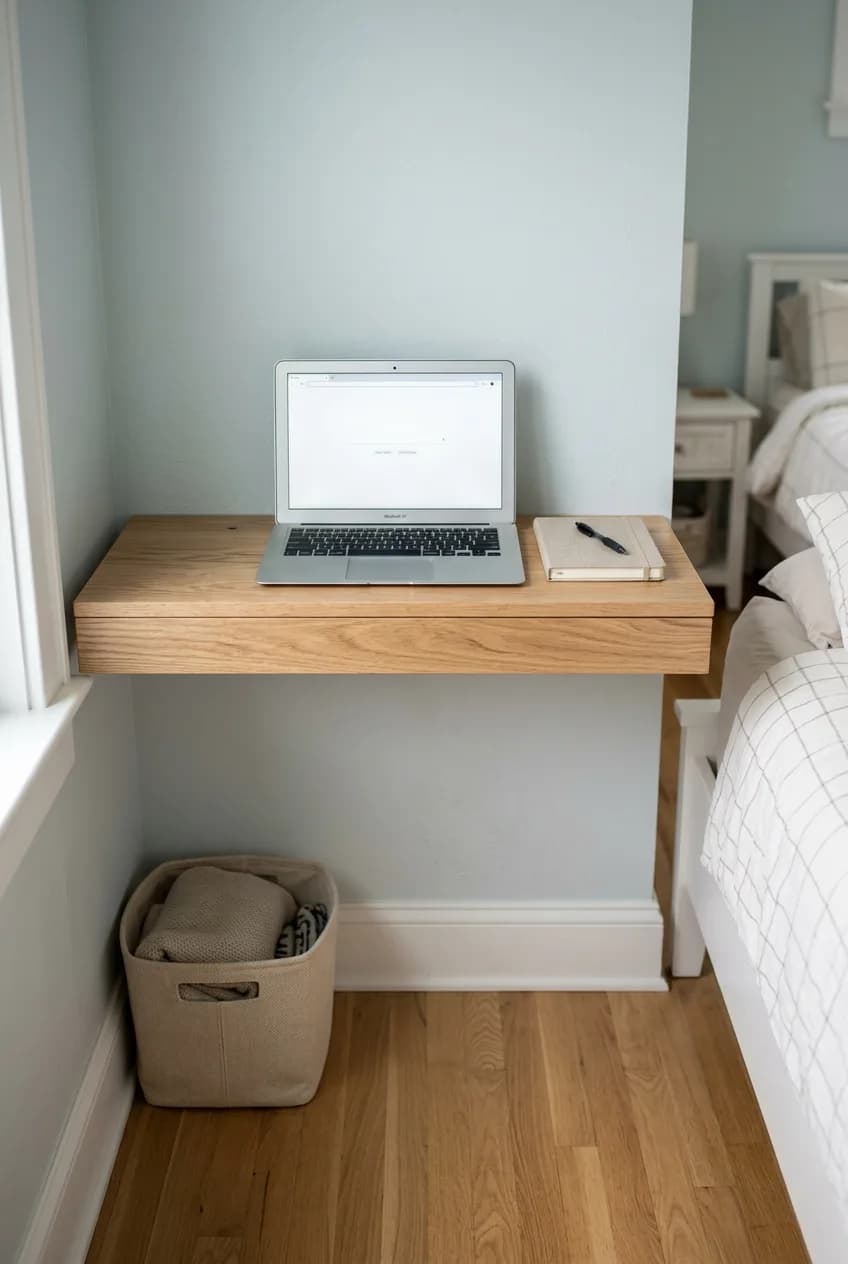
When you're working with a small footprint, a traditional four-legged executive desk is usually out of the question. But 'desk' is a flexible term! The goal is a functional work surface, and there are so many brilliant designs that maximize space.
Desks That Float and Fold
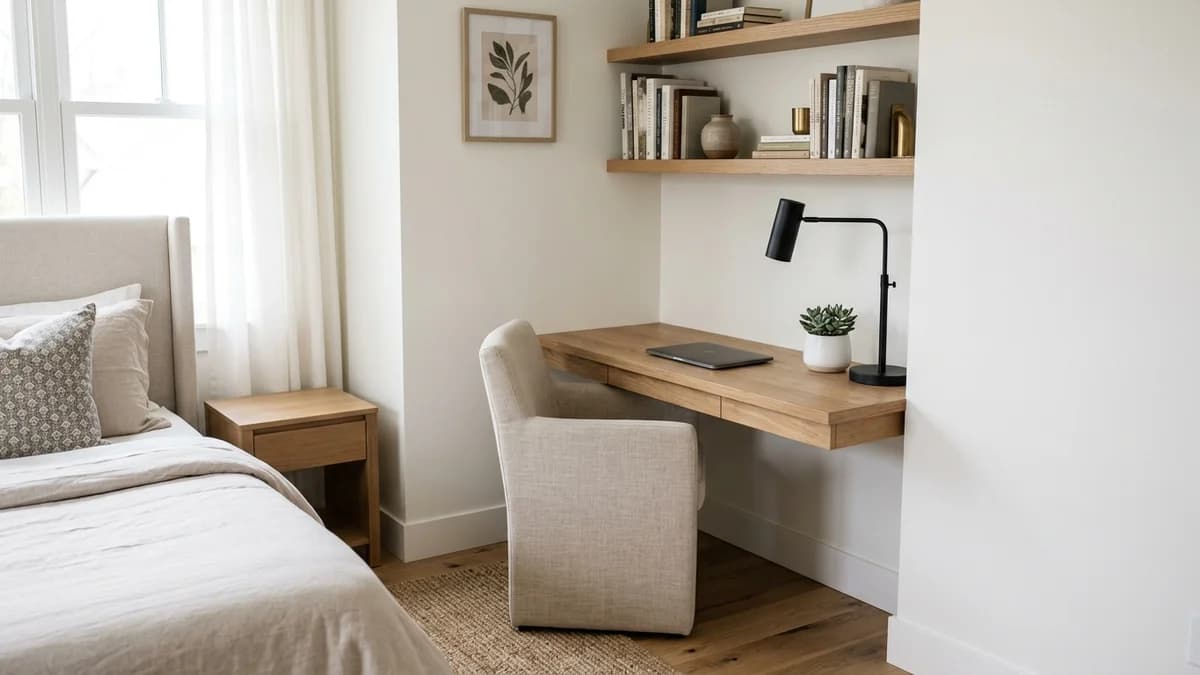
Wall-mounted or 'floating' desks are champions of small spaces. Because they have no legs, they free up the floor underneath, which makes the entire room feel larger and less cluttered. This open space below is also great for stashing a small file cabinet or a basket. Fold-down versions are even better—a functional desk when you need it, and a discreet, shallow cabinet when you don't.
Claim Your Corners and Go Vertical
Corners are often wasted, awkward space. A purpose-built corner desk tucks right in, turning a dead zone into a productive hub. Similarly, ladder desks are fantastic because they combine a small work surface with built-in vertical shelving. You get a desk and a bookcase in one slim piece of furniture, solving two problems at once.
The most non-obvious tip? A desk doesn't even need to be a 'desk.' A sturdy, deep shelf (around 18-24 inches) mounted securely to the wall at a comfortable height can serve as a perfectly minimalist and highly space-efficient workstation. It's visually lighter than any traditional desk and can be cut to the exact length you need.
Desk Type | Best For | Space Savings | Typical Price Range |
|---|---|---|---|
Floating/Wall-Mounted | Extremely tight spaces, minimalist look | Maximum (no floor footprint) | $70 - $300 |
Corner Desk | Utilizing awkward, empty corners | High (uses otherwise dead space) | $100 - $400 |
Ladder Desk | Needing both desk and storage in one | High (combines two functions vertically) | $120 - $350 |
Secretary Desk | Hiding clutter; classic aesthetic | Medium (can be bulky but closes up neatly) | $200 - $600+ |
Go Vertical: Your Walls Are Your Best Asset
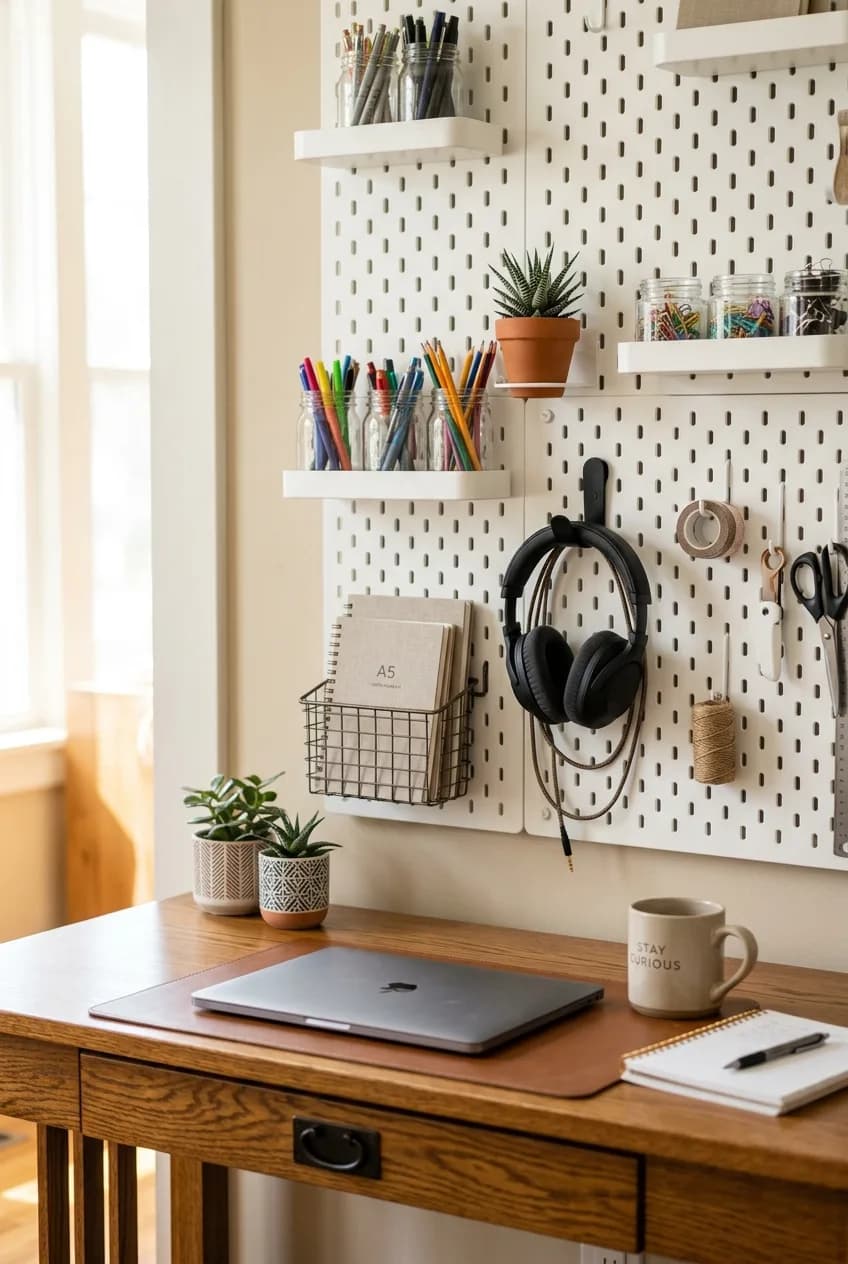
Once your desk is in place, the next challenge is storage. The solution? Look up. In a small room, your walls are your most valuable, underutilized real estate. Piling everything on your desk surface is the fastest way to feel overwhelmed and cluttered.
Think like a retailer designing a store. The 'prime real estate' at eye-level, within easy arm's reach from your chair, should hold your most frequently used items—pens, notebooks, chargers. Higher shelves are perfect for things you need less often, like archived files, extra printer paper, or decorative items. This keeps your immediate workspace clear for the task at hand.
- Install floating shelves directly above your desk. Two or three shelves provide ample space for books, supplies in nice jars, and a small plant.
- Use a pegboard or metal wall grid system. These are endlessly customizable with hooks, small shelves, and cups, allowing you to get small items off your desk but keep them visible and accessible.
- Choose tall, narrow bookcases over wide, short ones. They draw the eye upward, making the ceiling feel higher, and offer more storage for the same floor footprint.
- Mount magnetic strips or cork bars to the wall for pinning notes, reminders, and inspiration. This keeps paper clutter from taking over your work surface.
The Art of Concealment: Hide Your Office After Hours
The biggest psychological hurdle of a bedroom office is being unable to escape work. Seeing your laptop and to-do list from your bed can be a recipe for anxiety and poor sleep. The solution is to create a way to make your office 'disappear' when the workday is done.
Create a Visual 'Off' Switch
More in Room Ideas
7 Smart Built-in Bookshelf Ideas for Awkward Corners
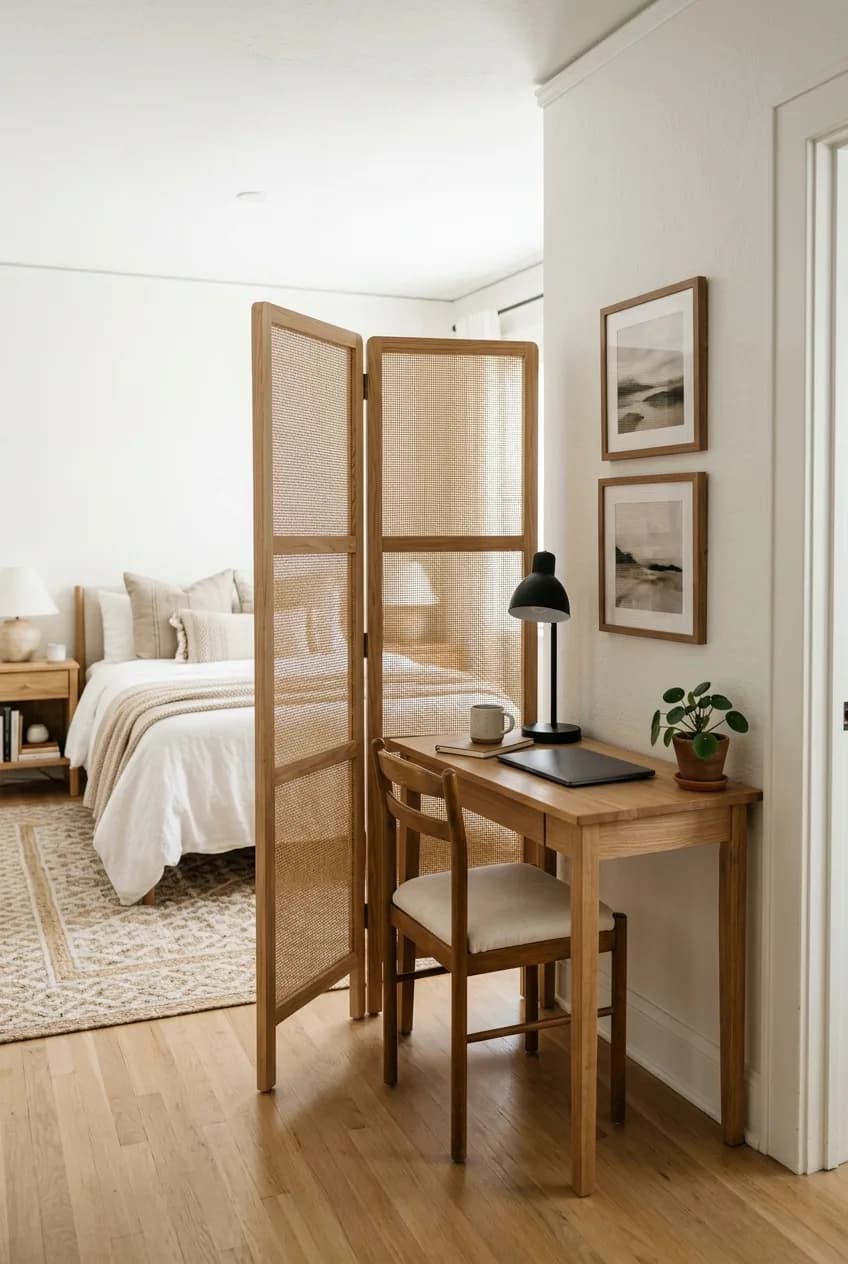
Never underestimate the power of a simple visual barrier. A lightweight, attractive folding screen can be used to partition off your desk corner. It's an instant room divider that physically hides your workspace. For an even softer approach, a ceiling-mounted curtain track allows you to draw a sheer or solid curtain across the nook, completely transforming the feel of the room.
This physical act of hiding your workspace is often more effective for mental relaxation than just tidying up. It sends a powerful signal to your brain: the office is now closed.
The 'Cloffice': Your Office in Disguise
If you have a spare closet, you have the ultimate built-in office solution. By removing the doors (or keeping them!) and fitting a countertop and shelving inside, you can create a 'cloffice.' At the end of the day, you simply close the doors, and the office vanishes completely. No closet to spare? An armoire or secretary desk works on the same principle—a self-contained office you can shut away.
For the rest of us, the key is a disciplined 'pack-away' routine. Choosing a laptop over a desktop computer is half the battle. At 5 p.m., put the laptop in a drawer. File papers into a stylish magazine holder. Corral pens and cables into a lidded, decorative box. Your desk becomes a simple console table, not a beacon of unfinished tasks.
Unify with Light & Decor: Blending Work and Rest
You've got the layout, the desk, and the storage. The final step is making it all look good. The goal is not to make the office invisible, but to make it look intentional and cohesive with the rest of your bedroom decor. A well-designed nook won't feel like a corporate intruder.
Lighting and Seating: The Functional Foundation
First, lighting is key. Your bedroom's overhead light won't cut it and will cause eye strain. Invest in dedicated task lighting for your desk. A slim, modern LED lamp with a small base won't eat up precious surface area. This focused light also helps visually define the work zone.
Next, ditch the clunky black office chair. It will scream 'cubicle' no matter what you do. Instead, look for an ergonomic chair that doesn't look like one. A comfortable, upholstered dining chair, a stylish low-back armchair, or even a well-cushioned stool that can be tucked away can provide the support you need while complementing your bedroom's aesthetic. Test for comfort—you'll be sitting in it for hours!
Harmonize with Color and Decor
Use your room's existing color palette to tie everything together. If you have blue throw pillows on your bed, find a pen cup or a notebook in a similar shade for your desk. This simple color repetition makes the office feel like a deliberate part of the design. Finally, a well-placed mirror on an adjacent wall can work wonders, reflecting light and making the entire room feel larger and more open.