Every home has one: that awkward, empty corner that defies all attempts at decoration. It’s too tight for a chair, too strange for a floor lamp, and a lonely plant just seems to highlight the emptiness. Instead of seeing a problem, what if you saw potential? With a custom built-in bookshelf, you can transform that wasted space into one of your home's most functional and stylish features. Here are seven ideas to turn any tricky corner into a place of purpose.
1. Embrace the Corner with a Floor-to-Ceiling Library Nook
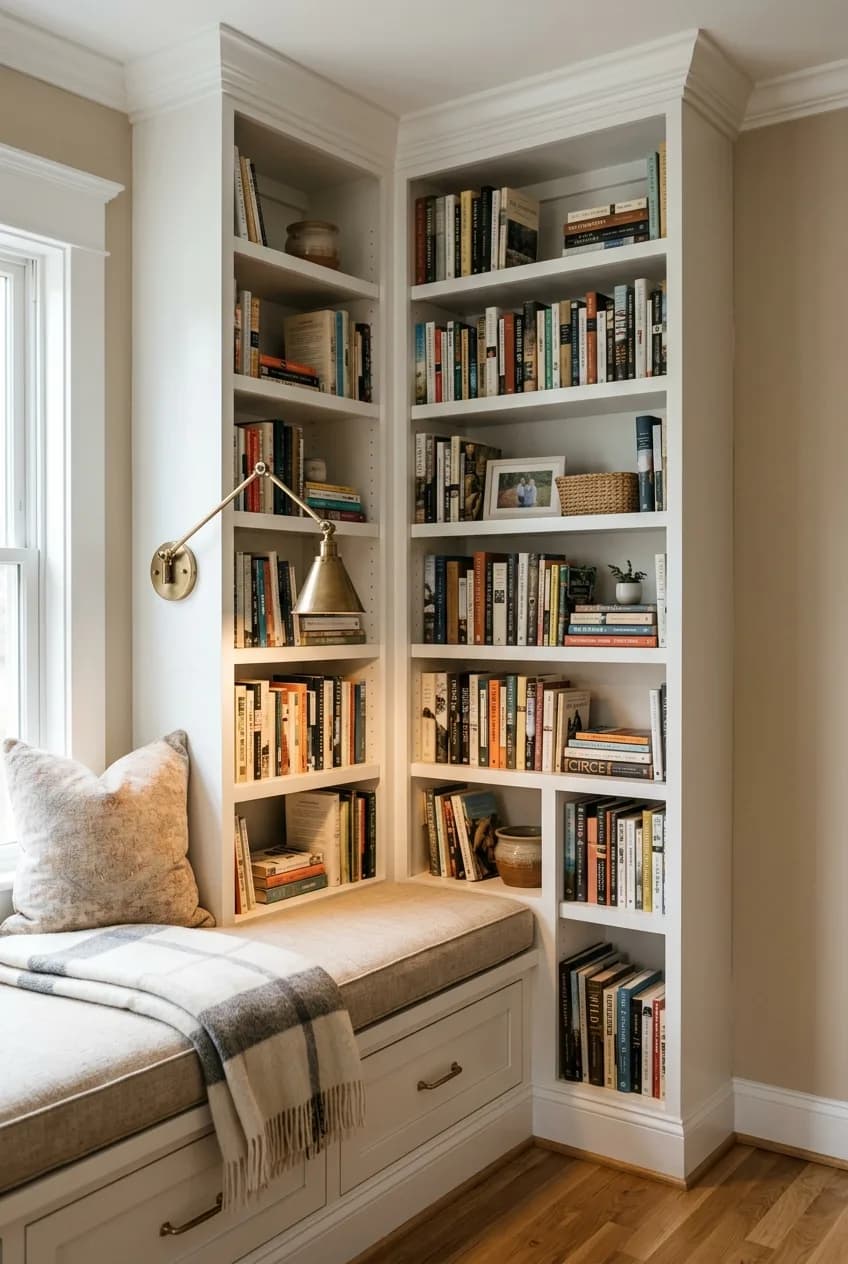
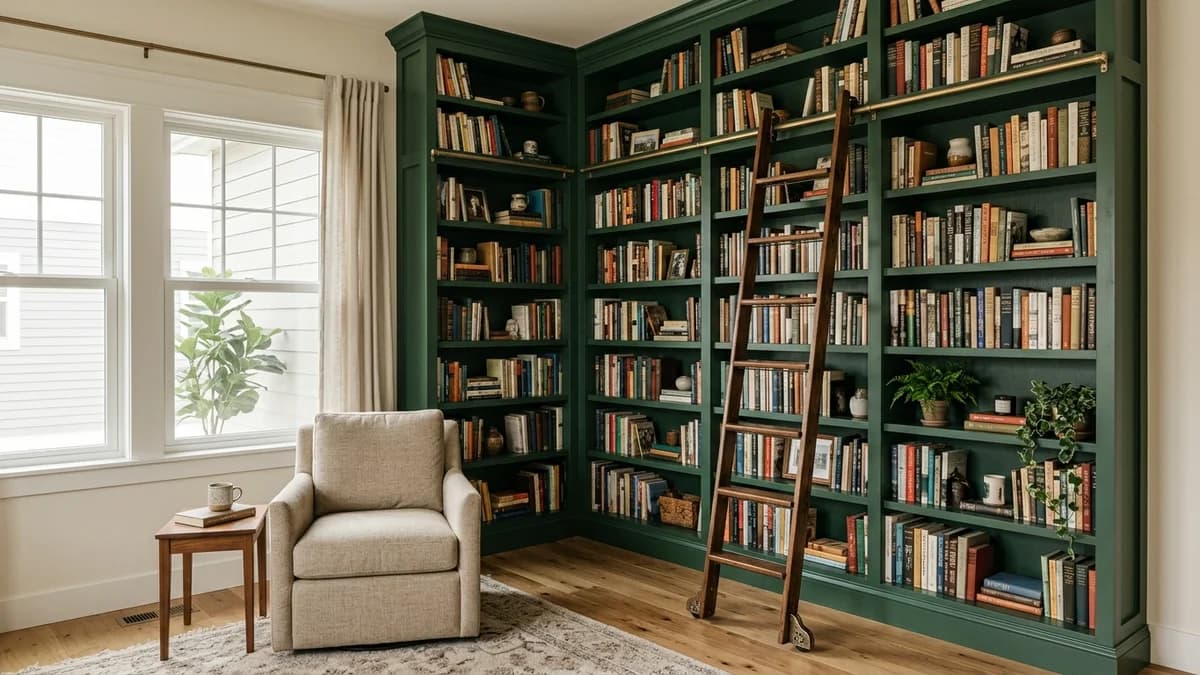
Why just fill a corner when you can create a destination? A floor-to-ceiling built-in transforms a tight spot into a grand library nook. By taking the shelves all the way to the ceiling, you draw the eye upward, making the room feel taller while maximizing every square inch of storage. Consider integrating a small, low-voltage puck light on the underside of a shelf to create a dedicated reading spot, or even building a small bench seat into the base for a truly cozy escape.
The real showstopper? A rolling library ladder. It's not just for reaching the top shelf; it adds a touch of classic, dramatic flair. This approach doesn't just solve a storage problem—it creates a new architectural feature, turning an afterthought of a corner into a deliberate, charming focal point of the room.
2. Integrate a Home Office with a Wraparound Desk Shelf
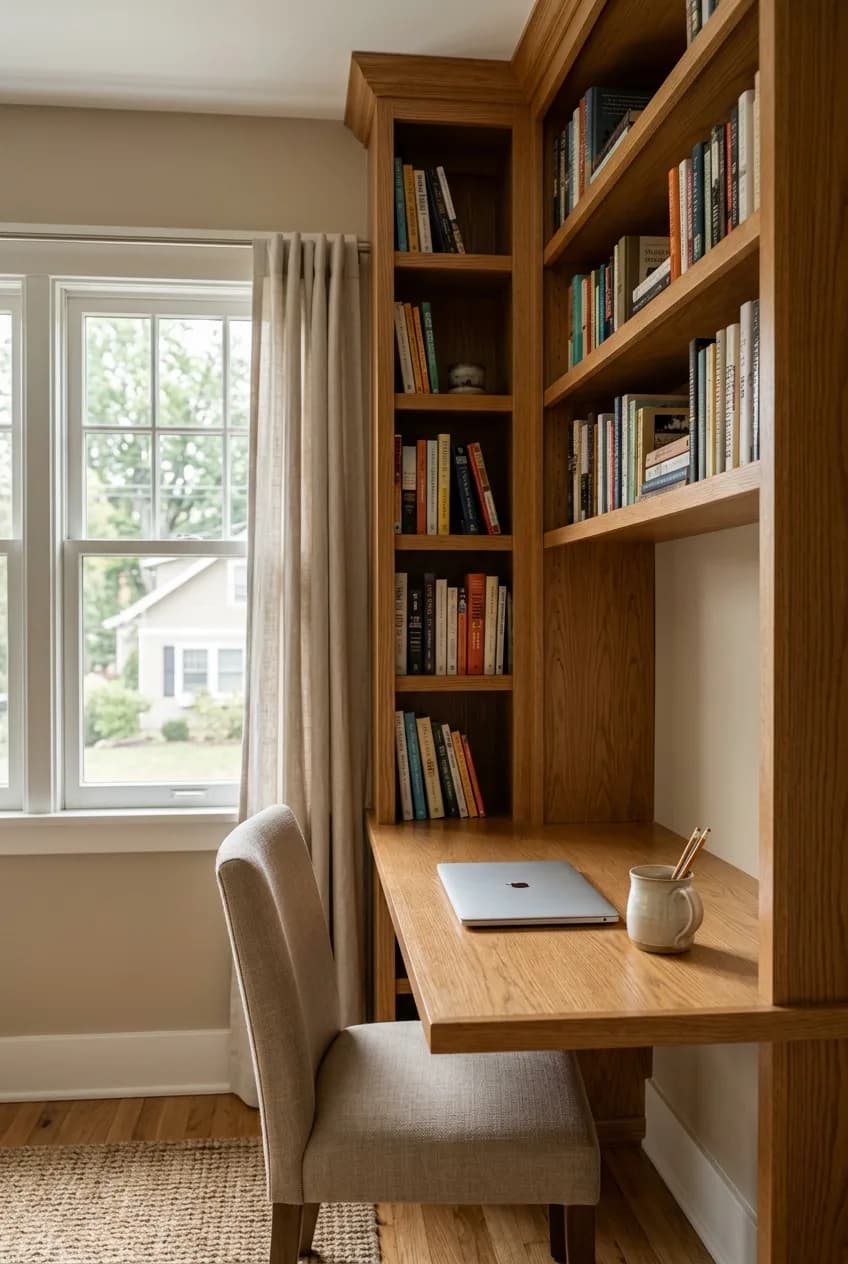
In homes where a dedicated office is a luxury, an awkward corner can become a surprisingly efficient workspace. The design is simple but brilliant: a lower shelf, about 30 inches from the floor, is built deeper (say, 20-24 inches) to serve as a desktop, wrapping around the corner. The shelves above it remain a standard 12-inch depth for books, binders, and supplies.
This is the perfect solution for a living room, bedroom, or guest room, tucking a functional home office into an otherwise unused footprint. The genius of this idea is its efficiency. This design layers two distinct functions—a workspace and storage—into the same vertical space, reclaiming that dead zone far more effectively than a separate desk and a freestanding bookshelf ever could.
3. Solve Non-90-Degree Angles with a Diagonal-Faced Unit
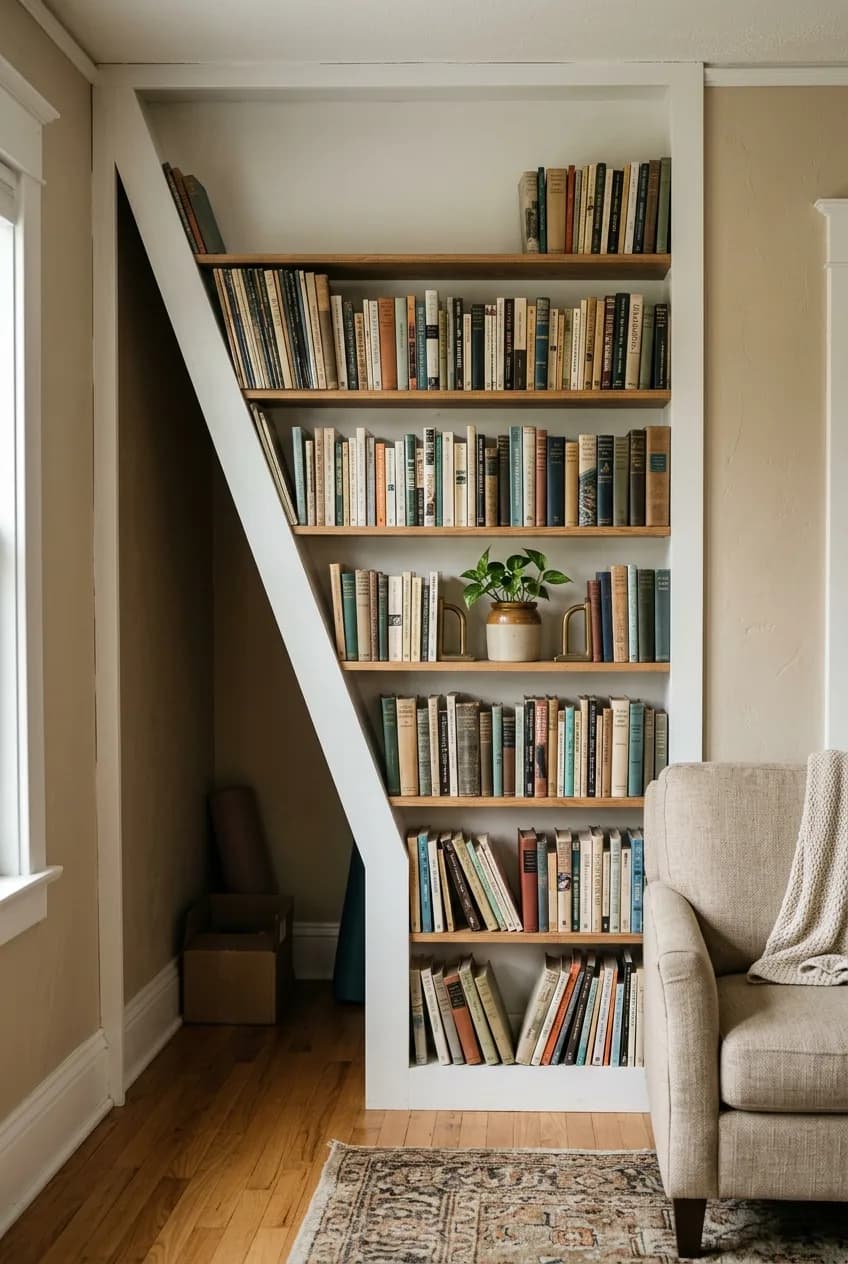
Odd angles that are wider or narrower than 90 degrees can feel like a custom carpentry nightmare. The elegant solution is often to ignore the tricky angle altogether. By building a single, flat-faced shelving unit diagonally across the corner, you simplify the construction and create a calm, orderly look in a visually chaotic spot.
This approach has a hidden benefit: it creates two deep, triangular voids behind the shelves. While not ideal for display, this space is perfect for stashing things you don't need every day, like seasonal decor, extra blankets, or archival boxes. By imposing a new, predictable geometry on the space, you make the corner both more useful and visually peaceful.
More in Room Ideas
How to Create a Dreamy Reading Nook in a Small Bedroom
4. Create an Airy Feel with Asymmetrical Floating Shelves
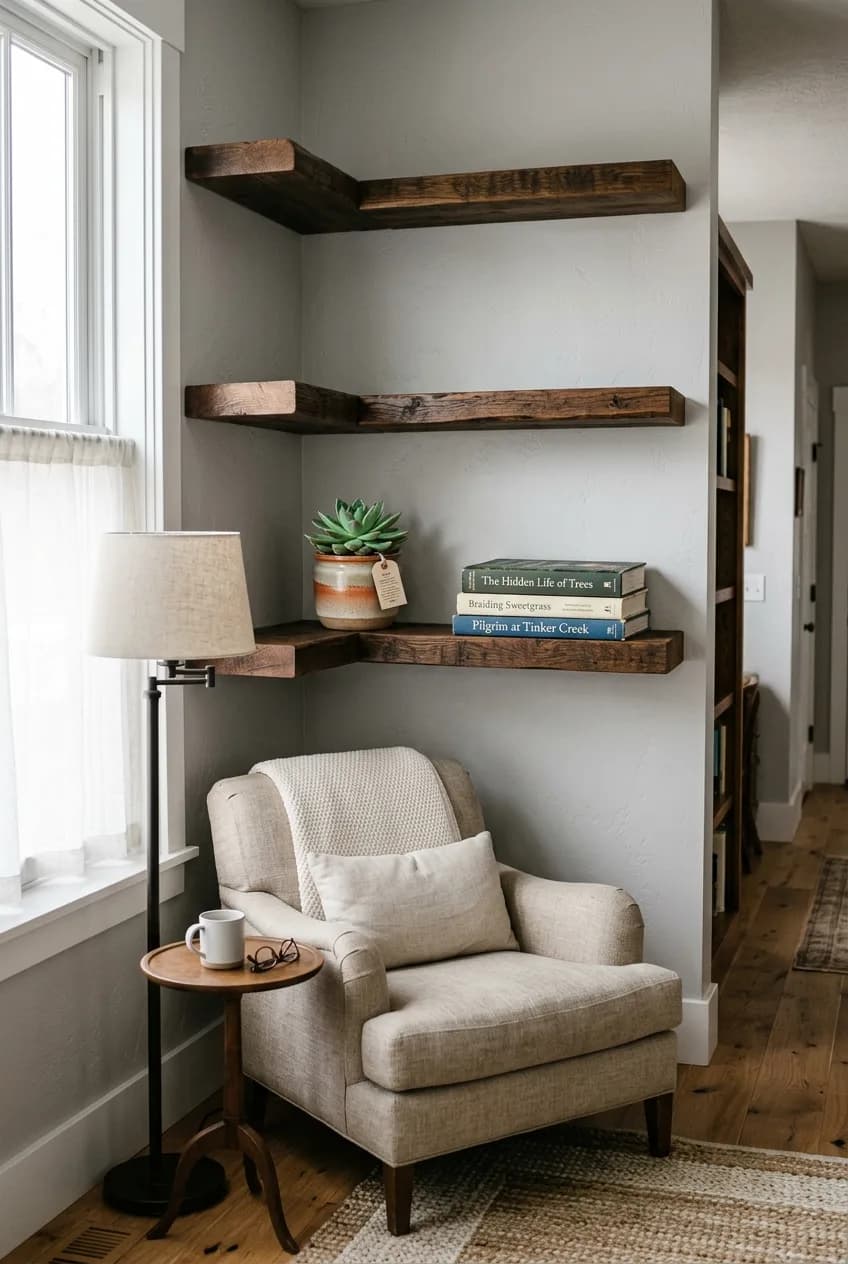
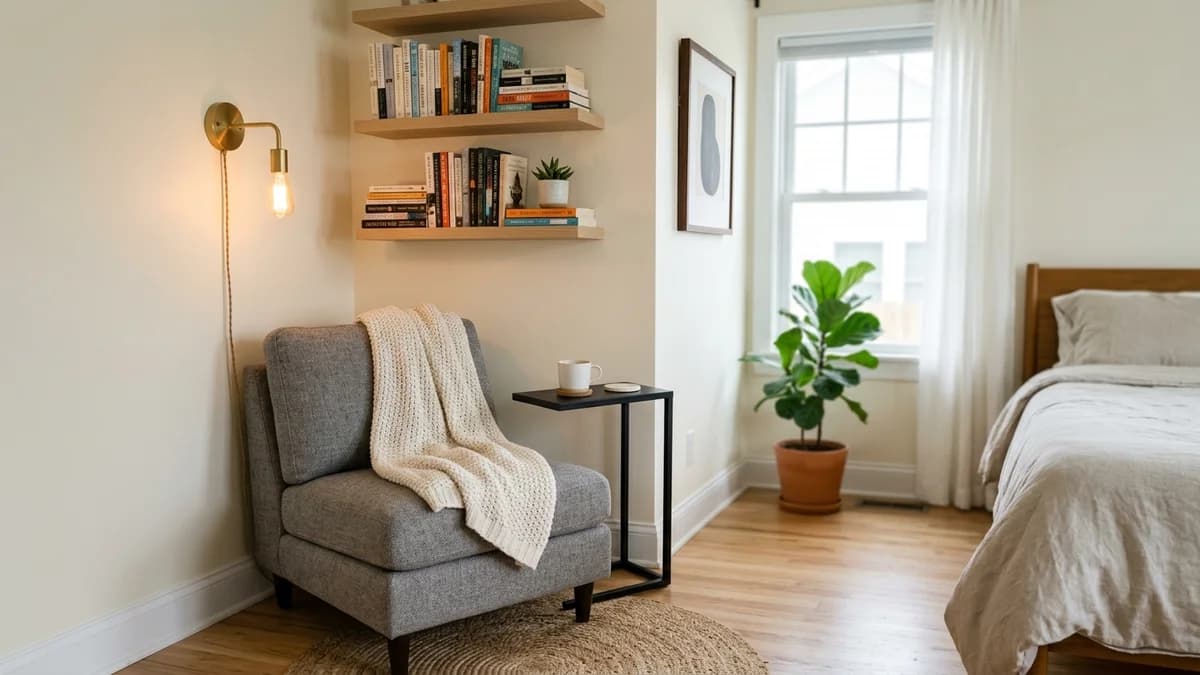
If a full floor-to-ceiling unit feels too heavy for your space, consider a lighter approach. A series of staggered, asymmetrical floating shelves that wrap around the corner can provide storage and display without the bulk. The lack of a vertical cabinet structure keeps the corner feeling open and prevents it from overwhelming the room.
This can look less like a storage unit and more like a piece of intentional wall art. For materials, you could use thick, 2-inch reclaimed wood planks for a rustic, substantial look, or opt for 3/4-inch MDF painted the same color as the wall for a minimalist vibe where the shelves almost disappear. The asymmetrical layout is the key; it makes the eye move around, turning a cramped corner into a dynamic and stylish feature.
5. Frame an Awkward Doorway with Seamless Built-ins
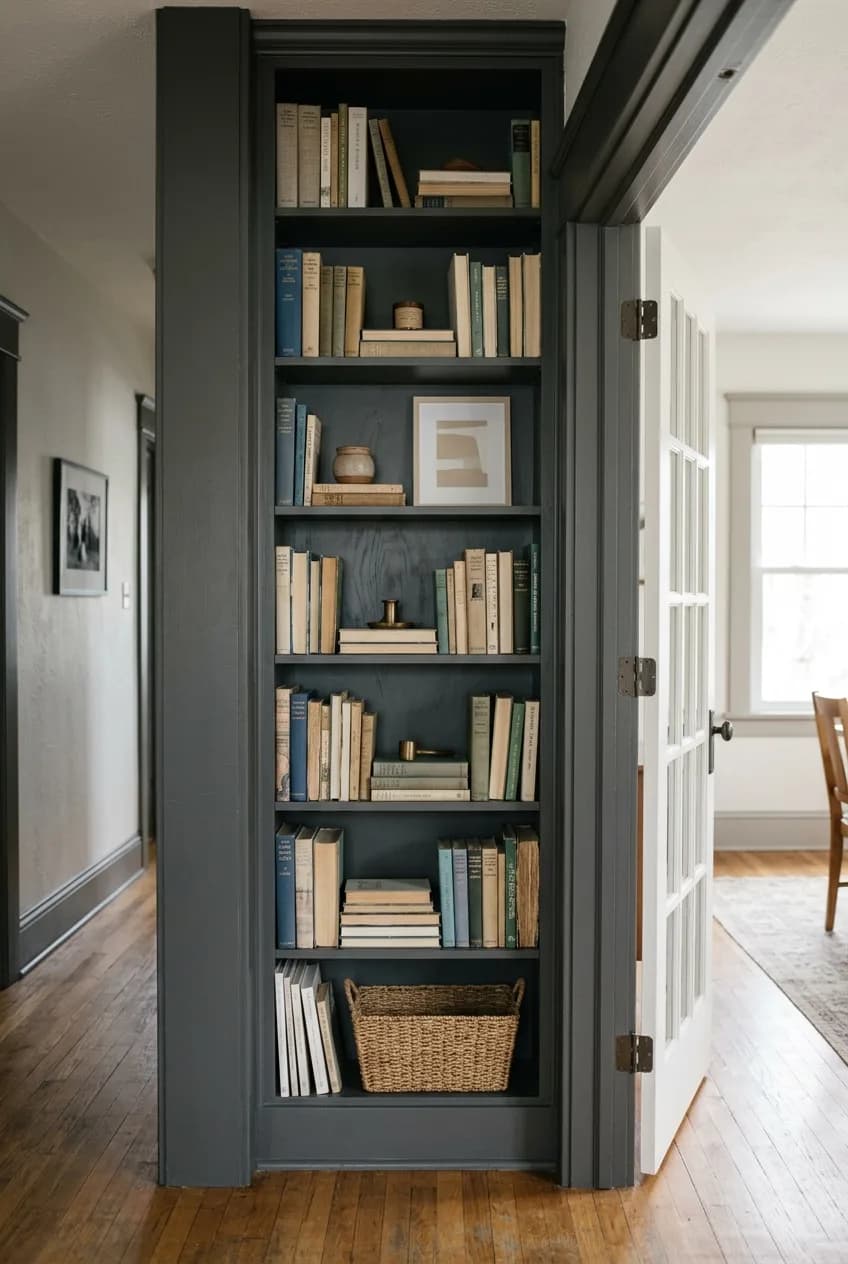
A doorway set a foot or two in from a wall creates one of the most common awkward corners. Instead of trying to awkwardly fill the space, integrate it. Design a built-in bookshelf to fill the nook perfectly, running from the adjacent wall right up to the door casing. This makes the corner feel purposeful and grand, turning the doorway into a more substantial architectural feature.
The real trick to making this look truly custom is to paint the bookshelf, the surrounding walls, and all the door trim the exact same color and finish. This creates a seamless, cohesive look, as if the entire structure was molded in place. It redefines the corner not as a leftover space, but as part of a larger, integrated design element.
6. Go Low with a Horizontal Corner Ledge System
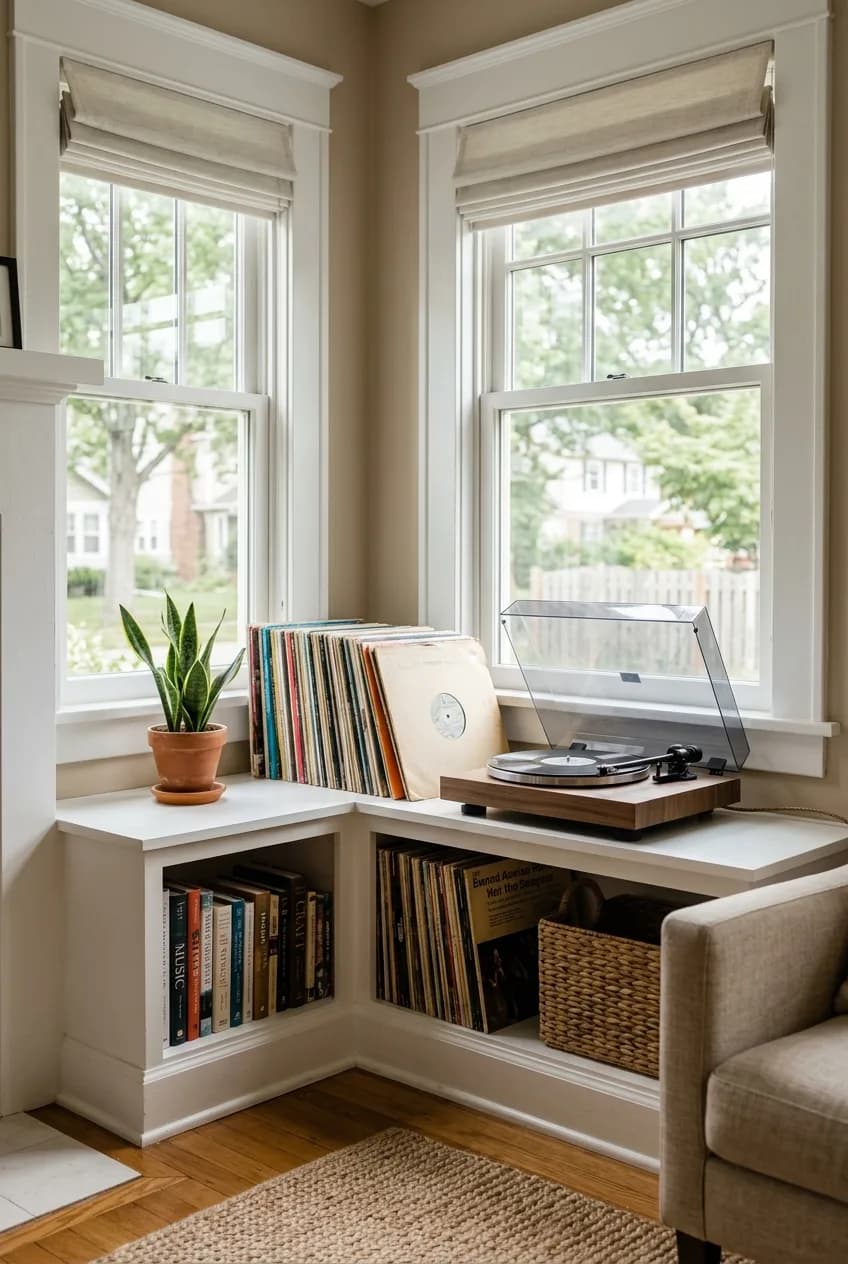
Not every corner solution needs to be vertical. For spaces with low windows, slanted ceilings, or where you simply want to avoid visual clutter up high, a series of long, low-profile shelves wrapping the corner is a fantastic option. Think of it as a built-in credenza or ledge system that activates the lower third of the room.
This design is less about mass book storage and more about curated display. It's the perfect platform for showing off art books, a vinyl record collection and turntable, or cherished decorative objects. In a tight living room, it can even serve as a media console, providing a home for electronics without the bulk of a typical entertainment center. This low-slung approach draws the eye horizontally, a counterintuitive trick that can make a room feel wider and more spacious.
7. Turn a Structural Column into a Display Pillar
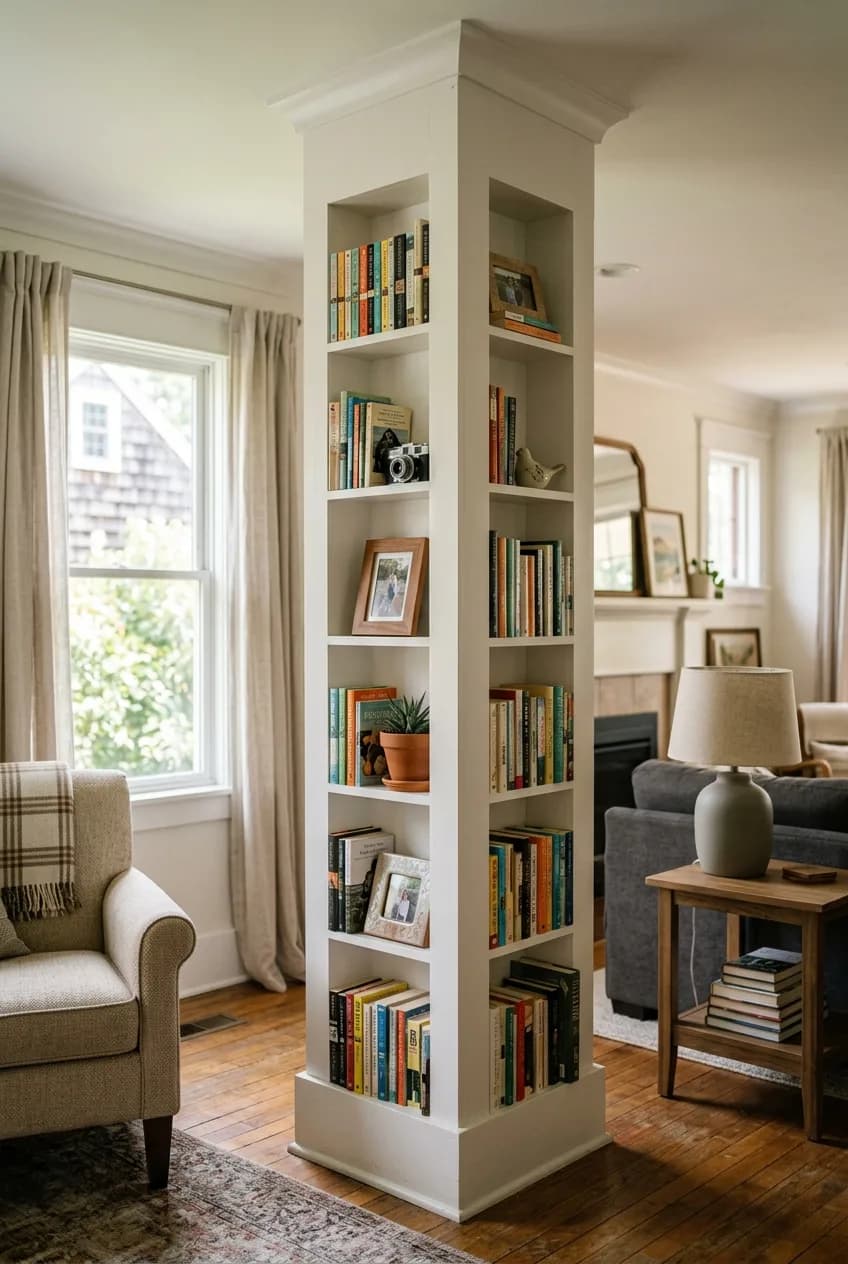
Sometimes the awkward corner isn't a corner at all, but a necessary evil like a structural column or a chimney breast that juts into the room. Instead of trying to hide it, use it. This is a form of architectural jiu-jitsu: you embrace the obstruction and make it a feature. Build shallow shelves—around 6 to 8 inches deep—that wrap around the two or three exposed sides of the column.
This simple addition transforms the intrusive element into a 360-degree display pillar. It's the perfect spot for smaller items that would get lost on a larger bookcase: paperback collections, framed photos, small sculptures, or other collectibles. By accentuating the column instead of fighting it, you turn a structural negative into a standout positive.