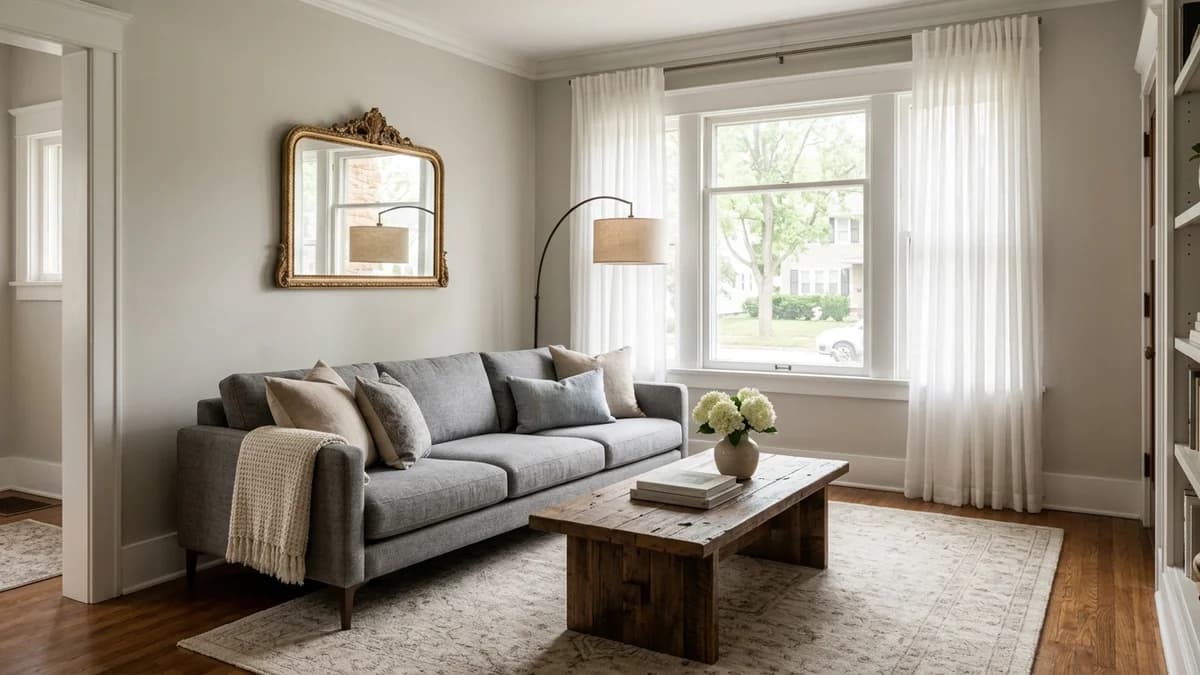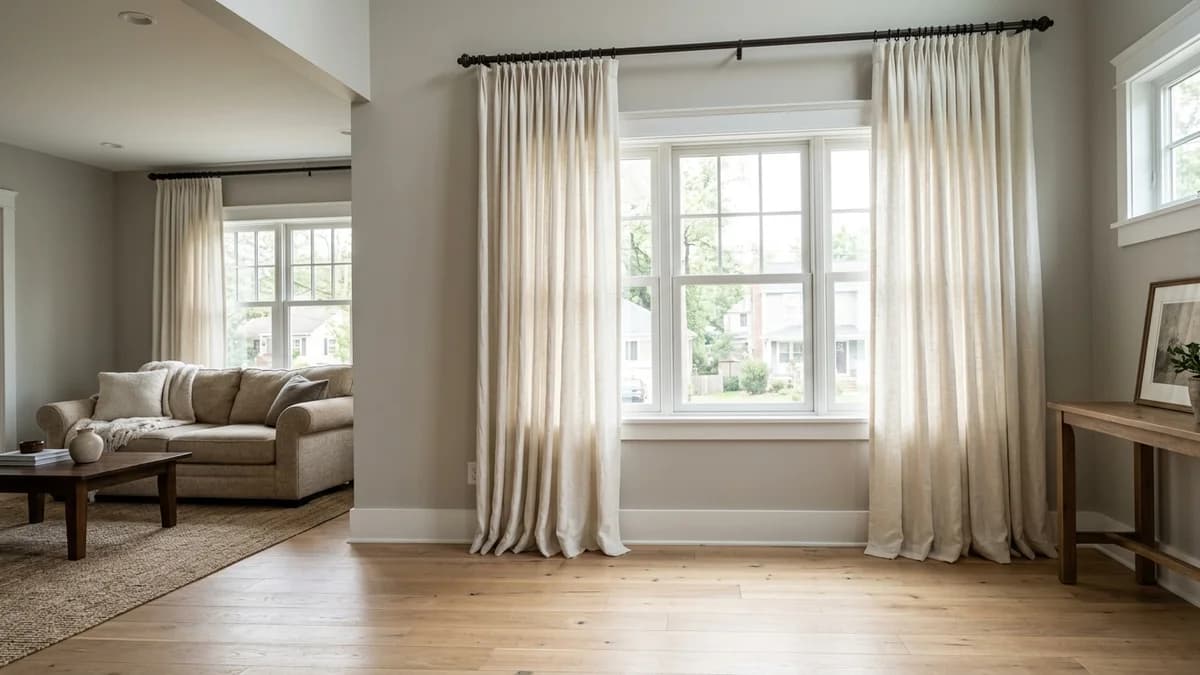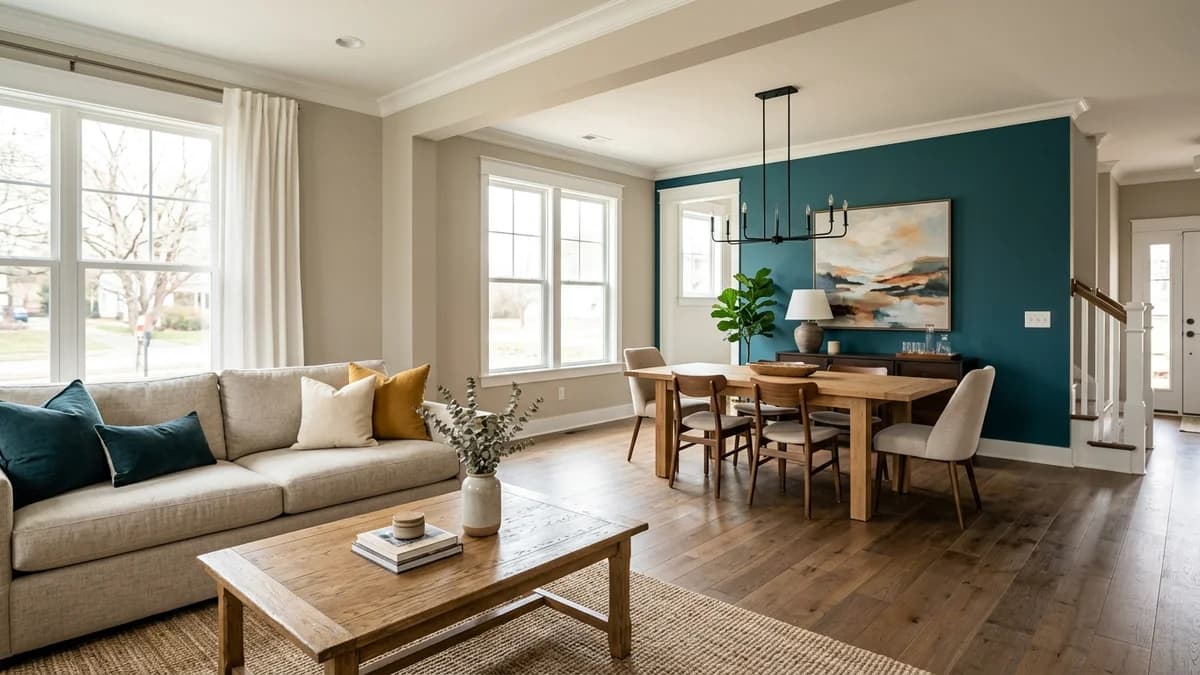
There’s a certain kind of decision paralysis that hits you in aisle seven of the hardware store. Faced with a wall of thousands of paint chips, each whispering promises of transformation, it’s easy to feel overwhelmed. You grab a handful that look good under the fluorescent lights, get them home, and suddenly that perfect ‘greige’ looks purple and the serene blue feels like a nursery color.
It’s the classic homeowner dilemma that leads to one big question: should you hire a professional, or can you trust your own eye?
The truth is, both paths can lead to a beautiful home. The trick is knowing which one is right for you, your project, and your wallet. We'll help you make that choice confidently by breaking down what a color consultant actually does, weighing the costs, and giving you a solid playbook for going the DIY route. Let's figure out which tool is right for the job.
What Does a Color Consultant Actually Do?
It's a common misconception that a color consultant just has a 'good eye' for paint. While a sense of style is part of the job, their real value lies in a technical understanding of light, space, and the complex properties of color that go far beyond what you see on a tiny paper chip.
Beyond Just Picking Paint
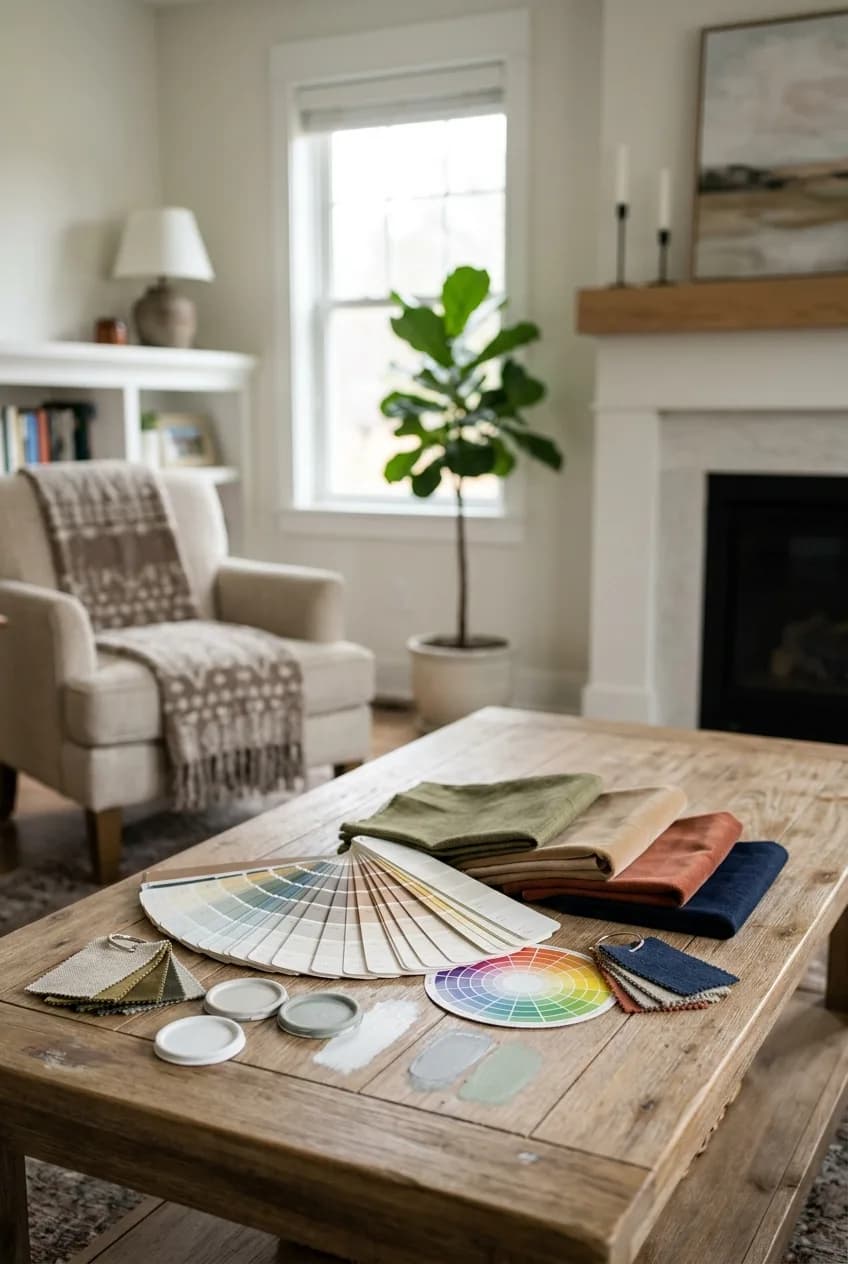
A professional doesn't just see 'gray'; they see the subtle green, blue, or violet undertones that will be magnified by your home’s specific lighting. They analyze the direction your windows face (north-facing light is cool and blue, while south-facing is warm and yellow), the color temperature of your light bulbs, and how a color will reflect off your existing wood floors or countertops.
This is the non-obvious insight: a color consultant is less of a decorator and more of a 'light architect.' They are engineering an emotional response—cozy, airy, dramatic, calm—by manipulating how natural and artificial light interacts with surfaces in your specific space. They create a holistic color scheme that connects rooms and creates a cohesive flow throughout your entire home, not just one isolated wall.
The Consultation Process Step-by-Step
The professional process is worlds away from the hardware store guessing game. It typically starts with an in-depth conversation about your goals, lifestyle, and the mood you want to create. They’ll look at your furniture, art, and fixed finishes.
From there, they’ll bring large-scale paint swatches or fabric samples into your home to see them in your actual light. They’ll move them around the room, observing how they change from morning to night. The final deliverable isn't just a paint chip name; it's a detailed plan, often including specific paint finishes (eggshell, satin) for different surfaces and a palette that ensures every room feels like it belongs to the same thoughtfully designed home.
The Financial Equation: Consultant Costs vs. Costly Mistakes
The True Cost of a Color Mistake
Let's talk numbers.
Hiring a professional is an upfront investment, but it must be weighed against the very real expense of a color misstep. Repainting a room isn't just the cost of a few more cans of paint; it’s the price of primer, new supplies, and—most significantly—labor. Whether it’s your own lost weekend or paying a painter twice, a do-over is always more expensive than getting it right the first time.
Think of a color consultant as an insurance policy against 'color regret.' When you consider that professionally painting a single 12x15-foot room can run from $500 to $1,000 or more, their fee often pays for itself just by preventing that one costly mistake.
A Breakdown of Consultant Fees
While fees vary by region and experience, here’s a general idea of what to expect:
Service Type | Typical Cost Range | Best For... |
|---|---|---|
Hourly Rate | $100 - $300 per hour | Smaller projects, quick advice, or confirming your own choices. |
Per-Room Fee | $400 - $800 per room | A single, complex room like a kitchen or a primary bedroom suite. |
Full Project Package | $1,000 - $3,000+ | Developing a cohesive palette for an entire home or an open-concept floor plan. |
On top of preventing mistakes, many consultants also have access to trade discounts on high-quality paint brands, which can help offset a portion of their fee.
The DIY Playbook: How to Be Your Own Color Expert
Feeling empowered to tackle the project yourself? Absolutely! With a little bit of color theory and a methodical approach, you can get fantastic results. A DIY approach is often the perfect fit for certain situations.
When to Confidently Go It Alone
Choosing your own colors is a great idea if you're working on a single, self-contained room (like a bedroom or office), if you already have a very clear vision of what you want, or if you're on a tighter budget where a consultant's fee just isn't feasible. If the stakes feel relatively low and you enjoy the creative process, this is your time to shine.
Your Toolkit for DIY Success
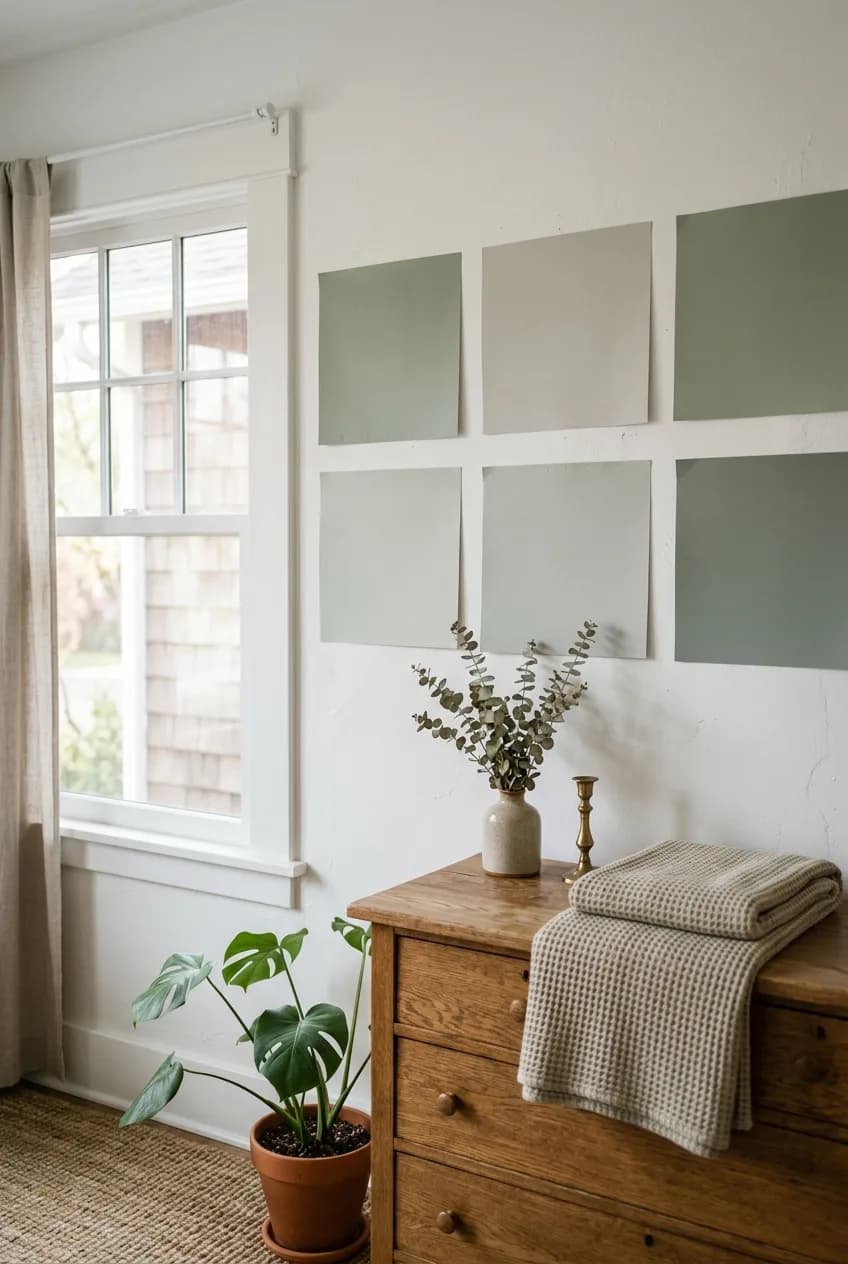
To avoid common pitfalls, approach your project like a pro would. Here are the key rules:
More in Home Decor
How to Mix Furniture Styles for a Cohesive, Curated Home
- Follow the 60-30-10 Rule: This is a classic interior design guideline. Your dominant color (usually walls) should take up about 60% of the space, a secondary color (furniture, rugs) about 30%, and an accent color (pillows, art) the final 10%.
- Understand Undertones: This is where most people go wrong. To see a color's true undertone, hold the paint chip against a sheet of pure white printer paper. That beige might suddenly look very pink, and that gray might reveal a sneaky purple base.
- Test, Test, Test: This is non-negotiable. Never, ever choose a color based on the chip at the store. Buy a sample can and paint a large square (at least 2x2 feet) on the wall. Better yet, use large peel-and-stick samples from companies like Samplize. Place them on multiple walls and check them in the morning, afternoon, and at night with your lights on.
The biggest DIY failure isn't picking a 'bad' color, but picking a good color that's wrong for your home's fixed elements. Hold your potential paint chips right up next to your flooring, kitchen countertops, fireplace brick, or tile backsplash. These elements aren't changing, so your wall color must harmonize with their undertones. This is the first thing a consultant is trained to see.
A few well-regarded tools can also help:
- Sherwin-Williams ColorSnap® Visualizer: Lets you upload a photo of your room and 'try on' different paint colors.
- Benjamin Moore Color Portfolio®: Similar to ColorSnap, this app helps you visualize colors in your own space and browse curated palettes.
- Coolors.co: A powerful online tool for generating color palettes that work well together, great for finding those perfect 30% and 10% accent shades.
5 Signs You Should Stop and Hire a Professional
Sometimes, the complexity of a project outweighs the potential savings of a DIY approach. If you find yourself in one of these situations, it’s a strong signal that calling in a pro will save you time, money, and a whole lot of stress.
- You Have an Open-Concept Floor Plan: This is the number one reason to hire a consultant. In a space where the living room, dining room, and kitchen all flow into one another, colors need to create a unified 'color story.' A pro knows how to select a primary neutral and supporting shades that guide the eye and make the entire space feel cohesive and intentionally designed, rather than a collection of separate, jarring walls.
- You Have Tricky Natural Light: Rooms that face north get very little direct sun, casting a cool, bluish light that can make even warm beige look drab and dingy. Conversely, west-facing rooms can be bathed in intense orange light in the afternoon. A consultant is an expert at selecting colors that will balance and flatter these challenging lighting conditions.
- You're Experiencing 'Analysis Paralysis': Have you been staring at 50 shades of white for three months, completely unable to decide? If you’re frozen with indecision and fear of making a costly mistake, a consultant can provide clarity and the confidence to move forward.
- You Have Expensive Existing Finishes: If you’ve just invested in pricey marble countertops, custom cabinetry, or have a prominent stone fireplace, the stakes are too high for guesswork. A consultant will ensure your new paint color enhances—rather than clashes with—these expensive, permanent features.
- You and Your Partner Can't Agree: Color is deeply personal, and it’s a common point of contention for couples. A color consultant can act as an expert, objective third party, listening to both viewpoints and finding a sophisticated solution that makes everyone happy.
The Final Verdict: A Quick Checklist to Make Your Choice
Still on the fence? Let's simplify it. This decision isn't really about your artistic ability; it's about matching the tool to the demands of the job. Run through this quick checklist to see which path aligns best with your project.
Factor | Lean Toward DIY If... | Lean Toward a Pro If... |
|---|---|---|
Project Scale | You're painting one or two self-contained rooms. | You have an open-concept layout or the whole house. |
Budget | Your budget is tight and a professional fee is a stretch. | You have room in the budget and value preventing costly repainting. |
Lighting | Your rooms have simple, consistent natural light. | You have north-facing rooms, low light, or complex light shifts. |
Existing Finishes | You're working with a neutral backdrop (e.g., simple wood floors, white tile). | You must coordinate with patterned granite, tile, or strong wood tones. |
Confidence Level | You have a clear vision and feel excited about the process. | You feel overwhelmed, indecisive, or afraid of making a mistake. |
Ultimately, there’s no single right answer. Some people find immense joy in the process of discovery and creation, while others find peace of mind in trusting an expert. The key is to correctly assess your project's complexity and your own tolerance for risk. Choose the path that will get you to a home you love, with the least amount of regret along the way.